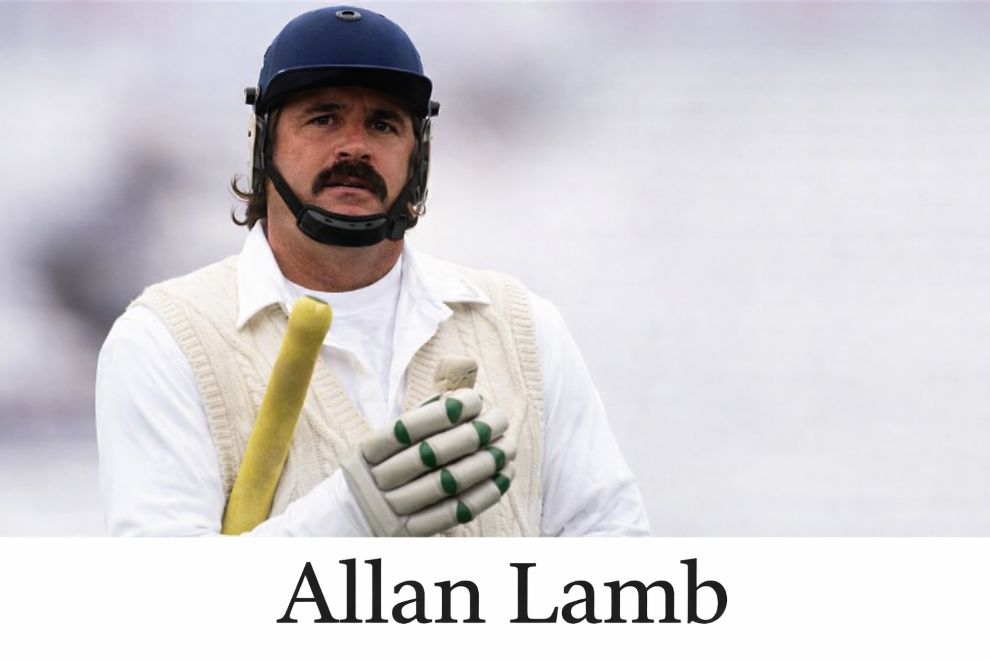
Allan Lamb: The Fearless Legacy of an English Cricket Warrior
How “Lambie” and “Legga” Became a Defining Force in England’s Batting History

Introduction
Allan Lamb is a name that resonates strongly in the history of English cricket. Known for his courage, resilience, and technical strength, Lamb carved out a remarkable career during one of the most challenging eras in international cricket. Facing some of the fastest and most intimidating bowlers the game has ever seen, he built a reputation as a batsman who never backed down.
Table of Contents
ToggleOften referred to by his nicknames Lambie and Legga, Allan Lamb’s journey from South Africa to becoming a mainstay of England’s batting lineup is both inspiring and complex. While his career had moments of inconsistency and criticism, his overall contribution to English cricket remains undeniably significant.
Quick Bio: Allan Lamb
| Attribute | Details |
|---|---|
| Full Name | Allan Joseph Lamb |
| Known As | Lambie, Legga |
| Date of Birth | 20 June 1954 |
| Age | 71 (as of 2025) |
| Place of Birth | Langebaanweg, Cape Province, South Africa |
| Nationality | English |
| Profession | Former International Cricketer |
| Batting Style | Right-handed |
| Bowling Style | Right-arm medium |
| Height | 5 ft 8 in (1.73 m) |
Early Life and Cricket Foundations
Allan Lamb was born in Langebaanweg, South Africa, into a family where cricket already had a foothold. His father, Micky Lamb, played club cricket, and this early exposure shaped Allan’s interest in the sport. From a young age, he showed both determination and natural batting ability.
He was educated at Wynberg Boys’ High School and later Abbots College, institutions known for competitive sports programs. These formative years allowed Lamb to refine his technique and develop the mental toughness that would later define his international career.
Start of His Professional Cricket Career
Lamb made his first-class debut in 1973 for Western Province at just 18 years old. At the time, South Africa’s international isolation due to apartheid limited opportunities for players aspiring to compete at the highest level.
Recognizing this barrier, Allan Lamb made a bold and life-changing decision in 1978 to move to England. This move marked the true beginning of his rise on the global stage and set the foundation for his identity as a South African-English cricketer.
County Cricket and Rise with Northamptonshire
Lamb joined Northamptonshire County Cricket Club in 1978, a partnership that would last until 1995. Over nearly two decades, he became the backbone of the team’s batting order and later served as county captain.
During his county career, Lamb scored over 30,000 first-class runs, establishing himself as one of Northamptonshire’s greatest players. His commitment and longevity were rewarded when the club named a hospitality suite “The Allan Lamb Room”, cementing his legacy at the county level.
International Career with England
Allan Lamb made his England debut in 1982, quickly becoming a regular in both Test and One-Day International squads. His strongest asset was his ability to face high-quality fast bowling, particularly against the West Indies, whose pace attacks dominated world cricket at the time.
Although Lamb’s career featured occasional dips in form, his resilience ensured he remained an essential part of England’s middle order for a decade. He also captained England briefly, reflecting the trust placed in his experience and leadership.
International Career Statistics
Allan Lamb – International Career Statistics
| Format | Matches | Runs | Average | Centuries | Half-Centuries | Highest Score |
|---|---|---|---|---|---|---|
| Test | 79 | 4,656 | 36.09 | 14 | 18 | 142 |
| ODI | 122 | 4,010 | 39.31 | 4 | 26 | 118 |
These numbers highlight both consistency and durability, particularly impressive given the era in which Lamb played.
Playing Style: Strengths and Criticism
Lamb was known as a brave, front-foot batsman who did not shy away from fast bowlers. His technique allowed him to play aggressive yet controlled shots, making him especially valuable in difficult conditions.
However, critics sometimes pointed to inconsistency and questioned his conversion rate of starts into big scores. Despite these criticisms, his ability to deliver in high-pressure situations often outweighed these shortcomings.
World Cup Contributions
Allan Lamb represented England in three Cricket World Cups: 1983, 1987, and 1992. He played a key role in England’s journey to the finals in both 1987 and 1992, contributing crucial middle-order runs.
While England fell short of lifting the trophy, Lamb’s performances during these tournaments reinforced his reputation as a dependable big-match player.
Life After International Cricket
After retiring from international cricket in 1992 and county cricket in 1995, Allan Lamb remained connected to the sport. He transitioned into cricket commentary and analysis, sharing his experience and insights with a new generation of fans.
He also founded Lamb Associates, a sports travel and events business, marking a successful shift from professional sport to entrepreneurship.
Legacy of Allan Lamb
Allan Lamb’s legacy is built on courage, longevity, and adaptabilitysilience. As a South African-English cricketer, his journey symbolizes adaptability and determination in the face of structural barriers.
Though he may not always be ranked among England’s most elegant batsmen, Lambie’s toughness, reliability, and impact during a competitive era ensure his place in cricket history remains secure.
Conclusion
Allan Lamb’s career reflects both the rewards and challenges of elite international cricket. He faced criticism, endured fierce bowling attacks, and experienced disappointment, yet consistently returned stronger. His achievements with England and Northamptonshire underline the value of persistence and mental strength.
Today, Legga is remembered not only for his statistics but for his fearless attitude and contribution to English cricket during one of its most demanding periods.
Frequently Asked Questions (FAQ)
Who is Allan Lamb?
Allan Lamb is a former English international cricketer known for his strong performances as a middle-order batsman during the 1980s and early 1990s.
Why is Allan Lamb called Lambie or Legga?
Lambie and Legga are popular nicknames used by teammates and fans throughout his cricket career.
Was Allan Lamb born in England?
No, Allan Lamb was born in South Africa but later represented England at international level.
How many centuries did Allan Lamb score in Test cricket?
He scored 14 Test centuries during his international career.
What is Allan Lamb’s biggest contribution to cricket?
His greatest contribution lies in his resilience against fast bowling and his consistent role in England’s batting lineup across formats.