How Component Reliability Impacts Operational Efficiency in Industrial Supply Chains

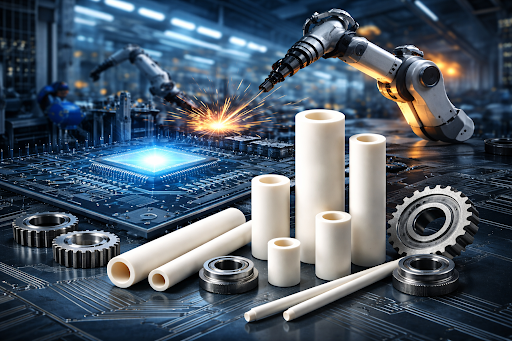
In industrial supply chains, efficiency is often discussed in terms of logistics speed, inventory turnover, and cost control. However, one factor consistently underestimated in operational planning is component reliability. When critical components fail prematurely or perform inconsistently, the consequences extend far beyond maintenance costs—affecting uptime, scheduling accuracy, supplier coordination, and overall business performance.
As manufacturing and processing systems become more interconnected, even minor reliability issues at the component level can cascade into significant operational disruptions. Understanding this relationship is essential for organizations seeking resilient, predictable, and scalable supply chains.
In many industrial systems, reliability is closely tied to the performance of core structural and functional parts, including reliability-critical ceramic tube components in industrial operations, which are often exposed to continuous heat, mechanical stress, or corrosive environments where failure margins are small.
Reliability as a Foundation of Operational Predictability
Operational efficiency depends on predictability. Production schedules, maintenance windows, staffing plans, and logistics coordination all assume that equipment will perform within expected parameters. When components behave unpredictably, this assumption breaks down.
Unreliable components introduce variability into systems designed for stability. Unexpected shutdowns, emergency repairs, and reactive maintenance force managers to shift from planned operations to crisis response. Over time, this reactive mode erodes efficiency, increases costs, and undermines confidence across the supply chain.
Reliable components, by contrast, support consistent throughput and allow organizations to plan with confidence rather than contingency.
The Hidden Cost of Downtime Beyond Repairs
Downtime is rarely limited to the cost of replacing a failed part. Its real impact includes lost production time, delayed shipments, overtime labor, expedited logistics, and strained customer relationships. In tightly coordinated supply chains, one unplanned stoppage can affect multiple downstream partners.
Component reliability plays a critical role in minimizing these disruptions. When components are selected with lifecycle performance in mind, systems experience fewer unplanned interruptions, enabling smoother coordination between production, warehousing, and distribution functions.
Over time, this reliability translates into measurable gains in operational efficiency and cost control.
Maintenance Strategy and Reliability Alignment
Maintenance efficiency is directly linked to component behavior. Predictive and preventive maintenance programs rely on components that degrade in consistent, observable ways. When parts fail unpredictably, maintenance schedules lose effectiveness.
Reliable components enable maintenance teams to plan interventions based on usage patterns and known wear characteristics rather than emergency response. This alignment reduces spare parts inventory pressure, minimizes labor inefficiencies, and supports better utilization of maintenance resources.
In industrial environments where access or shutdowns are costly, component reliability becomes a strategic enabler rather than a technical detail.
Supply Chain Stability and Component Lifecycles
From a supply chain perspective, component reliability affects more than internal operations. It influences supplier relationships, inventory planning, and procurement strategies. Short-lived or inconsistent components increase reorder frequency and complicate forecasting.
Conversely, long-life components with stable performance profiles allow procurement teams to negotiate more effectively, reduce buffer stock requirements, and synchronize supply schedules with production needs. This stability is especially valuable in global supply chains where lead times and transportation costs introduce additional risk.
Reliable components act as stabilizers, reducing variability across the entire supply network.
Reliability in Harsh and Continuous Operating Environments
Many industrial systems operate under conditions that accelerate wear: high temperatures, chemical exposure, mechanical vibration, or continuous-duty cycles. In these environments, component selection has an outsized impact on operational outcomes.
Structural elements such as structural ceramic rod components supporting long-term equipment stability are often used in applications where dimensional stability and resistance to degradation are essential for maintaining alignment and performance over time.
When components are matched appropriately to operating conditions, systems maintain efficiency longer and require fewer corrective interventions.
Decision-Making: Reliability Over Initial Cost
A common efficiency trap in industrial operations is prioritizing upfront cost over long-term reliability. While lower-cost components may appear attractive in procurement comparisons, their impact on downtime, maintenance frequency, and operational disruption often outweighs initial savings.
Organizations that evaluate components based on total cost of ownership—including reliability, lifespan, and performance consistency—tend to achieve better operational efficiency. This approach aligns component selection with business outcomes rather than short-term budget targets.
Reliability-focused decision-making supports sustainable efficiency rather than temporary cost reduction.
Building Resilient Operations Through Component Strategy
As industrial supply chains face increasing pressure from market volatility, labor constraints, and regulatory demands, resilience has become a core operational objective. Component reliability is a foundational element of this resilience.
Reliable components reduce uncertainty, support stable planning, and allow organizations to absorb external shocks more effectively. Whether scaling production, entering new markets, or adapting to changing demand, operations built on reliable systems are better positioned to respond without disruption.
Efficiency, in this context, is not just about speed or cost—it is about consistency and control.
Conclusion
Component reliability is a critical, yet often overlooked, driver of operational efficiency in industrial supply chains. From reducing downtime and stabilizing maintenance schedules to supporting procurement strategy and system resilience, reliable components influence performance at every level of operation.
By treating component selection as a strategic decision rather than a technical afterthought, organizations can unlock meaningful gains in efficiency, predictability, and long-term operational success. In increasingly complex industrial environments, reliability is not merely a quality attribute—it is a competitive advantage.