William Robinson: The Visionary Pioneer Who Transformed Gardening Forever
How the Irish Gardener and Journalist Revolutionized Landscape Design with Bold Ideas and Lasting Influence

Introduction
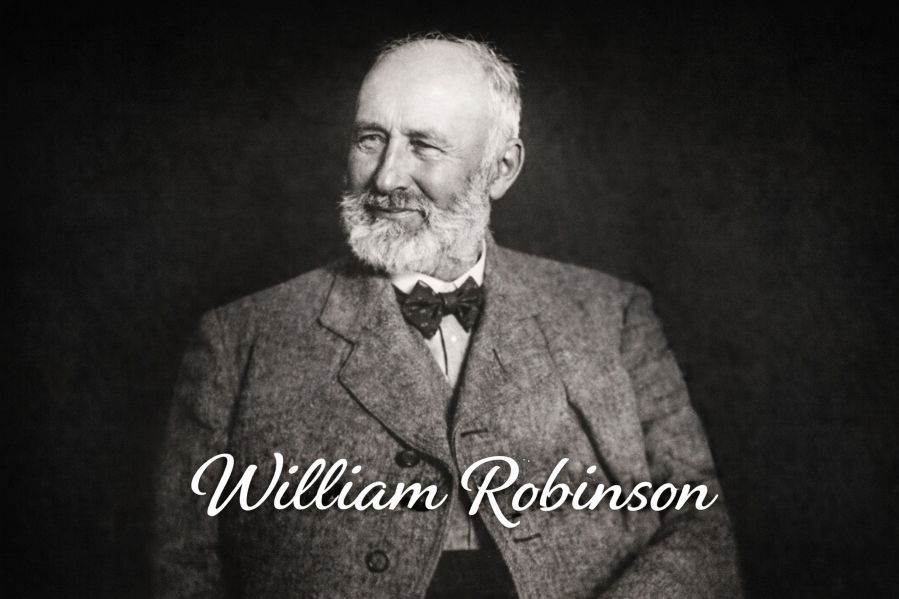
William Robinson stands as one of the most influential figures in the history of horticulture, remembered for reshaping how gardens are designed and appreciated. As an Irish gardener and journalist, he challenged rigid Victorian traditions and introduced a more natural, expressive approach to planting that continues to inspire modern landscapes. His work brought both admiration and criticism, reflecting the boldness of his ideas and the resistance to change during his era.
Table of Contents
ToggleHis legacy is rooted in a powerful belief that gardens should harmonize with nature rather than control it. Through writing, experimentation, and practical work, he encouraged gardeners to embrace beauty, biodiversity, and simplicity. This balance of innovation and controversy makes his story both inspiring and instructive for anyone interested in design, creativity, or environmental thinking.
Quick Bio
| Field | Details |
|---|---|
| Full Name | William Robinson |
| Born | 5 July 1838 |
| Birthplace | Ireland |
| Died | May 1935 |
| Age | 96 |
| Nationality | Irish-born British |
| Profession | Gardener, Landscape Designer, Journalist, Publisher |
| Known For | Naturalistic gardening movement |
| Major Works | The Wild Garden, The English Flower Garden |
| Notable Project | Gravetye Manor |
Early Life and Background
William Robinson was born in Ireland in 1838, growing up in a rural environment that naturally exposed him to landscapes and plant life. His early years were modest, and instead of pursuing extensive formal education, he entered the world of work at a young age. This practical start played a defining role in shaping his deep understanding of plants and gardening techniques.
As he gained experience, Robinson developed a strong curiosity about horticulture and design. His early exposure to estate gardens helped him observe both the beauty and limitations of traditional methods. These formative experiences laid the groundwork for his later desire to challenge conventions and promote a more natural approach to gardening.
Education and Self-Learning
Robinson did not follow a traditional academic path, but his education came through observation, practice, and relentless self-study. Working in gardens provided him with hands-on knowledge that many formally trained designers lacked. This experiential learning became one of his greatest strengths.
Over time, he supplemented practical work with reading and writing, sharpening his ability to communicate ideas clearly. His curiosity and discipline allowed him to grow into a respected authority despite the absence of formal credentials. This journey highlights how passion and persistence can rival structured education in shaping expertise.
Start of Career
Robinson began his career as a working gardener in Ireland, where he learned essential skills in plant care, landscape maintenance, and seasonal planning. His dedication and talent soon opened doors to broader opportunities, leading him to move to England in search of professional growth.
In London, he gained valuable exposure to diverse plant collections and evolving horticultural practices. This period was crucial, as it allowed him to refine his ideas and observe how formal gardening styles dominated the landscape. These experiences fueled his desire to introduce change.
Rise as an Irish Gardener and Journalist
Robinson’s transition from gardener to writer marked a turning point in his career. Through articles and publications, he began sharing his views on natural planting and criticizing overly rigid garden designs. His clear voice and practical insights quickly attracted attention within horticultural circles.
As an Irish gardener and journalist, he used the power of the written word to reach a wide audience. His ability to blend technical knowledge with persuasive storytelling helped him build influence and credibility. This dual identity as practitioner and communicator set him apart from many of his contemporaries.
Philosophy of Natural Gardening
At the heart of Robinson’s work was the belief that gardens should reflect the patterns of nature. He encouraged the use of hardy plants arranged in ways that mimicked wild landscapes, creating spaces that felt organic and alive. This philosophy became known as naturalistic gardening.
His ideas challenged the formal symmetry and heavy ornamentation common in Victorian gardens. While some critics resisted his approach, many embraced it for its beauty and practicality. Today, this philosophy remains central to sustainable and ecological landscape design.
Major Works and Publications
Robinson’s influence spread widely through his books, which became essential references for gardeners and designers. The Wild Garden introduced readers to the concept of natural planting, while The English Flower Garden offered detailed guidance on creating harmonious landscapes.
These publications combined practical advice with a strong design philosophy, making them accessible to both professionals and enthusiasts. Their enduring popularity demonstrates how his ideas resonated across generations, shaping gardening practices worldwide.
Gravetye Manor: A Living Example
In 1884, Robinson purchased Gravetye Manor in Sussex, turning it into a living laboratory for his ideas. Here, he implemented natural planting schemes that showcased the beauty of seasonal change and biodiversity. The estate became a powerful demonstration of his philosophy in action.
Gravetye Manor also served as a creative refuge where Robinson could experiment freely. Visitors and admirers saw firsthand how his principles translated into real landscapes. This project solidified his reputation as both a visionary thinker and a practical innovator.
Career Impact and Influence
Robinson’s career reshaped the direction of horticulture by encouraging a move toward more relaxed and nature-inspired designs. His ideas influenced cottage gardens, woodland planting, and modern ecological landscaping. The ripple effect of his work can still be seen in public parks and private gardens today.
Beyond design, he also changed how people thought about gardening as an art form connected to environmental awareness. His writings inspired a shift from strict control to creative collaboration with nature, a perspective that remains increasingly relevant in contemporary discussions about sustainability.
Conclusion
William Robinson’s life illustrates how vision and determination can transform an entire field. By challenging tradition and advocating for natural beauty, he created a legacy that continues to guide gardeners, designers, and environmental thinkers. His journey from practical gardener to influential voice shows the power of ideas rooted in observation and passion.
Today, he is remembered not only for his writings and projects but for redefining what a garden can be. His work reminds us that innovation often begins with the courage to question established norms and imagine a more harmonious relationship with the natural world.
FAQ
Who was William Robinson?
William Robinson was an Irish-born gardener, landscape designer, and journalist known for pioneering naturalistic gardening.
What is William Robinson famous for?
He is famous for promoting the wild garden concept and influencing modern landscape design through his books and ideas.
What were his most important books?
His most influential works include The Wild Garden and The English Flower Garden.
Why is he considered influential today?
His ideas shaped sustainable and nature-inspired gardening practices that remain widely used in contemporary design.