David Marshall: Singapore’s Trailblazing Chief Minister
Pioneer Leader, Lawyer, and Voice for Self‑Governance

Introduction
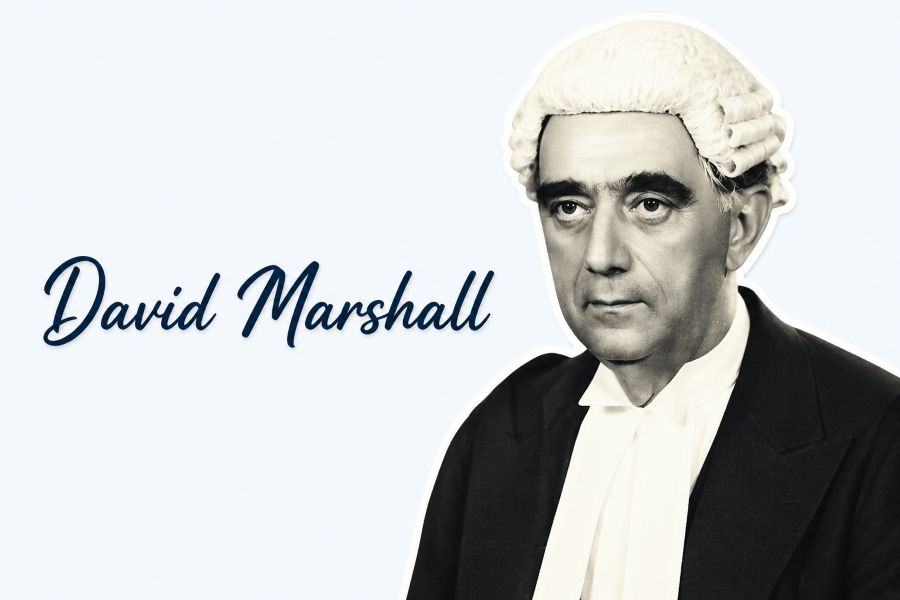
David Marshall stands as one of the most influential figures in Singapore’s modern history. As a Singaporean lawyer and former Chief Minister of Singapore, his life reflects courage, resilience, and unwavering commitment to public service. Born into a Sephardic Jewish family and trained in law, David Saul Marshall was not only a masterful legal mind but also a charismatic political leader who shaped Singapore’s early path toward self‑government. He faced immense challenges, including wartime imprisonment and turbulent politics, yet his legacy endures as a testament to dedication and visionary leadership.
Table of Contents
ToggleBelow is a quick bio summarizing key details of his life before we delve deeper into his remarkable journey.
Quick Bio
| Attribute | Details |
|---|---|
| Full Name | David Saul Marshall |
| Date of Birth | 12 March 1908 |
| Place of Birth | Singapore, Straits Settlements |
| Nationality | Singaporean |
| Ethnicity | Sephardic Jewish |
| Religion | Judaism |
| Profession | Lawyer, Politician, Diplomat |
| Major Role | First Chief Minister of Singapore |
| Key Achievement | Founder of Workers’ Party |
Early Life and Roots in Singapore
David Marshall was born on 12 March 1908 in colonial Singapore, then part of the Straits Settlements. His family was of Sephardic Jewish heritage, rooted in the Iraqi Jewish community, making his upbringing uniquely pluralistic in a multicultural society. Raised in a close‑knit family as the eldest of several siblings, Marshall’s early environment instilled in him strong values of responsibility, integrity, and intellectual curiosity.
From his youth, education played a central role in shaping his worldview. He attended local schools, including one of Singapore’s most prestigious institutions, where he developed a clear sense of justice and an early appreciation for the power of words. These formative years laid the groundwork for his later pursuits in law and politics.
Education and Legal Formation
Marshall’s academic path led him beyond Singapore’s shores to pursue formal legal training in England. He studied law and was called to the Bar at the Middle Temple, one of the four Inns of Court in London. His education abroad not only broadened his legal expertise but also exposed him to diverse political ideas and global perspectives on governance and civil rights.
On returning to Singapore, David Saul Marshall rapidly established himself as a formidable criminal defence lawyer. His courtroom presence was commanding, his reasoning sharp, and his advocacy deeply principled. Marshall became widely known for defending clients with tenacity and empathy, often taking on difficult cases that revealed his unwavering belief in fairness and the rule of law.
World War II: Resilience Under Fire
The outbreak of World War II brought seismic shifts to Singapore and the region. In 1942, Japanese forces overtook the island, marking a dark chapter in its history. During this period, Marshall volunteered with the Singapore Volunteers Corps, a decision that spoke to his deep sense of civic duty.
However, the war took a personal toll. Marshall was captured by the occupying forces and endured harsh conditions as a prisoner of war for three and a half years. This experience of suffering, endurance, and survival shaped both his character and his resolve. It forged in him a deeper understanding of human vulnerability and an even stronger determination to contribute to his homeland’s future.
Rise to Political Leadership
In the years following World War II, Singapore underwent significant political change. As calls for self‑determination grew louder, Marshall answered with purpose. He entered the political arena at a time when colonial governance was being questioned and the seeds of self‑government were beginning to take root.
David Marshall co‑founded the Labour Front, a political party focused on improving workers’ rights and advancing social reforms. His leadership of this party catapulted him into the forefront of Singaporean politics. In the 1955 elections, Marshall became the first elected leader to head the local government, earning the historic title of Chief Minister of Singapore.
Chief Ministership: Triumphs and Trials
On 6 April 1955, David Marshall assumed office as Singapore’s inaugural Chief Minister. His term was marked by both optimism and formidable challenges. Marshall tirelessly sought negotiations with the British colonial authorities to secure greater internal self‑government for Singapore. He championed workers’ rights, pressed for more representative governance, and engaged deeply with grassroots communities.
However, his tenure was not without controversy. Singapore faced significant social unrest during this period, including labour strikes and public demonstrations. The complexity of balancing political ideals with social stability proved difficult. After attending constitutional talks with British officials and failing to secure the level of autonomy he sought, Marshall chose to resign on 7 June 1956. His resignation demonstrated a blend of steadfast principle and candid acknowledgement of political realities.
Founding of Workers’ Party
Not one to retreat from public life, Marshall continued his political journey by founding the Workers’ Party of Singapore in 1957. This major step planted the seeds for long‑term opposition politics in Singapore. As chairman, he shaped the party’s values and strategic direction, advocating for social justice, political accountability, and broader democratic participation.
Although the party initially gained traction and Marshall himself won a seat in the Legislative Assembly, the political landscape shifted rapidly with Singapore’s evolving governance structures. Marshall eventually lost his seat in subsequent elections, but the Workers’ Party persisted and remains an active force in Singapore’s political landscape today.
Diplomatic Career and Later Life
After returning to private legal practice for a period, David Marshall’s public service took on an international dimension. In 1978, he was appointed Singapore’s Ambassador to France, a prestigious role that extended his influence beyond national borders. As ambassador, Marshall also held concurrent accreditation to several European nations, further enhancing Singapore’s diplomatic footprint.
He served with distinction in this capacity for over a decade, contributing to Singapore’s engagement with global partners and enhancing its international reputation. Marshall’s diplomatic work reflected his core strengths: eloquence, deep understanding of law and governance, and a capacity to navigate complex global environments.
Legacy of a Visionary Leader
David Marshall passed away on 12 December 1995, leaving behind a legacy that continues to inspire. His contributions as a lawyer, statesman, and diplomat are woven into the fabric of Singapore’s historical narrative. While he lived through turbulent times, his resilience, courage, and dedication to the principles of justice and self‑governance endure as hallmarks of his life.
His name remains synonymous with the early struggles for Singapore’s autonomy and the ongoing debates around governance and civic engagement. Historians, civic leaders, and ordinary citizens alike recognize Marshall’s pivotal role in shaping a nation’s journey from colonial rule toward self‑determination.
Career Timeline
1908 – Born in Singapore
1930s – Established legal practice as a criminal defence lawyer
1942–1945 – Detained as a prisoner of war during World War II
1955–1956 – Served as Singapore’s first Chief Minister
1957 – Founded Workers’ Party of Singapore
1960s – Continued legal and political engagement
1978–1993 – Served as Singapore’s Ambassador to France
1995 – Passed away in Singapore
Conclusion
David Marshall’s life story is rich with courage, principled leadership, and a relentless commitment to public service. As a Singaporean lawyer and former Chief Minister of Singapore, he navigated war, political upheaval, and societal transformation with dignity and vision. His enduring legacy not only reflects the challenges of his era but also offers lessons in perseverance, integrity, and civic responsibility.
Frequently Asked Questions (FAQ)
1. Who was David Marshall?
David Marshall was a Singaporean lawyer and politician best known as the first Chief Minister of Singapore and a leading advocate for self‑government.
2. What was David Marshall’s full name?
His full name was David Saul Marshall.
3. Where was David Marshall born?
He was born in Singapore, then part of the Straits Settlements.
4. What is David Marshall’s ethnic and religious background?
He was of Sephardic Jewish ethnicity and practised Judaism.
5. What did David Marshall do during World War II?
Marshall was captured by Japanese forces during World War II and spent three and a half years as a prisoner of war.
6. What major political party did he found?
He founded the Workers’ Party of Singapore in 1957.
7. What role did David Marshall hold after his political career?
He served as Singapore’s Ambassador to France and several other European nations.
8. What is David Marshall’s legacy in Singapore?
He is remembered as a pioneer in Singapore’s push toward self‑governance, a respected lawyer, and an influential public servant whose leadership helped shape national identity.