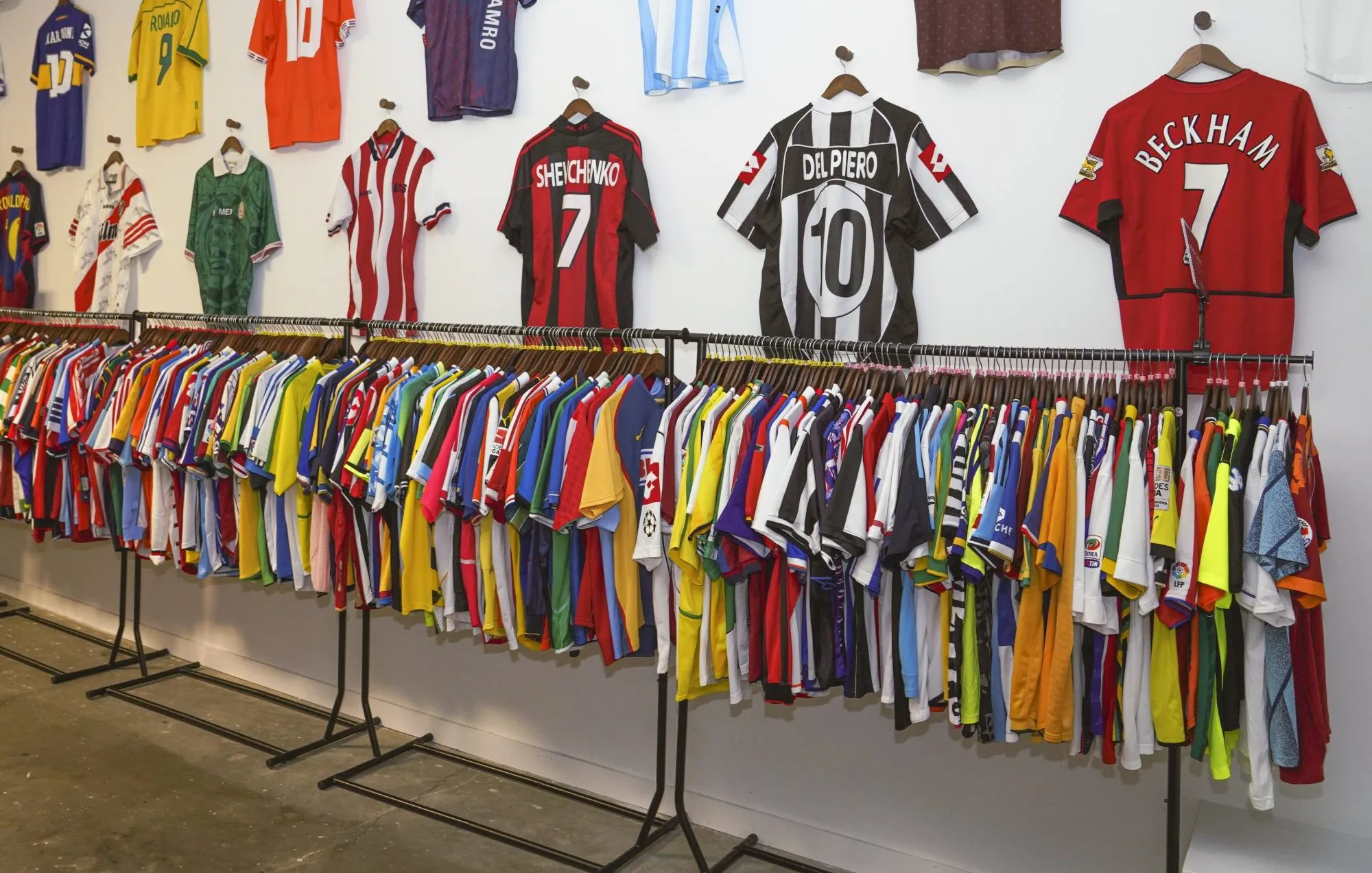
Retro football shirts became a serious collectors’ market as scarcity, nostalgia and changing fashion collided. Original shirts from the 1980s and 1990s were produced ‘in small batches, scantily archived, and connected to the players and games fans long to remember. What used to be a heap of unwanted kit in someone’s attic is now a tradeable asset class, where a shirt sold for hundreds, even thousands of pounds.
This move happened faster than most people realise, though. Just ten years ago a threadbare 1990 England shirt might have been worth a kebab, but now an immaculate, original article with the correct badge and sponsor can attract a sum that takes sellers to re-read the auction page.
Supply has increased but demand has far exceeded the supply of original vintage offerings, and that disparity is what has powered the entire market.
Why Old Football Shirts Suddenly Became Worth Money
3 things had to happen. First, the cream of the 80s and early 90s were the objects of severe longing as the generation that had grown up watching them, entered their 30s and 40s, an age when there is disposable income as well as a tremendous desire to revisit one’s own childhood. Second, the shirts themselves were made to die.
Whether it was the cotton-heavy fabrics, the excessive branding that would crack in a very short period of time or even that they were worn every day until they had been worn out, survival was invariably shoddy. Thirdly, the fashion side caught up. Baggy, old-fashioned 90s shapes, sharp angles and mixing of bright colours suddenly looked fashionable again.
Once, dated-looking old-style shirts were being worn by those who had zero knowledge of a game, just as trainers became a form of statement streetwear rather than the usual terrace fashion. This meant the number of potential purchases increased dramatically, away from the game itself. Another is a ‘status’ thing. Wearing the real thing, whether your 1996 Borussia Dortmund away shirt or the original bruised banana Arsenal we all wore in 1991, for example, conveys a level of taste and understanding that no current reissued product ever could. That little bit of value is there because so few real shirts are still in good enough condition to get away with.
What Actually Determines a Shirt’s Value
“Condition” is king. A one-year-old shirt with no fade, pristine sponsor lettering, no bobbling, and OEM tags will frequently sell for over 3 times the price of the same shirt aged one year with wear. It is not uncommon for buyers to refer to items as being “deadstock” which translates into “no wear and preferably still in a bag.” These items carry the highest premiums. Rarity comes next. The average shirt for a one-season range and special editions for particular wins and famous appearances are all valued more highly.
Goalkeeper shirts, produced much fewer are also higher up the scale. Player-issue/worn shirts are an altogether different ballgame for which provenance can elevate the prices into four and five-figure sums. And then there are the details that make a 40 shirt a 400 shirt.
The right manufacturer for that particular season, the correct sponsor logo (sponsors did change mid-era so the wrong one gives the shirt away after 5 seasons), the original stitching instead of a copied print, the proper sizing tags and tags away from the team badge. Reproductions and “retro re-borns” sold by clubs and manufacturers are not period originals and most serious collectors treat them very differently in value. A re-release could be anything from 60 or 90 in today’s money, the…
How Buyers and Sellers Actually Move These Shirts
The market runs across a few distinct channels, each with its own rhythm. General auction sites handle huge volumes but require buyers to do their own authentication, which is where bargains and disasters both happen. Dedicated vintage football shops, both physical and online, curate their stock and authenticate it, so you pay more but carry less risk. Specialist sites that focus specifically on football kit have become the natural home for collectors who want range and reassurance in one place, and a retailer like SoccerLord gives buyers a way to browse retro and current shirts without sifting through the guesswork of an open marketplace.
Prices are scattered across leagues and teams. An average mid-1990s replica home shirt, in fair condition, will fetch between 50 and 120 based on the kit. A classic, iconic design from a top club, which will almost Yes feature in an “all-time best ranges” come the end of the season, can go between 200 and 500. Replicas tied to World Cup milestones like the North Korea kit of 1966, a few club kits from the absolute peak of what is now Italian Serie A in the early-’90s or players’ shirts with legendary names on the back will all go well beyond that. Traders have commented that “the amount that vintage kit tends to command has gone upward steadily and year on year for a number of years.
The appreciation rate is better than leaving it in a bank”. Geography also influences things. Italian and German collectors prize their country-blessed kits extremely highly, while English buyers go after then-plural Premier League and pre-Premier League First Division shirts, and South American jerseys also have a considerable cult following. What may be a nondescript shirt in one market can be a fiercely sought-after piece in another, which is why cross-border buying and selling has become such a hallmark of the scene.
The Risks Nobody Mentions Until You’re Burned
Fakes are the largest single danger. The popular market creating demand for authentic pieces also supports a sizeable counterfeit trade, and many reproductions today are indistinguishable from authentic itemsunless you know how to decipher fabric weight, stitch placement and font choice. Cheaply sold, “rare” shirts are not a bargain.
The other quiet problem is condition decay. Vintage fabrics weaken, sponsor prints are still separating, and bad storage (direct light, in the damp, cramming shirts onto wire hangers) will quietly eat away at value.
Anyone treating shirts as assets needs to store them like anything that degrades, flat or padded, out of light, out of air. Third, there is the liquidity issue. Unlike stocks a shirt is only worth what someone will agree to pay you on the day you wish to sell it. Niche items can take months to find the buyer, and you may have to take a discount to shift them quickly. There is a market, but it is not instantaneous cash.