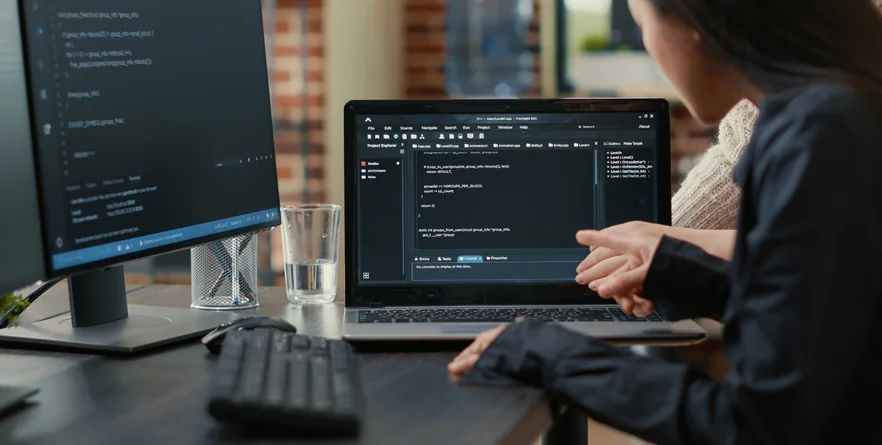
There’s a version of custom software that exists in many people’s heads that doesn’t match reality. It involves enormous budgets, years of development, and a team of fifty engineers building something that only a bank or an airline could justify. That picture made sense fifteen years ago, but the industry has moved on considerably since then. The tools available to engineering teams are better, the cost of running software in the cloud has dropped sharply, and the businesses commissioning bespoke tools today look very different from what you might expect.
It usually starts with a specific frustration
Many of the businesses that end up investing in custom software development don’t set out looking for it. They set out trying to fix a specific problem. Maybe the sales team is copying data between three different systems every morning, or the operations manager has built a spreadsheet so complex that nobody else in the company can maintain it. Sometimes the trigger is a piece of off-the-shelf software that does almost everything they need but falls short in one area that happens to be central to how the business actually runs.
What tends to follow is a relatively short conversation with a software engineering team who can look at that problem and say whether building something makes more sense than continuing to patch it. That conversation is usually free and takes less than an hour, and what comes out of it is a realistic picture of what a solution would look like, how long it would take, and roughly what it would cost.
The outcomes are more practical than people expect
When a small or mid-sized business commissions custom software, the result is rarely some grand digital transformation. More often it’s something focused and specific. A booking system that handles the particular way a company schedules its work. A reporting dashboard that pulls data from several sources into one place so the owner can see what’s happening without chasing five different logins. An internal tool that automates the admin tasks that were eating up two or three hours a day.
Customer-facing tools are another common one. A business might need a portal where their clients can log in, check the status of an order, download invoices, or submit a support request. Off-the-shelf options exist for this sort of thing, but they’re often designed around somebody else’s workflow and end up needing so many workarounds that you spend as much time managing the tool as you would have spent doing the work manually. A bespoke version does exactly what’s needed and nothing more, and it can be branded and integrated with whatever systems the business already uses.
These aren’t glamorous projects but they tend to have an outsized effect on how a business operates day to day. The time saved is real, and it compounds – staff who were spending their mornings on data entry are now spending that time on work that actually moves the business forward. And because the software was designed around the way the team already works, the adoption curve is usually short. People don’t need to learn a new way of doing things because the tool already reflects the process they’re familiar with.
Ownership changes the economics
One thing that catches people off guard is the difference in long-term cost. With off-the-shelf software, you’re paying a monthly subscription that goes up over time, often for a product where you use a fraction of the features. With custom software, you pay for the build and then you own it outright. There are hosting and maintenance costs, but they’re typically a fraction of what the ongoing subscriptions were costing, and you’re not at the mercy of a vendor deciding to change their pricing or discontinue a feature you rely on.
The upfront number can look larger than a monthly subscription, which is why many businesses hesitate at first. But when you spread the cost of a bespoke build over three to five years and compare it to what you’d spend on subscriptions, licences, and the workarounds needed to make generic tools do what you want, the maths often works out differently from what people assume. There’s also the question of what it costs a business to keep doing things the slow way – hours lost to manual processes, mistakes from copying data between systems, and the opportunity cost of staff doing admin work instead of higher-value tasks.
Red Eagle Tech offers a bespoke software cost estimator that lets you plug in your own numbers and see what the comparison actually looks like for your situation, which is worth a look if you’re weighing it up.
It doesn’t take as long as you’d think
A focused internal tool for a small business can go from initial conversations to a working first version in a matter of weeks rather than months. Engineering teams that work with smaller businesses are used to keeping scope tight and delivering something usable quickly, then refining it based on how the team actually uses it. This isn’t the sort of project that disappears into a black hole for six months and emerges as something nobody recognises.
The way it typically works is that the engineering team will build something small and functional first, put it in front of the people who’ll actually use it, and then adjust based on their feedback. That cycle repeats a few times until the tool does what it needs to do. It means the business gets something working early on rather than waiting for a finished product, and the final result is shaped by the people who know the work best rather than by assumptions made at the start of the project.
When it doesn’t make sense
Custom software isn’t the answer to every problem, and a good engineering team will tell you that upfront. If a well-established product already does what you need without significant workarounds, buying it is almost always the smarter choice. The case for building something only really holds up when your business has a process or a requirement that really doesn’t fit what’s already on the market, or when the cost of adapting your workflow to somebody else’s software is higher than the cost of building your own.
It also depends on where the business is headed. A company that’s growing and expects its processes to change over the next few years will get more value from software it can adapt than from a rigid product it’s locked into. On the other hand, a business with stable, well-defined needs that match what’s already available off the shelf has no reason to build from scratch. The honest answer is that many businesses fall somewhere in between, and working out which side of the line you’re on is part of what that initial conversation with an engineering team is for.
For the businesses where it does make sense though, the shift from working around their software to working with it tends to be one of those changes that’s hard to imagine going back from. It’s not a silver bullet, but when the fit is right, it quietly removes a surprising amount of friction from the day-to-day running of a business.