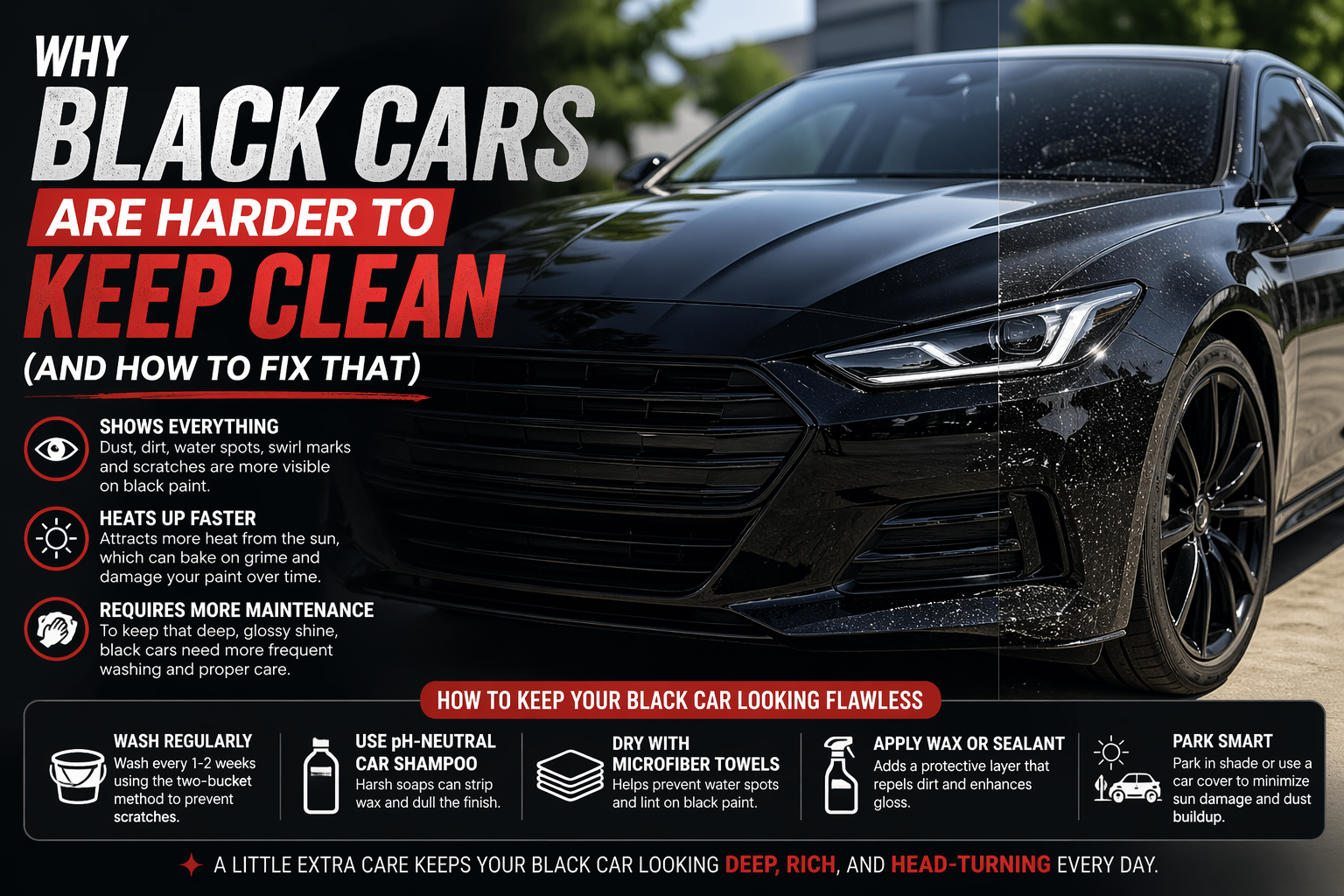
Black cars show more imperfections than any other color because dark paint creates high contrast with scratches, water spots, and contamination. The visibility of these defects is optical rather than structural—the same damage exists on lighter cars but remains hidden.
Dark paint finishes require different maintenance protocols to preserve their appearance. Standard washing techniques that work on silver or white cars often create visible swirl marks on black surfaces. Understanding why black paint behaves differently helps owners implement preventative measures.
The Science Behind Black Paint Visibility
Black paint is not more delicate than other colors—it simply reveals defects through contrast rather than hiding them. The paint chemistry remains identical across color variants, but light reflection patterns differ dramatically.
When light strikes a scratch on black paint, the bright reflection creates a visible line against the dark background. According to Autopia’s paint defect analysis, micro-scratches between 0.5-2 microns deep become visible on black surfaces while remaining undetectable on lighter colors.
The optical effect becomes more pronounced in direct sunlight. Black paint absorbs 90-95% of visible light, creating maximum contrast with reflective scratches. White paint reflects most light wavelengths, diffusing the appearance of surface imperfections.
| Paint Color | Light Absorption Rate | Scratch Visibility | Swirl Mark Detection |
| Black | 90-95% | Extremely High | Visible under all lighting |
| Dark Blue/Grey | 70-80% | High | Visible in direct sun |
| Red/Green | 50-60% | Moderate | Visible at angles |
| Silver/Light Grey | 30-40% | Low | Rarely visible |
| White | 10-20% | Very Low | Nearly invisible |
Heat absorption creates secondary maintenance challenges. Black cars reach surface temperatures 10-20°C higher than white vehicles in summer conditions. Elevated temperatures accelerate water evaporation, increasing water spot formation and making wax or sealant application more difficult.
Common Defects on Black Paint
Swirl Marks and Holograms
Swirl marks appear as circular scratches visible under direct light. These defects originate from improper wash techniques, dirty wash media, or automated car washes with contaminated brushes.
According to DetailingWiki’s scratch analysis, automatic car washes account for 60-70% of swirl mark formation. The rotating brushes trap dirt particles that act as abrasives, creating thousands of micro-scratches per wash cycle.
Manual washing with improper technique causes similar damage. Circular washing motions create the characteristic swirl pattern, while dirty microfiber towels drag contaminants across the paint surface. A single grain of sand caught in a wash mitt can create visible scratching on black paint.
Water Spots and Etching
Water spots manifest as white or cloudy rings where water droplets evaporate. The severity depends on water hardness and exposure time.
Water spots are mineral deposits, not paint damage—but they can cause permanent etching if left untreated for extended periods. Fresh water spots sit on the paint surface and remove easily with acidic cleaners. Aged spots bond chemically with the clear coat, requiring polishing to eliminate.
According to Autocar’s paint maintenance guide, UK water hardness varies from 50 mg/L in Scotland to 300+ mg/L in Southeast England. Hard water areas create visible spots within 15-20 minutes of drying time.
| Water Spot Type | Appearance | Removal Method | Prevention |
| Type 1 (Surface) | White/cloudy rings | Quick detailer spray | Immediate drying |
| Type 2 (Bonded) | Etched circles | Acidic water spot remover | Ceramic coating protection |
| Type 3 (Etched) | Crater-like depressions | Machine polishing | Deionized final rinse |
Sprinkler systems and irrigation overspray cause particularly stubborn spots. Repeated exposure to mineral-laden water creates layered deposits that penetrate the clear coat. Some severe cases require wet sanding to restore the surface.
Dust and Contamination Visibility
Airborne contamination appears more visible on black surfaces because dust particles are typically light-colored. Brake dust, pollen, and road film create an obvious haze that develops within days of washing.
Industrial fallout bonds to paint through heat and moisture exposure. These metallic particles oxidize on the surface, creating orange or brown spots that resist normal washing. Clay bar treatment removes embedded contamination without damaging the finish.
Proper Black Car Washing Technique
The two-bucket method with grit guards prevents contamination transfer during washing. One bucket holds soapy water for the wash mitt, while the second contains clean rinse water.
Pre-rinse the vehicle thoroughly to remove loose dirt and debris. High-pressure water dislodges particles that would otherwise scratch during contact washing. Focus on wheel wells, rocker panels, and lower sections where heavy contamination accumulates.
Use pH-neutral car shampoo formulated for automotive finishes. Household detergents strip protective wax and can damage rubber trim. Mix the shampoo according to manufacturer specifications—excess concentration provides no additional cleaning benefit.
Work from top to bottom in straight lines rather than circular motions. The roof and upper panels contain less contamination than lower sections. Rinse the wash mitt in clean water after each panel and reload with fresh soap.
According to The Detailing Club’s wash guide, microfiber wash mitts with 70/30 polyester-polyamide blend provide optimal cleaning without marring. Replace wash mitts every 20-25 washes or when they show visible contamination buildup.
Rinse thoroughly using the sheeting method. Remove the spray nozzle and allow water to flow freely over the surface. This technique reduces water droplet formation and minimizes spotting during the drying phase.
Drying Methods for Black Paint
Forced air drying with a car dryer or leaf blower eliminates water contact entirely. These devices remove 90-95% of surface water without touching the paint. Focus airflow on panel gaps, mirrors, and trim where water pools.
When air drying is not available, use plush microfiber drying towels with minimum 600 GSM (grams per square meter) weight. Thicker towels absorb more water per pass and reduce the number of strokes needed.
Apply drying aid or quick detailer spray before towel contact. These products provide lubrication that helps the towel glide across the surface without creating friction. The spray also encapsulates remaining contaminants.
Pat the towel onto the surface rather than wiping. Gentle pressure allows capillary action to draw water into the towel fibers. Fold the towel to expose fresh sections frequently—using saturated areas redistributes water rather than removing it.
Deionized or filtered water for the final rinse eliminates mineral content. Professional detailing products include spot-free rinse systems that produce purified water for the last step. This investment prevents water spot formation entirely.
Protection Systems for Dark Paint
Ceramic Coating Benefits
Ceramic coatings create a hydrophobic layer that resists contamination bonding. The coating cross-links with paint at the molecular level, forming a semi-permanent barrier 1-2 microns thick.
The hydrophobic effect causes water to bead into tight spheres with 110-120° contact angles. These beads roll off vertical surfaces, carrying dirt and contamination with them. According to Gtechniq’s coating technology, properly applied ceramic protection reduces wash frequency by 40-50%.
Ceramic coatings add surface hardness that resists light scratching from automated brushes and improper technique. The coating measures 9H on the pencil hardness scale, compared to 4-5H for untreated clear coat. This increased resistance prevents casual contact from creating visible marring.
Chemical resistance protects against acidic bird droppings, alkaline bug residue, and industrial fallout. The inert coating prevents these contaminants from etching into the clear coat. Removal becomes easier because substances cannot bond chemically with the protected surface.
Paint Sealant Alternatives
Synthetic paint sealants provide 4-6 months of protection at lower cost than ceramic coatings. These polymer-based products create a sacrificial layer that takes the abuse instead of the paint.
Sealants apply quickly with dual-action polishers or hand application. The product cures in 12-24 hours, creating a glossy finish that enhances black paint depth. Reapplication every season maintains consistent protection.
Wax vs. Ceramic Coating
| Protection Type | Durability | Water Beading | Scratch Resistance | Cost |
| Carnauba Wax | 4-8 weeks | Good (90-100°) | Minimal | £15-30 |
| Synthetic Sealant | 3-6 months | Very Good (100-110°) | Low | £25-50 |
| Ceramic Coating (DIY) | 12-24 months | Excellent (110-115°) | Moderate | £50-100 |
| Professional Ceramic | 3-7 years | Superior (115-120°) | High | £500-1500 |
Correcting Existing Damage
Paint Correction Process
Machine polishing removes swirl marks and light scratches by leveling the clear coat. The process uses abrasive compounds to eliminate surface defects while preserving paint thickness.
Paint thickness measurement with a digital gauge determines safe polishing limits. Most factory clear coat measures 40-60 microns. Each polishing step removes 1-3 microns, allowing multiple corrections over the vehicle’s lifetime.
Multi-stage correction addresses severe defects through progressive refinement. Heavy cutting compounds remove deep scratches and oxidation. Medium polish eliminates haze from the cutting stage. Fine polish creates the final gloss and clarity.
Dual-action polishers provide safer operation for beginners compared to rotary machines. The orbital action prevents heat buildup that can burn through thin edges. Professional detailers use rotary polishers for maximum cutting power.
Water Spot Removal
Fresh water spots respond to acidic cleaners formulated for mineral dissolution. Spray the product onto affected areas and allow 2-3 minutes contact time. The acid breaks down calcium and magnesium deposits without damaging paint.
Severe etching requires light polishing to level the surface. Use finishing polish with minimal cut to remove the top layer where minerals have bonded. Multiple light passes produce better results than single aggressive attempts.
Long-Term Maintenance Schedule
Weekly maintenance preserves black paint between full washes. Quick detailer spray removes light dust and fingerprints without water. Microfiber cloths with plush weave lift contamination safely.
Monthly decontamination with clay bar treatment removes bonded particles. The clay pulls embedded metal, tar, and tree sap from the paint surface. This step should precede any wax or sealant application.
Quarterly inspection identifies areas requiring correction before damage becomes severe. Check panels under direct LED light at multiple angles. Early intervention prevents minor issues from developing into paint-through damage.
Annual paint protection renewal maintains the hydrophobic barrier. Ceramic coatings require maintenance boosters every 12 months. Traditional wax and sealant need complete removal and reapplication.
Frequently Asked Questions
Why do swirl marks show more on black cars?
Swirl marks appear more visible on black cars because dark paint creates higher contrast with light-colored scratches. When light hits micro-scratches on black paint, the reflection creates visible circular patterns that are almost invisible on lighter colors. The scratches themselves are the same depth regardless of color, but the optical effect is dramatically more pronounced on dark finishes.
What causes water spots on black paint?
Water spots on black paint are caused by mineral deposits left behind when water evaporates. Hard water contains calcium, magnesium, and other minerals that bond with the paint surface. On black cars, these white or cloudy deposits create stark contrast and appear as distinct rings or patches. Direct sunlight accelerates evaporation, making spots more concentrated and harder to remove.
How often should I wash a black car?
Black cars should be washed every 1-2 weeks in normal conditions, or weekly in harsh environments with road salt, tree sap, or industrial fallout. Frequent washing prevents contaminants from bonding to the paint and reduces the need for aggressive scrubbing that creates swirl marks. Use the two-bucket method with grit guards and microfiber wash mitts to minimize marring during each wash.
Can ceramic coatings prevent swirl marks on black cars?
Ceramic coatings reduce but do not completely prevent swirl marks on black cars. The hard coating adds 1-2 microns of protection that makes the surface more resistant to light scratching from improper wash techniques. However, ceramic coatings cannot prevent damage from abrasive materials or excessive pressure. Proper wash methods remain essential even with coating protection.
What’s the best way to dry a black car without water spots?
The best way to dry a black car is to use a clean, plush microfiber drying towel with a quick detailer spray as a drying aid. Work in shaded areas immediately after rinsing to prevent water from evaporating on the surface. Pat the towel gently rather than wiping, and fold it frequently to expose clean sections. Filtered or deionized water for the final rinse eliminates mineral content that causes spots.