25GBASE-LR Optical Modules: The Cornerstone of Next-Gen Network Connectivity

What is a 25GBASE-LR Optical Module?
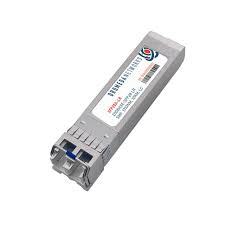
25GBASE-LR is an optical transceiver module standardized by the IEEE 802.3by specification. It provides a single-lane 25Gbps Ethernet connection over single-mode fiber (SMF) for distances up to 10 kilometers. The “LR” stands for “Long Reach,” indicating its design for extended transmission in data centers, carrier networks, and enterprise backbones. Typically packaged in the compact SFP28 form factor, the module allows network engineers to achieve high data throughput while maintaining a streamlined physical interface. It has become a preferred choice for modern network infrastructure upgrades that require more bandwidth without the bulk or cost of 40G or 100G systems.
Specifications and Transmission Technology
Technically, the 25GBASE-LR operates at a center wavelength of 1310nm, optimized for transmission over single-mode fiber. The module generally uses a Distributed Feedback (DFB) laser for its transmitter and a PIN photodiode or Avalanche Photodiode (APD) for the receiver, ensuring accurate signal detection over long distances. Operating temperatures usually range from 0°C to 70°C for commercial modules, while industrial-grade variants can support even wider ranges. Most models run on 3.3V power and consume less than 1.5W, aligning with the growing demand for energy-efficient data center operations. Electrical connectivity is achieved through the SFP28 edge connector, making it hot-swappable and backward-compatible with 10G SFP+ ports in many cases (at reduced speed).
Advantages Over Other Modules
Compared with its predecessors and peers, the 25GBASE-LR offers a compelling mix of speed, distance, and cost-efficiency. While 10GBASE-LR is widely used and cheaper, it falls short in bandwidth for modern applications. On the other hand, 40G and 100G modules often require more complex cabling and higher capital expenditure. 25GBASE-LR strikes a sweet spot by offering 2.5 times the bandwidth of 10G with minimal changes in physical infrastructure. Moreover, when compared to 25GBASE-SR, which uses multimode fiber and supports up to 100 meters, 25GBASE-LR provides a much broader operational scope for long-distance deployments. Its ability to work with existing single-mode fiber makes it particularly attractive in large-scale, distributed environments.
Deployment Scenarios and Use Cases
The application areas for 25GBASE-LR are diverse and continue to expand. One of the most significant is in 5G fronthaul networks, where low-latency and high-bandwidth links are required between remote radio units (RRUs) and baseband units (BBUs). In data centers, these modules are widely used in leaf-spine topologies where access and aggregation layers need scalable 25G links. Enterprises with growing bandwidth demands also turn to 25GBASE-LR for uplinks between core switches across office campuses or between buildings. Moreover, it’s being used in cloud infrastructures and content delivery networks that need reliable long-range links for hyperscale data transport.
Interoperability and Selection Guidelines
Choosing a 25GBASE-LR module isn’t just about specs—it’s also about compatibility. Many network operators use switches and routers from different vendors like Cisco, Arista, Juniper, and HPE, so ensuring multi-vendor compatibility is essential. This is where the Multi-Source Agreement (MSA) standard becomes important, as it ensures that compliant modules will work across various platforms. Buyers should look for modules with certifications such as CE, FCC, and RoHS, as well as ensure they support Digital Diagnostics Monitoring (DDM) for real-time performance metrics. Opting for third-party alternatives that are coded for compatibility can significantly reduce costs without compromising reliability—just be sure to source from reputable vendors.
Conclusion: A Robust and Future-Proof Solution
As the demand for network performance continues to grow, 25GBASE-LR stands out as a future-ready choice that balances speed, cost, and distance. It enables seamless upgrades from 10G to 25G without a complete overhaul, making it highly attractive for budget-conscious deployments. Its use of single-mode fiber aligns with most long-haul strategies and its energy-efficient design meets modern environmental standards. Whether for telecom, cloud, or enterprise environments, the 25GBASE-LR module remains a dependable and scalable building block in today’s evolving network ecosystems.