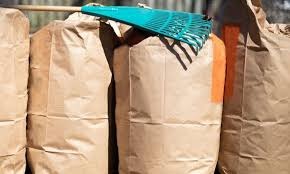
Multi-ply kraft paper bags are the workhorse of industrial packaging. For heavy, powdery or granular products, these multi-layered paper sacks deliver performance that a single sheet of material simply cannot. By combining several plies of strong kraft paper – often with an inner plastic liner – a multi-ply bag can withstand drops, rough handling, and moisture far better than ordinary paper bags. Each layer plays a distinct role: the outer sheet takes the print and protects against scuffs, the inner sheet safely contains the product and works with the closure, and the middle layers absorb shock and guide tears along predictable paths. This engineered structure can be fine-tuned for each application by adjusting the weight of the paper (grammage), the number of plies, fiber orientation, or barrier materials. The result is a packaging “system” rather than a generic bag, giving manufacturers confidence that their goods will survive forklifts, humidity swings, and pallet loads while arriving with legible codes and intact branding.
As one of the industry’s leading manufacturers, VidePak has built its reputation on supplying such reliable bags. VidePak is recognized as a top-three global producer of industrial packaging solutions, including multi-ply kraft bags, BOPP-laminated and plain polypropylene (PP) woven sacks, heavy-duty PE sacks, valve bags, and even large FIBC bulk bags. Founded in Shanghai in 2007, VidePak brings over 15 years of focused experience to the heavy-bag market. Today it operates W&H and Starlinger production lines, turning out well over a hundred million kraft paper bags annually under ISO 9001 quality control. This scale and expertise allow VidePak to develop highly customized products – from powdery chemical bags to food ingredient sacks – while maintaining tight tolerances across every batch. In this article, we explore the design logic and practical considerations behind multi-ply kraft paper bags, and how VidePak applies these principles across its product range. We will cover material choices, bag geometries, closure methods, performance testing, real-world use cases, and best practices for specification and production, all from a system-oriented perspective. https://www.pp-wovenbags.com/understanding-multiwall-paper-bags-types-laminate-structures-and-quality-control-standards/
Understanding Multi-Ply Kraft Paper Bags
At their core, multi-ply kraft paper bags are composite containers made by layering multiple sheets of high-strength paper. They are sometimes referred to as multi-wall or multi-layer paper sacks, pinch-bottom or pillow-bottom sacks, and may be manufactured with either an open mouth, a stitched closure, or an integrated filling valve. Whatever the name or style, the engineering challenge is the same: combine plies and construction features so that the final bag consistently performs under realistic conditions. Unlike single-layer options where one metric (like burst strength) might dominate, multi-ply bags rely on the harmony of their layers and features.
Layered synergy: A typical multi-ply bag has an outer ply chosen for its printability and scuff resistance, one or more middle plies for absorbing impact and controlling tear propagation, and an inner ply that is compatible with the product and closure method. For example, the outer ply might be calendered (smoothed) and primed to take high-quality graphics, but still have enough weight (usually 70–100 g/m² per ISO 536) to resist abrasion on a pallet. The inner ply, facing the contents, may be optimized for dust control or heat sealing. Middle plies often use stronger or oriented kraft papers so that if a crack starts at the gusset toe, it is deflected or stopped rather than running through the whole bag. By tuning the grammage and fiber direction of each layer, manufacturers create bags that drop cleanly (without disruptive “toe splits”) and hold their shape on a conveyor.
Terminology and alignment: In practice, different teams may call these sacks by different names: “multiwall kraft bags,” “valve paper bags,” “pinch-bottom paper sacks,” etc. What matters is the underlying structure: the number of plies, the basis weight of each, the style of bottom (block vs. pillow), the closure type (pinch-sealed, stitched, or valve), and any inner liner. By agreeing on these key parameters rather than just a catch-all term, purchasing, production, and sales can stay aligned. VidePak engineers work with customers to set explicit targets – for example, specifying “4-ply, 80 gsm kraft, block-bottom with ultrasonic closure and a 50-micron PE liner,” including acceptable tolerances on each measurement. This level of detail prevents misunderstandings, whether a buyer says “multiwall” and the factory hears “pinch-bottom,” or a salesman says “valve” and expects a specific block-bottom design. In short, clear definitions of ply count, grammage, gusset type, mouth style, and lining are essential to get everyone on the same page.
Layered Construction and Materials
Every ply in a multi-ply bag has a job. VidePak’s design philosophy is to assign a purpose to each layer and then measure its contribution to performance. Key choices include the paper grade (often sack or test-kraft), the grammage per ply, and any coatings or barriers. Typical kraft paper in these bags ranges from about 70 to 100 grams per square meter (gsm) for each layer. A higher grammage provides stiffness and impact resistance but also increases weight and potential curl; the right balance depends on the route and product.
- Outer ply: This face of the bag carries the branding and initial wear. It is usually calendered (heat-and-pressure smoothed) to give a consistent printing surface. The paper should hold ink well without being excessively glossy (target Cobb 60s values around 20–40 g/m², per ISO 535, ensure good ink holdout without making the surface too slippery). A primer coat often improves ink density. After printing, a low-gloss varnish or protective coating can be applied, especially over barcodes or logos, to prevent rub-off. A robust outer ply resists tearing from handling and provides some initial moisture resistance – though multi-ply designs typically avoid unnecessary moisture barriers unless testing shows a real need.
- Middle plies: These internal layers absorb drop energy and help control tear paths. For example, one middle ply may have its fibers oriented differently (MD vs. TD) than its neighbors, so that a crack starting in a corner will be arrested when it hits a differently oriented layer. Another middle ply might use a slightly “extensible” kraft that can stretch under sudden load, acting as a shock absorber. These plies effectively create a buffer zone; instead of all stress concentrating on one ply, each layer takes its share of the load. In practice, VidePak often balances one MD-oriented and one CD-oriented ply in a three-ply bag, or adds a fourth ply for extra redundancy on very demanding routes.
- Inner ply: The innermost layer interfaces with the product. It must be compatible with any closure (for example, if heat-sealing or ultrasonic sealing is used, the inner ply must melt or fuse properly with any liner). It should also minimize dust release (some kraft papers are treated for lower dust). In cases where moisture or odor are concerns, the inner ply may be combined with a plastic film liner (30–60 microns of polyethylene or a multi-layer PE/EVOH/PE lamination). VidePak uses liners only when justified by climatic data (ASTM F1249 water vapor transmission, OTR data) or product testing, since liners complicate recycling. When used, liners are made from virgin PE/PP with tight melt-flow properties to ensure reliable seals.
- Gusset reinforcement: Many failures begin at the gusset toe – the bottom corner of a block or pillow bag. A targeted “patch” or heavier paper in that exact spot can dramatically cut toe tears. VidePak often engineers a localized reinforcement, either by doubling the paper in that area or by orienting a stiff inner ply to buttress the corner. This provides insurance exactly where needed, without adding unnecessary weight to the entire bag. In one case, a customer reducing toilet-feed seed bags by adding a tiny mid-ply patch at the toe saw gusset tears drop by over 80%, virtually eliminating the issue while keeping the bag light.
By selecting the right papers (sack kraft vs. test kraft, different fiber mixes) and processing them correctly, each ply becomes a lever that moves a specific outcome. For example, increasing the outer ply’s weight by 10 g/m² might only slightly raise overall strength but could hurt forming on the machine; instead, VidePak engineers might choose a thicker inner ply or a local gusset patch to achieve the needed strength with less impact on runnability. Throughout this design process, actual test data guide decisions: burst strength (ISO 2758), Elmendorf tear (ISO 1974), drop tests (ASTM D5276 or ISTA-3A), and compression (ISO 12048) results tell the team whether a given material set passes the required hurdle.
Bag Geometry and Closure Options
Beyond materials, a multi-ply bag’s shape and closure method critically influence performance. VidePak offers several base styles and mouth designs to fit different filling and handling requirements:
- Pillow-bottom (flat-bottom) sacks: These are made by folding a gusset along one vertical seam, resulting in a simple flat rectangle on one side. Pillow bags are quick to produce and work well for clean, high-speed lines where flow is easy. However, they tend to bulge in the center when filled, so control of the “center bulge” is important for neat pallet stacking. Without careful tension control, pillow bags may require extra pallet wrap layers.
- Block-bottom sacks (square bottom): By pasting a paper base onto the bag, a block-bottom design creates a flat, square surface when the bag is opened. This improves pallet fill by 5–12% compared to pillows and gives each bag a fixed cube footprint. Block-bottoms resist leaning and help keep layers aligned, especially when the product load is high. However, the forming process is more complex and must be tuned so the glued base is square and the gussets crease sharply. VidePak’s W&H pouch formers excel at producing square, consistent block-bottom sacks.
- Valve sacks (pillow or block): In an open-mouth block or pillow bag, a valve sack adds a built-in paper cone (valve) for filling. The valve allows fast horizontal filling without requiring manual stitching or taping afterwards. Once the bag is filled, the valve top can often be closed by glue and folded under. VidePak provides various valve designs (paper insert, poly-lock, tuck-in, etc.) for different line speeds and dust characteristics. Valves are popular for cement, flour, and other high-speed applications where end-of-line stitching would be a bottleneck.
- Closures – Stitching vs. Pinch-sealing: If the bag is open-mouth, the top must be sealed after filling. Stitching (using a sewing machine needle and thread to close with a dust tape) is very tolerant of fine powders, since the thread holds even if a bit of dust is in the seam. Ultrasonic or hot-air pinch closures fuse the paper edges without thread; they produce a clean look and are faster, but are more sensitive to liners and dust. VidePak often recommends ultrasonic sealing for lines with very fine powders, as it can weld through a tiny dust layer and generally yields lower leak rates once dialed in. Hot-air pinch remains common for its simplicity, especially if cosmetics are important (no stitch tail to trim). Each closure method has a process window (temperature, dwell time, pressure for hot-air; amplitude, time, force for ultrasonic) that VidePak documents for each product, so operators know the proper settings.
No style is universally best – the choice depends on product, line speed, and handling priorities. VidePak helps customers match bag style to the use case. For example, a 25 kg mineral powder filling line switched from a stitched pillow bag to a block-bottom with ultrasonic sealing. The result was a more square pallet and cleaner top seal, even though a slight process requalification was needed. Conversely, a high-speed pet-food plant stuck with stitched pillow bags for years because their dust level was manageable and the simple flat bag let them run at 120 bags/minute with minimal trouble. Understanding these trade-offs and setting correct parameters is key. VidePak ensures any chosen geometry is paired with tolerances on width, gusset depth, closure position, etc., so production stays consistent.
Performance Metrics and Quality Control
In specifying a multi-ply kraft bag, it is crucial to tie every feature to a measurable outcome. VidePak’s approach is practical: if a parameter doesn’t improve the bag’s pass rate on a real packaging line, it is not included in the spec. Some of the key performance metrics considered are:
- Drop Test (ASTM D5276): Bags should survive the drops experienced in a distribution cycle. VidePak often designs for at least one or more “route-specific” drops (e.g. ISO 5179 or ISTA 3A sequences) with a safety factor on top-load. If customers report repeated bag failures from forklift drops, that feedback leads to adjusting ply structure or closure method.
- Compression Strength (ISO 12048): The filled pallet must maintain stability during transport and storage. VidePak typically targets a loaded pallet compression strength at least 1.3× the expected static load. A higher compression margin means the stack resists slumping or shifting. Compression results also reflect bulge control; better-disciplined bags (e.g., block-bottom or lower center bulge) will show less static creep.
- Tensile & Tear (ISO 1924-2 and ISO 1974): These paper tests indicate how well each ply – and thus the whole bag – resists handling stresses and corner tears. Rather than only the highest numbers, VidePak looks for balanced tensile in both machine and cross directions. If the gusset tears repeatedly along the inner layer, the inner ply’s tear value or orientation will be adjusted. Elmendorf tear is especially useful to predict how a tear might propagate in real use.
- Burst Strength (ISO 2758): While burst pressure was traditionally a go-to spec, it serves more as a general indicator for paper wall strength rather than a real-world test. VidePak still checks burst to ensure there is sufficient wall strength, but it always cross-validates with drop tests and compression, since those directly reflect what happens on a fork truck or rack.
- Surface Friction (ASTM D1894): Conveyor systems need enough interlayer friction to form stable pallets, but not so much that bags get hung up on metal rails. VidePak keeps the coefficient of friction (paper-on-paper or paper-on-steel) in a window around 0.3–0.5. Too smooth a bag will slide and cause pallet misalignments; too sticky and it can jam a high-speed filling line. Any surface coatings or laminations are tested to see how they affect friction and adjusted as needed.
- Cobb Test (ISO 535): This measures how much water the outer ply absorbs in 60 seconds. VidePak uses targeted Cobb values (often 20–40) to achieve good ink holdout without making the bag impervious (since extreme moisture barriers invite condensation issues). This ensures printing quality and code legibility are maintained without “over-engineering” moisture resistance unless required by the product.
- Barcode/2D Code Grade (ISO/IEC 15416/15415): Since traceability is paramount, VidePak routinely verifies that bag printing – especially barcodes and QR codes – achieve at least a “Grade B” on a verifier, not only at the press but after real-world wear. That means checking codes after a few days on a pallet in a warehouse simulation. Any finishing (varnish, UV cure) is tuned so the final grade stays stable.
Quality control methods are built around these metrics. VidePak sets positive tolerances – targets deliberately above the minimum – so that even the low end of production is still safe. For example, if a rope passes test requires 80 g/m² paper, the spec might target 82–85 with tight control limits. Process capability (Cp/Cpk) is tracked for critical attributes like slit width, glue weight, and seal strength; VidePak usually aims for 1.33 or higher, meaning the process variation is well within spec. The factories maintain real-time SPC charts for these measures. Any deviation triggers immediate investigation, rather than letting problems accumulate. By contrast, unknown processes tend to wander: one week the bag might be rock-solid, the next a few excess leaks or tears appear. VidePak’s philosophy is to catch that drift early through charts and audits.
Equipment pedigree contributes to consistency. VidePak’s lines in Shanghai and partner plants use Starlinger extruders and coaters (for film and lamination stages) and Windmöller & Hölscher (W&H) formers for the paper sacks. This combination is known in the industry to produce tightly registered valves and gussets, square bases, and even glue distribution. Weaving machines (for PP woven products) and high-performance sewing machines round out the setup. Because the machinery itself is precise, VidePak can maintain tighter settings and spend less effort “chasing” calibration shifts.
Production Processes for Consistency
Building a high-performance multi-ply bag is a relay race. Each stage – from raw paper reels to the final sewn or sealed bag – must hand off its work without errors. VidePak follows a rigorous production flow with inspections at every baton pass:
- Paper selection and conditioning: VidePak sources kraft paper only from reputable mills with ISO 9001:2015 certification and FSC or PEFC chain-of-custody, ensuring fiber traceability. Upon arrival, each lot is checked for proper basis weight (ISO 536), tensile strength (ISO 1924-2), tear (ISO 1974), and moisture content. Paper is conditioned to a stable humidity to prevent bag curl. A sheet curl or mis-registration often points back to moisture issues in the paper roll. The conditioning room maintains a consistent temperature and RH.
- Liner and film preparation: If a PE liner or paper-polyethylene laminate is used, these films come from high-quality virgin resin. VidePak tests film thickness (ISO 4593) and conducts migration screening (FDA 21 CFR 177 and EU 10/2011) for food/feed applications. The films are kept spooled cleanly and monitored for any pinholes or irregularities before being married with the paper.
- Tubing, forming, and gusseting: In the sack-forming section, the paper plies and any liner are laminated (usually at the bottom) and shaped. W&H tubers handle the cut length, registration, and gusset quality. The machine controls fiber orientation by guiding which paper goes to which ply. Operators verify that slit width, gusset folds, and block-bottom panels meet the drawing before advancing. Any imbalance here shows up later as skew or drag. The laminating heads use controlled glue weight; VidePak measures coat weight (COA records) to ensure every panel has the right bond.
- Printing and coding: VidePak predominantly uses water-based flexographic printing for kraft bags, due to good color and environment-friendly profile. A primer is applied for heavy solids. Printing plates are set for tight register so that barcodes and multi-color logos align perfectly. A protected code zone is reserved with minimal varnish to keep barcodes at Grade B or higher after finishing. For extra abrasion resistance, UV-curable inks and coatings are optionally used, with strict curing parameters (energy, speed) documented. Every batch has a sample barcode printed and checked with a verifier after 24 hours of curing. If a code drops below B, the ink/media configuration is reviewed.
- Closure processing: On closing, stitching machines or pinch-sealing units finish the bag. Stitching uses high-strength threads and optional paper or polymer tapes. For ultrasonically sealed bags, VidePak engineers embed “energy director” patterns (thin polymer layers) inside the lamination to focus weld heat. Each type of closure has clear settings: for heat sealing, the team records bar temperature, dwell time, and pressure; for ultrasonics, amplitude and compressive force. Seal or stitch strength is checked (for example, using a modified ASTM F88 peel test or a burst-after-seal test) and must meet or exceed the program requirements. VidePak also runs dust-leak tests by pressing talcum powder against the seal for a short period to see if any fines escape – a quick litmus test of practical integrity.
- Quality inspection and SPC: After production, finished bags go through acceptance testing. VidePak follows a First Article Protocol: the initial shipment from a run is fully checked – dimensions, gusset and block squareness, closure appearance, and everything listed above. During full production, critical dimensions like width, weight, and closure (stitch length or weld seam width) are monitored by machine gauges. Any trend toward the lower bound triggers a review. Detailed documentation is kept: batch charts of all tests, certificate of analysis (COA) for incoming materials, and equipment log sheets. This discipline means the company can trace any problem back to its root, rather than blaming operators.
Repeatability is not a buzzword at VidePak; it is built into the system. Every operator has “windows” for critical settings. Production dashboards display current SPC data, and shift supervisors audit the closing parameters daily. When procedures and tolerances are locked in, the output becomes predictable. This predictability ensures that claims about performance are not just theoretical but matched by real bags passing dock tests day after day.
Applications and Industry Use-Cases
Multi-ply kraft paper bags find use wherever loads are heavy, abrasive, dusty, or sensitive to moisture – and where the brand or trace code must survive the journey. VidePak’s experience covers many industry segments. A few archetypes illustrate how design features align with needs:
- Polymer resins and pellets: Plastic manufacturers often pack 10–25 kg resin pellets in sacks. The primary needs here are smooth conveying and stacking. Outer plies are often calendered for good ink, but a rougher finish is left on the underside for grip on conveyors. Cones or printed registration marks aid automated feeders. Closures are usually loose (pinch seals) or stitched with a simple tape, since these pellets are relatively benign. VidePak’s solution: 2–3 ply kraft without liner, high-fiber middle ply to stop toe cracks, and calm pallet stacks. The result is faster line speed (no dust concerns) and pallets that hold shape under automated wraps.
- Fertilizers and blends: These granular materials are dusty and often shipped through hot, humid climates. The focus is on dust control and weather resistance. VidePak recommends ultrasonic pinch closures to minimize leak paths and usually specifies a PE liner if data shows issues with moisture. A 3–4 ply bag (often with a middle ply specifically chosen for tear resistance against the granules) keeps fertilizer from eating through the bag. The outer ply is durable enough for short-term UV exposure, or the design may include a moisture-blocking foil lining for tropical rains. These robust bags mean fewer on-site spills and customer returns.
- Mineral powders and salts: High-density powders (like cement or chemicals) put unique stress on bags. The key priorities are tear and puncture resistance and unit-load stability. Block-bottom bags are common here to maximize pallet cube and keep heavy loads in line. VidePak might use a 3-ply plus liner (the liner for hygroscopic materials) or even a 4-ply with a mid-layer oriented for tear strength. Compression performance is critical: a non-stretch middle ply helps maintain shape. The outcome VidePak targets is a bag that can sit under a filling spout without sagging, that passes drop tests without bursting, and that stays in square stacks without requiring excess wrap.
- Feed and seed: These products travel through barns and silos, where they can encounter mechanical roughness and dust. Priority is on scuff resistance and codability. VidePak’s approach is a primed, slightly coated outer surface (with a low-gloss over-varnish on the code area) to keep the branding crisp. The bag may be 2–3 ply (often 3 for larger counts) and does not always need a liner if caking is not an issue. The printers are tuned so that barcodes scan reliably even after shoveling or forklift bumps. A strong inner ply and secure closure prevent feed from poking through. The visible brand longevity can be important to customers choosing these products.
In each segment, the common denominator is clear: prevent leaks, control bulge, preserve codes, and keep pallets solid. VidePak’s breadth lets it apply lessons across categories. For example, improvements in scanned code retention learned from agricultural bags (like adding primer or varnish) are also applied to industrial chemical sacks, because the same demands on traceability exist. Similarly, the friction tuning done for grain sacks helps polyolefin compound bags run better on the same conveyors. The cross-pollination of knowledge is one reason multi-ply continues to be a preferred solution across industries.
Key Parameters and Testing Methods
Communicating a bag specification often boils down to agreeing on numeric targets and test methods. VidePak and its customers typically define each parameter with a test standard and an operational note. For example:
- Ply count: Usually 2–5 layers (depending on route roughness). Specified by drawings and confirmed by counting lamination layers. The team ties ply count to expected drop/compression requirements.
- Grammage per ply: 70–100 g/m² is common for sack kraft (ISO 536 used to verify). The trade-off is stiffness vs. formability vs. printability. Higher plies may use the same per-ply weight or sometimes a heavier outer layer for print.
- Cobb (outer ply, 60s): Often 20–40 g/m² (ISO 535). This range lets ink sit on the surface without soaking in too much, and gives some moisture buffering. Too low a Cobb means ink bleeds; too high means the paper might not breathe if a liner is also used.
- Tensile/tear: Each program has targets set via ISO 1924-2 (tensile) and ISO 1974 (Elmendorf tear). These values ensure the bag resists handling and provides toe resilience. Specs often note whether the value is per ply or total. If a bag fails tear tests, VidePak looks at fiber orientation and possible reinforcements.
- Burst strength: Given in kPa (ISO 2758). VidePak sets burst targets based on route-specific thresholds. If bags keep popping at a certain point in transit, burst targets are raised or material is adjusted until the bursts go away.
- Barrier (MVTR/OTR): If a liner is used, it comes with targets: e.g. MVTR (ASTM F1249) might need to be below X g/m²·day for a given climate, or OTR (ASTM D3985) for odor-sensitive products. VidePak provides lab data or selects liners to meet these lane-based targets. No liner is typically set as “N/A” unless tests say otherwise.
- Coefficient of friction (COF): Specification might call for paper-to-steel COF in the 0.3–0.5 range (ASTM D1894). This ensures proper conveyor traction and limits pallet shifts. If a proposed treatment (like a UV film) pushes COF too high, VidePak either adjusts the coating or applies an anti-slip strip.
- Drop and compression: We usually say “Pass route pattern” for drop (ASTM D5276 / ISTA 3A), and “≥ 1.3× safety factor” for top-load (ISO 12048). In practice, VidePak does drop and compression tests in-house or at testing labs and provides the results. A bag might be designed for, say, a 1.5-meter corner drop at a fully loaded weight, and a failing bag sends us back to re-engineer.
- Barcode/2D grade: Customers often insist on Grade B or better (ISO/IEC 15416/15415) for all codes. VidePak prints extra verification samples and checks them after environmental abuse (rub, light, humidity) to ensure they meet that grade at delivery, not just fresh off the press.
This list becomes part of the specification sheet. It is the agreement: procurement knows what numbers to look for on the COA, production knows what to produce, quality knows what to test, and the customer knows what to expect. Perhaps most importantly, if a metric drifts in production, these numbers tell us which lever to adjust. For example, if drop failures start creeping up, the team looks back: did ply grammage fall, did closure strength slip, is the seal seam too narrow? They consult the spec table, see which test has loosened, and tighten the relevant process – rather than a wild guess like “add more paper” that might worsen other issues.
Practical Guidelines and Best Practices
Specification is only part of success. In the plant and in the field, a few practical habits keep multi-ply systems reliable. VidePak distills these into quick screening questions and operational tips:
Screening questions for spec review:
– “Are the ply count and weights targeting the real failure mode?” Don’t just assume “more plies is better.” Use historical line data. If most breaks are from handles or in-transit bumps, maybe a stronger inner ply or stitch closure is needed. If it’s mostly block-bottom collapse, maybe a thicker base or an extra ply in the bottom is warranted.
– “Have the closure parameters been documented and trained?” For instance, if using ultrasonic sealing, did we specify amplitude, time, and force, and did we train operators on these windows? If nobody has the ultrasonics on recommended settings, leak performance will vary.
– “Is the barcode zone protected?” A common oversight is applying a varnish overall, but sometimes heavy varnish can actually dull a code. Instead, VidePak reserves a smooth, primer-coated patch just for the code, then verifies those specific symbols at final inspection.
– “Are liners justified by data?” Liners add cost and complexity, so VidePak asks for MVTR/OTR test results before defaulting to one. Can we meet needs with a decent Cobb and warehouse SOPs instead of a liner? This question avoids throwing protection at the problem prematurely.
– “Are production tolerances positive?” The spec should allow for a “drift” that still clears. For example, if the bag width is 400±5 mm nominal, is that ±5 truly a two-sided tolerance or has VidePak defined it as +3/–2 mm? The difference decides whether a wet Friday shift-out-of-spec bag will sneak into the stack.
Operational tips:
– Seasonal adjustments: Temperature and humidity changes can affect paper moisture, static, and friction. VidePak recommends pre-writing seasonal “playbooks.” For example, on very dry winter mornings, increasing jaw dwell time and adding antistatic bars can prevent static cling. In humid monsoon months, lowering line speed slightly and adjusting lower oven settings can keep the bags flat. The idea is to plan the adjustments, not invent them under fire.
– Protecting the code: Always designate a protected zone for the GS1 barcode or QR. Keep this patch of the outer paper as smooth and lightly coated as needed, and apply a matte or satin varnish over only that area. This way, labels scan reliably even after abrasion or light wrinkling. VidePak data shows that a well-protected code zone can maintain Grade A or B through two weeks of warehouse handling, whereas an unprotected code might drop to C under the same conditions.
– Stitching without excess dust: If stitching with a sewing machine, operators should use dust tapes and trim threads carefully. Loose fibers or frayed edges near the seam are prime locations for leaks or breakage. VidePak encourages a “clean” stitch area: no stray paper fibers, no rolled edges. Some customers even use vacuum suction near the stitch to immediately capture flying dust and keep housekeeping neat. The collateral benefit is that the packaging area looks more professional, which operators appreciate.
Multi-Ply Configurations: 2-Ply, 3-Ply, 4-Ply, and Beyond
Choosing how many plies to build into a bag is a fundamental design decision. More plies give more strength and redundancy, but also more weight and rigidity. VidePak treats each common configuration as a distinct strategy:
- Two-ply bags: Often the “lean and agile” solution, two plies (commonly 70–90 g/m² each) can handle lighter loads (roughly 10–25 kg) in well-controlled environments. A typical two-ply might have the outer ply optimized for print (calendered, 80 g/m²) and the inner ply focused on dust containment (uncoated, 75 g/m²). Because there are only two layers, the bag is more flexible and easier to form at high speed. However, with one fewer shock-absorbing layer, a two-ply bag must rely on perfect process conditions. VidePak advises two-ply only when drop tests are mild and moisture is not an issue. The advantage is lower material use (often 15–25% less paper than a three-ply) and improved sustainability metrics. For example, reducing a pet-food line from three-ply to two-ply (after confirming the drops were not severe) saved a measurable amount per bag and slightly improved line OEE because the bag fed more smoothly. The catch is that two-ply runs on a narrower margin: tolerances must be tighter, and any slack in glue or drum speed can cause failures. If operators report registration drift or split lip forming, a middle ply may need to be reintroduced. In sum, two-ply is chosen when lighter payloads and forgiving processes allow it – an opportunity to trim cost and bulk without sacrificing safety.
- Three-ply bags: This is the balanced default for 25–50 kg loads. By adding a middle layer, designers can “cheat physics” a little. For example, a middle ply of semi-extensible kraft (80 g/m²) absorbs drop energy, while rotating its fiber orientation boosts cross-direction tear resistance. The outer ply (maybe 90–100 g/m²) is calendered for print, and the inner ply (70–80 g/m²) interfaces with product and seals. The three-ply structure shows its strengths with higher drop survival: compression tests on pallets often show more safety margin because the bulge is lower (the extra ply stiffens the bag). Scuff damage to the outer ply is still minimal because the bag is not overbuilt. In one case study, a 25-kg mineral powder shift from 2-ply to 3-ply (plus a thin liner) saw leak complaints drop tenfold and top-load capacity improve measurably, at the cost of only ~12 grams extra paper per bag. Vendors saw these savings pay back in weeks via fewer reworks. Comparatively, a three-ply bag runs smoothly on most formers, though if the humidity is not controlled, the thicker wall can lead to curl or registration issues – something VidePak monitors by balancing moisture carefully. Generally, three-ply is the go-to for medium-heavy products because it provides forgiveness (if slight overfills occur) without being as unwieldy as four layers.
- Four- and five-ply bags: When the logistic environment is very harsh, redundancy rules. Four-ply (and occasionally five-ply) bags create multiple fail-safes. A nick or tear in the outer ply becomes non-critical as load transfers inside. Each additional ply builds a buffer layer. These are used for very heavy sacks (40+ kg) or where pallets go outdoors or over rough terrain. For example, a salt bag suffering seasonal “bag pops” (literal bursts at corner drops) was countered with a shift to 4-ply (with a 4th ply of stiff kraft), plus a 40-micron PE liner, and changing from hot-air to ultrasonic top seal. The leaks dropped to zero in follow-up tests, and even the appearance improved (ultrasonic sealing caused less kraft discoloration than the old hot-air seals). The trade-off: with four or five layers, stiffness becomes an issue. The paper wall is so rigid that the forming station might start timing out, and the risk of curl goes up if moisture is not kept in check. Also, on very tight conveyors with curves, a too-stiff bag may jam or tear. Therefore, VidePak never just maxes out plies – instead, they aim to meet the performance spec with the fewest layers possible. In practice, if a customer jumps from 3-ply to 4-ply, VidePak will often test if adding a liner or reinforcement could suffice instead (because often it does, as shown in comparative studies). If the answer is still that only 4-ply or 5-ply hits the drop and compression targets, then that is what is used, and the production process is adjusted accordingly (e.g. slower forming, more paste area).
The key is always to consider “What do we gain vs. what do we pay in process complexity?” In VidePak’s experience, when the route truly requires that fifth ply, it adds a few percentage points of drop pass rate at best. But if adding that ply causes a late-day forming failure, it could end up costing production time – hence the advice: “Respect the conveyor before flirting with a fifth ply.” In short, more plies equal more insurance, but only if you can keep running the machine at a decent speed.
The Liner Decision: When to Add Plastic
Inner liners – typically sheets of polyethylene (30–60 µm) or multi-layer coextrusions – are sometimes included in multi-ply bags to provide moisture or odor barriers. However, they bring trade-offs. VidePak treats liners as a solution for specific needs, not a default.
- When liners are needed: Liner use is driven by data. For instance, if a fertilizer is extremely hygroscopic and lab tests show MVTR above a threshold (say 1.0 g/m²·day vs a spec of 0.2), a PE liner becomes the way to meet the spec. Or if a chemical’s odor penetrates normal kraft walls (OTS tests using ASTM D3985 show excessive oxygen transmission or fragrance permeation), a foil or EVOH liner is added. In pharmaceutical or food feed, migration tests (per FDA 21CFR 176/177 or EU 1935/10/2011) on the liner are often required too. VidePak’s labs or partner labs provide these certified test reports, and those results accompany the technical file so compliance is documented. The goal is that every liner has a justification: no “just in case” liners.
- Liner benefits: When properly chosen, liners can reduce moisture ingress by orders of magnitude. VidePak engineering has shown that moisture-sensitive powders remain flowable much longer when shipped in a lined bag across high humidity routes. In one example, a domestic sugar shipper did not need a liner on local trucks (saving on material and making recycling simpler), but the same product for tropical export was given a 30µm PE liner. The result: the overseas flow tests passed with liner and failed without, confirming that the liner was worthwhile. Meanwhile, customers often report cleaner production lines and fewer clogs thanks to dustless sealing with a liner.
- Liner costs and drawbacks: Liners complicate sealing (not all seals work with liners – e.g., hot-air might weaken if the air can’t get through the liner). They also make recycling the bag more complex, since now it’s a paper-plastic hybrid. VidePak communicates to clients the lifecycle considerations: a liner bag may score higher on moisture performance but lower on pure recyclability. In some cases (like fertilizer shipments on a continent without recycling infrastructure), that tradeoff is acceptable, but it should be an informed choice.
- Alternatives and hybrid strategies: Sometimes VidePak engineers propose creative alternatives. For example, for some fertilizer routes, a heavy varnish on the outer ply (keeping Cobb low) plus strict storage control at the warehouse (e.g. tarped pallets) can reduce water uptake enough that a liner is unnecessary. In comparative trials, a varnish-coated 3-ply without liner occasionally outperformed a plain 3-ply with liner (due to better overall integrity and easier stack compaction). Where this is feasible, it lowers costs and simplifies disposal. But if the route truly involves monsoon rains, no varnish can match a sealed film.
In summary, VidePak’s rule is: use liners as tools, not as shields. They check the climate and product data first, then decide. If a liner is required, they document which standard (ASTM F1249, ASTM D3985) it passed and include the lab certificate. This way, auditors see the clear “train of thought” and not a default guess.
Reinforcing the Build: Ply Roles and Details
It is useful to think of each ply and feature in the bag as having a defined role. In engineering terms, each layer is like a layer of a composite panel, carrying different loads:
- Outer ply (Skin): Acts as the face sheet of a panel. It defines the bag’s exterior interaction – durability, print canvas, weather resistance. Because of this, its grammage and calendering are balanced to give enough friction (for pallet stability) and enough smoothness (for printing). Primers and varnishes act as surface treatments here. Too glossy, and the bag might slide on forklifts; too rough, and the print suffers. VidePak aims for an outer ply that resists abrasion (ASTM D5264 rub tests often exceed 100 double rubs with the right ink and varnish) while keeping friction in spec.
- Middle ply or plies (Core): These are the energy absorbers. By using different materials or fiber directions in each, these layers control how the bag handles impact. For example, in a three-ply, the middle sheet might use kraft with fibers at 90° to the outer ply. If a crack starts at the side, it encounters a layer of different orientation which makes it less likely to run straight through. In a four-ply bag, the two inner plies might both be tear-resistant grades to give redundant stopping power. These middle plies also help with curl control: if the bag goes slightly out of flatness, the internal balance of orientation can help it spring back.
- Inner ply (Interface): Functions as the negotiator with the product. It should be smooth enough to allow seals to bond (hot-air or ultrasonic energy must pass cleanly). It also must tolerate any product chemistry. For example, if a bag carries limestone, the inner ply may have extra calcium carbonate fillers. If hot glue closures are used, the inner ply is chosen to resist sticking to machines. When ultrasonic sealing is used, VidePak sometimes includes an “energy director” polymer layer between plies to focus the weld – effectively building part of the weld path into the inner ply.
- Gusset reinforcement (Localized core): Because many failures start at the gusset toe, VidePak often adds a strategic “patch” of extra fiber or a folded reinforcement at that corner. It’s a small area but high-return. Tests have shown that adding just 5–10 g of extra paper at the toe (for instance, by extending an inner ply around the corner) can eliminate most heel splits. Without this patch, a bag might tear all along the gusset; with it, any tear is usually stopped at the patch and becomes a controlled puncture instead of a cascading split.
Assigning jobs this way has a practical benefit: when a problem is observed, VidePak asks which layer’s domain was breached? If codes are wearing off, it’s an outer-ply issue – maybe the primer or varnish. If leaks at the seam occur, it’s an inner-ply or closure issue. This layer-by-layer thinking shortens troubleshooting. It also clarifies where to invest weight: simply making every ply thicker is wasteful, whereas reinforcing the right layer solves the actual failure mode.
Quality Systems and Standardization
Avoiding “bag pops” by design requires robust quality disciplines. VidePak’s approach can be summarized in four pillars:
- Only predictable materials: VidePak insists on virgin plastic for any liners or coatings, because a consistent melt flow index leads to predictable welding behavior. For example, a sudden spike in bag leaks was once traced to a batch of PP resin with a wide MFI range. Switching to a tighter spec (“MFI 30±1 g/10min”) solved the sealing issue. On the paper side, VidePak sources from mills that have ISO 9001:2015 and FSC/PEFC chain-of-custody. This doesn’t just check a box; it means the papers arrive with stable basis weight and moisture. VidePak engineers set a cap on recycled content in contact layers and use COA data plus in-house re-tests to catch any anomalies. The mantra: the input must behave, or the process can’t be stable.
- Positive tolerances (“enough is enough”): Targets are set slightly above nominal, not to waste, but to hedge against process variability. For instance, if a target grammage is 80 gsm, VidePak might spec 82 gsm nominal so that even on a “heavy Friday night shift,” the slow tail of production is still at or above 80. Tests show that a slight increase in ply weight (say +2–3%) can significantly raise burst strength and drop-pass rate, at only a negligible cost increase per bag. This positive bias is most effective when applied where it counts. VidePak’s experience is that adding tolerance to the inner ply often buys more in drop integrity, whereas adding it to the outer ply could backfire on forming if it stiffens the bag too much. The idea is to sit just on the safe side of the threshold for each property.
- Teachable process windows: Every sealing or stitching process is documented with clear operating windows. It’s not enough to say “stitch the bag”; the spec sheet calls out the stitch density, thread type, dust tape width, etc. For pinch seals, the spec is bar temperature 170–180°C, dwell 0.8–1.0s, pressure 0.2–0.25 MPa, etc. For ultrasonic seals, it’s amplitude 50%, hold 0.6s, downforce 2.5 kg, etc. These are not kept in the machine manual only; they are written in the SOP and trained. Acceptable results (seal strength in Newtons, helium or talc leak rates) are defined and tested. For example, a batch of bags might be deemed acceptable only if every tested seal holds ≥0.5 bar for 30 seconds with talcum challenge (fine powder pressed into it). By quantifying everything, the outcome is no longer left to guess or “operator feel.” This has measurable benefits: VidePak reports that after standardizing ultrasonic settings and adding energy directors, one plant saw leaks drop below 0.05%, whereas before operators would “listen” to welds and had about 0.3% leaks.
- Durable printing: Finally, graphics and codes must survive. VidePak ensures the printing system is up to the task: surfaces are calibrated (using ISO 2836 or D5264 liquid rub tests) and inks are tested for washfastness. A common recommendation is to apply a matte UV varnish over color blocks for abrasion resistance (this can multiply rub counts by 3–5x), but to keep it away from barcodes. VidePak often does accelerated aging tests (xenon light exposure if bags go outdoors) to make sure colors don’t fade prematurely. In one example, a feed producer was having code failures in the field; VidePak narrowed the anilox roll cell count to lay down finer dots and added primer under the black ink. This stabilized the code grade at B+ and solved their scanning issues without a drastic redesign. The lesson: invest in the right ink system and protect it, so that brand and traceability remain intact through the toughest handling.
No single piece can ensure quality, but combined these pillars create a stable system. VidePak’s factories run parallel lines under the same standards. One site using a slightly older machine and one with newer W&H equipment both meet identical spec limits because each process is tightly controlled. It’s not about having “better” machines, but about making best use of them. In fact, VidePak often says: premium equipment doesn’t fix loose tolerances; it just broadens the window in which you can run. If you do everything else right, even a mid-tier line can hit spec – but only if you stay disciplined. Conversely, Starlinger extruders upstream can flatten out variations from raw resin, and W&H formers downstream lock in dimensions tightly. The synergy of quality equipment and quality culture is what suppresses surprises.
Compliance, Certifications, and Documentation
Industrial customers and regulators demand proof, not promises. A VidePak packaging program accelerates approvals by anchoring every claim to the right certificate or test report:
- Management systems: VidePak’s converting sites are ISO 9001:2015 certified for quality and ISO 14001:2015 for environmental management. Food or feed customers get documentation of the plant’s food safety system (ISO 22000 or FSSC 22000). These are table stakes in many markets.
- Food/Feed compliance: If a bag is used for edible or animal-grade products, VidePak provides declarations of compliance to FDA 21CFR 176/177 (paper and olefin contact materials) and EU regulations 1935/2004 and 10/2011. Any added liner film comes with migration test certificates (from third-party labs like SGS or Intertek) showing it meets requirements under actual use conditions.
- Chemical regulations: For chemical shipments, VidePak screens raw materials for REACH SVHCs (per EC 1907/2006) and provides a compliance statement. If bags include RFID tags or electronics (for high-tech pallets), RoHS (2011/65/EU) compliance for the electronics is documented.
- Traceability systems: Barcodes and 2D codes are digitized. VidePak can support GS1 Digital Link implementations (QR codes linked to live data on the cloud) if a customer uses smart inventory systems. RFID-capable bags meet ISO/IEC 18000-6C (EPC Gen2) standards for passive chip encoding. More simply, every bag shipment includes a COA listing all measured values (weight, tensile, tear, etc.) and the test methods (ISO/ASTM numbers). These are dated and signed off. If an auditor asks “where is your proof that ply 3 has 100 g/m²?”, the COA and mill certificates provide the answer.
The key takeaway is that modern industrial packaging is not about subjective claims. VidePak makes sure every property – from “ISO 12048 compression pass” to “ISO 15416 barcode B grade” – has a number and a doc. This way, customers know that “meeting spec” means exactly what the bag does in the real world.
Customization and Collaboration
Every market and customer has unique twists. The flexibility of multi-ply kraft means customization is often used to target specific needs – without breaking runnability. For example:
- Graphical differentiation: If a brand wants premium finish but the line is fast, VidePak can selectively add low-gloss varnish in the code and logo areas. They may also use anti-curl primers on part of the roll so that large filled bags form square instead of skewed. Customization can also be functional: embedding RFID chips in an inner ply if traceability is required down to pallet level, for instance.
- Printed code workarounds: Suppose a new regulatory barcoding scheme requires more code space. VidePak might reassign the outer ply so that an extra “calm zone” of smooth paper is reserved for all codes. They could print the graphics on that patch first, then overprint logos around it. This way, the scanner sees a flat, unvarnished barcode area, instead of a patch that might have raised varnish edges. Small design moves like these significantly improve scan rates with minimal impact on the bag’s structure.
- Targeted reinforcements: Instead of telling a customer “more grammage solves toe splits,” VidePak might only thicken the outer ply from 80 to 90 gsm if the only issue is scuffing, leaving the inner ply unchanged. If only the corners break, we saw earlier that a discrete mid-ply patch can do wonders. These surgical changes cost a fraction of adding an entire ply’s worth of weight.
- Equipment compatibility: Sometimes, an existing plant can only handle certain bag dimensions or speeds. VidePak will design to that. For instance, if a customer’s bagger only does 500 mm wide bags, VidePak might recommend a two-ply “wide bag” with slightly heavier paper rather than a taller, narrower three-ply, to maximize fill and reduce vertical bulge. The goal is to fit improvements into what the line can do, not force a brand-new line.
In all cases, VidePak’s product managers and engineers work with customers to ensure custom options serve a purpose. A past example: A retailer needed special bags with a tear strip for easy opening. VidePak engineered a micro-perforation feature integrated into the paper layers that let consumers rip open the bag from the top, while still maintaining seal integrity. Validated by leak tests, this “easy-open” design did not weaken the bag in handling but gave a safer unboxing experience. The key is that each customization is backed by a test (leak, drop, OEE) so neither the factory nor the customer is making an unsupported guess.
Economical Packaging: Balancing Cost and Performance
Every enhancement has a cost, so VidePak emphasizes total cost of ownership. Rather than quoting a single bag price, they break it down:
- Material costs: Ply count, grammages, coatings, liners – all measured in grams or microns. Shaving 10 g off a bag may seem small, but at a scale of 10 million bags a year, that is 100 metric tons of paper saved. If that weight reduction still passes all drop and burst tests, it’s a clear saving. Conversely, adding a liner might raise unit cost by 20–40%, but if it eliminates just 0.1% bag loss on a 10M-run (i.e. 10,000 fewer reworks), it can pay off. VidePak often presents these trade-offs quantitatively.
- Process costs: Different closing methods have different equipment and OEE impacts. For example, an ultrasonic sealer may require a higher capital tool, but it often allows slightly faster speed with fewer stops. If switching from hot-air to ultrasonic raises production from 10,000 to 10,500 bags/day and cuts dusty clean-up time, those extra 500 bags/day at high volume translate to quick ROI. VidePak will show such comparisons.
- Risk costs: A lower-leak solution might justify a premium if it prevents line rework or customer returns. VidePak uses past data (or collected data) to estimate how many bags per million failed due to seals, bulges, etc. They then multiply by handling costs and lost production to attach a dollar value to failure rates. This often reveals that an “expensive” seam or an extra ply is justified by the $ it saves in avoided waste.
In one scenario, VidePak calculated that cutting the leak rate from 0.5% to 0.05% on a 5M bag program prevented 22,500 bag reworks annually. Even at a conservative margin, that meant tens of thousands of dollars saved – far more than the extra material cost for a small design change. Similarly, if better stacking reduces stretch-wrap use by 5%, on a large pallet volume that is a steady cost reduction. These figures become part of the internal pitch or justification for the new spec. The message: price the performance, not just the paper. This economic framing helps customers see the bigger picture of packaging value.
Implementation Roadmap
To ensure success in the real world, VidePak recommends a phased rollout, akin to a supplier quality assurance process:
- Intake phase (requirements): Gather all input data: product bulk density, angle of repose, hygroscopicity, expected fill weight, route environmental specs (humidity, temperature), pallet patterns, and branding requirements. Document these clearly. This is the basis for design.
- Design phase (spec development): Choose initial ply count and grammages based on that data. Decide on a liner if preliminary MVTR tests indicate need. Select base type (block vs pillow) and mouth style, and set closure method. Draft a spec sheet with targets (as outlined above). If possible, run finite element models or simple calculations (like drop-energy distribution) to refine initial choices.
- Proofing phase (first article and panels): Produce prototype bags and perform all tests: fit check on existing equipment, physical panel tests (tensile, tear, burst, drop, compression, friction, Cobb, code grade). Provide these results to the customer for approval. If any target is not met, analyze failure mode and adjust design. This is the last chance to fine-tune without impacting a live line.
- Freezing the spec: Once tests pass, finalize tolerances and methods. Implement positive tolerance margins and define any seasonal adjustment protocols. Write down triggers (e.g., if ambient RH > 80% for 3 days, increase dryer temperature by X%). Also define when and how inks or adhesives can be changed (e.g., a varnish change requires a new code verification run).
- Go-live monitoring (run-at-rate): With the specification locked, start production runs. Collect real-time metrics: OEE on the bagging line, leak or defect rate, code scan success rate, pallet compression margin. Track Cp/Cpk on critical dimensions like slit width and closure parameters to ensure the process remains capable. VidePak typically reviews this data weekly in the first month, then monthly thereafter. Any drift triggers a consult.
- Continuous improvement: Treat the bag spec as a living tool. If a new delivery shows higher variability, inspect if a machine maintenance or raw-material shift has occurred. If a new filling line is installed, go back to the intake phase for adjustments. Often VidePak finds that small “lever” adjustments (e.g., raising glue application, or modifying overlap at the seam) can correct out-of-spec metrics. The principle is never to say “Oh well, this spec is as good as it gets.” Instead, use data to tune gradually for even better performance.
By following this roadmap, debates get short. Everyone looks at the numbers. Change control becomes a formal step rather than a knee-jerk. The result is a robust multi-ply bag program that stands up to real shifts, not just lab conditions.
Holistic and Lateral Thinking
VidePak encourages teams to think both laterally (across industries) and vertically (across the product lifecycle). Some mindsets that pay off:
- From composites engineering: Treat the bag like a panel. Look for “skinning” and “core” analogies. How do the layers interact under bending or tension? Ideas from board or laminate design can inspire ply selection. For instance, adding a thin glassine barrier layer (a type of kraft coated with clay) mimics a “skin” that blocks moisture, just as a wood panel might have a veneer.
- From tribology: Check friction budgets. Conveyor belts, forklifts, pallet wrap, and even worker shoes all see that bag. If a bag is too smooth, it might accelerate layer creep on a pallet; if too rough, it might cause jams or extra abrasion. Balancing COF is like tuning a brake: enough grip to stop movement, but not so much that it induces wear or noise. For example, adding a tiny silica filler to the outer ply can raise friction slightly without harming print.
- From logistics: Realize that warehouse space and loading affect specs. A 2% increase in pallet height due to bag bulge might seem small, but multiplied over an entire trailer it can force an extra load. VidePak’s designs often aim for “square face pragmatics” – meaning very flat bag faces to save on tie-down straps and shrink film. A block-bottom bag that uses 5% less stretch wrap per pallet is a subtle but real cost saving.
- From quality and statistics: Use capability math. If someone just says “we want 99.9% defect-free,” VidPak calculates what that means: a Cp/Cpk of ~4.5 on seals if only the top tail fails. If the current process is Cp/Cpk=1.0 (about 30,000 ppm defect), they have to identify which parameter is most unstable. Often it’s equipment vibration or ambient changes causing long tail failures. In that sense, they treat packaging like any other manufacturing line.
- From product life-cycle: Trace an input all the way to the customer’s forklift. If a change is made at the paper mill (e.g. using a higher virgin content pulp), how will that ripple through the tuber, to the bagger, to the truck? VidePak’s product managers will walk through each stage, asking “Will this new raw material cause any needed adjustment down the line?” This avoids unpleasant surprises, like a slightly stiffer paper causing ink slippage or conveyor stalling.
Encouraging this broad thinking ensures the multi-ply bag is not viewed in isolation, but as part of a logistics ecosystem. That’s why VidePak positions multi-ply kraft not as a gamble but a “platform” – a collection of variables that can be dialed in predictably.
VidePak’s Product Portfolio and Expertise
VidePak is not just a maker of paper bags; it is a full-service industrial packaging provider. While multi-ply kraft paper sacks are a core specialty, the company’s business scope spans a wide range of bag types to meet diverse customer needs:
- Multi-Ply Kraft Paper Bags: VidePak’s flagship product, offered in 2–5 ply constructions for 5 to 60 kg fills. These come in numerous variants: open-mouth or block-bottom, with pinch or sewn closures, and optional PE liners. Colors, logos, and custom valve designs are all available. The company’s in-house R&D adapts each bag to the specific product (cement, food starch, feed pellets, etc.). Producing over 100 million kraft bags per year, VidePak leverages W&H forming machines and rigorous quality systems to ensure each bag matches spec.
- PP Woven Bags: VidePak also manufactures plain polypropylene woven bags. These bags are essentially high-strength fabric sacks, either laminated with BOPP (biaxially oriented polypropylene) film for print and moisture barrier, or uncoated for cost-effective bulk. The woven structure gives exceptional strength (hundreds of kN tensile) and reusability. They are popular for things like animal feed, cement, rice, and chemicals. With over 300 million woven bags capacity, VidePak’s lines include Starlinger looms (over 100 machines) and lamination stations. Its BOPP-laminated versions are praised for excellent water resistance – a recent innovation claimed 40% lower moisture transmission than standard.
- PE Sacks and FFS Films: For products sensitive to contamination or requiring liquid-tightness, VidePak offers polyethylene sacks and FFS tubular films. These seamless bags (made on form-fill-seal machines) use blown PE film from virgin resin. They protect agricultural or chemical powders from moisture fully, and can be custom thickness up to hundreds of microns. Such sacks might be 20–50 kg and are common in fertilizer and chemical lines, often with integrated easy-tear seals. VidePak’s cleanroom capabilities allow even food-grade PE sacks with FDA compliance.
- Valve Bags: These are a subtype of both kraft and PP sacks with a built-in filling spout. VidePak makes several valve bag designs, integrating a sturdy paper or fabric sleeve for high-speed filling spouts. Whether customers run cement lines at 200 bags/minute or pack pet food by gravity, VidePak tailors the valve geometry (size, shape, sealing edges) for a tight, dust-free fill. The bags can be multi-ply or laminated, depending on the application.
- FIBC (Big Bags): For very large loads (500–2000 kg), VidePak produces flexible intermediate bulk containers, often called “big bags.” These can be plain tubular PP or bonded sacks, with single or multiple loops. They may include inner liners (EVOH or PE) for moisture- or oxygen-sensitive contents. VidePak’s FIBCs comply with safe load capacities and can be designed for one-trip or multi-trip use. They are used for minerals, grain, plastics, and bulk chemicals.
Each of these product lines benefits from the same VidePak quality ethos. For example, the standards and testing described for paper bags (burst, drop, code scanning) have parallels in woven bags (tape tensile tests, UV print fastness). VidePak’s advantage is offering a single source: a customer with multiple packaging needs can get them from one vendor. This ensures consistency – for instance, if both a 25 kg feed is in a multi-ply bag and a 50 kg variant in a woven bag, VidePak ensures the branding and performance feel aligned.
Quality and compliance carry across the portfolio. VidePak’s entire facility network is ISO 9001 and 14001 certified, and many sites also have ISO 22000/FSSC for any food-grade products. They can handle big custom labeling jobs and just-in-time delivery for large industrial customers. The company prides itself on scalability: whether the order is a few thousand specialized valve sacks or tens of millions of standard woven bulk bags, the processes and oversight are the same. In their literature, VidePak often mentions “massive production capacity” (over 300 million bags annually) and “Starlinger & W&H equipment” – signals of their commitment to both volume and precision.
The brand promotion comes through fact, not fluff. As VidePak puts it, their 17+ years in polypropylene sacks and massive output demonstrate they are not a “mom-and-pop” hopper, but a mature industrial group. This pedigree is important in industries where bag failure means product loss or safety risk; customers need to trust that their supplier has the depth of experience to back claims. VidePak’s solution is to transparently share capabilities and documentation, so that engagement is based on engineering realities, not empty promises.
Choosing a Partner and Making It Work
Finally, customers often ask: “How do I find the right manufacturer for multi-ply kraft bags?” VidePak has a straightforward answer built on evidence:
- Factory audit: The best indicator is seeing the equipment and systems for yourself. A plant with W&H and Starlinger machines is a good sign; a shop where lamination and tuber lines have brand names recognized for precision is reassuring. VidePak welcomes such tours to demonstrate their setups. It’s not about marketing gloss – it’s showing that the tools exist to hit spec.
- Document review: Before any order, customers should request COAs (with method references) for test runs, plus third-party audit certificates (ISO 9001, ISO 14001, etc.), and detailed process flow charts. VidePak provides all of these. Importantly, they will share actual in-process data (like slit width SPC charts) or migration test reports upon request. This data-centric approach means customers can objectively compare potential suppliers. Asking for historical Cp/Cpk or defect rates is fair game – VidePak is transparent with numbers where others might be vague.
- Trials and PPAP: Treat large bag purchases like a production part. VidePak supports PPAP-style procedures. The first article and panel tests must pass all criteria. Then a run-at-rate demonstration can be set up: run 50,000 bags in a day and watch quality stats in real time. Deviations should be shown and discussed. If possible, an initial smaller batch order can be placed with split inspection (some bags lab-tested and some run at the customer’s line) before full commitments. VidePak usually has no problem with this – they know consistency comes from process, not hope.
- MOQ and scalability: Understand that changeover and setup scrap drive minimum order quantities. VidePak actually encourages customers to negotiate smaller “pilot” lots (sometimes as low as tens of thousands of bags) for product development and then scale to larger volumes as the process is proven. Their production planning accounts for this: if a customer needs a weekly delivery, VidePak may lock one line-week for the program. The idea is to align on both sides: the supplier explains that an MOQ covers machine prep and testing costs, while the buyer plans shipments to meet those runs. Good partners will work on lot phasing that smooths peaks and troughs. VidePak often offers capped pricing or inventory programs so that as customers increase volume year over year, pricing stabilizes.
In short, the goal is to treat packaging as a partnership. VidePak’s recommendation: don’t just ask the supplier for a price, ask for evidence – run charts, test results, factory videos if available. Then make supply continuity a major factor. A premium per-bag cost can be worth it if it means predictable deliveries and quality.
Conclusion
Multi-ply kraft paper bags remain an anchor of heavy-duty supply chains because they tame variability, not amplify it. In challenging logistics, a well-designed multi-ply bag makes a forklift behave smoothly instead of like a bull. It does so not through any one “heroic” material property, but through the harmonious interaction of its layers and features. An engineered outer ply takes the blisters, multiple middle plies diffuse shocks, and an inner ply seals in the product. Add liners only when analytics show them needed; set tolerances so the weakest bag of the month still passes; document process windows so quality doesn’t drift.
VidePak’s approach is to treat these bags as systems of levers that move measurable outcomes – drop passes, compression margins, scan rates, line OEE. They bring modern manufacturing reality into every specification: 100% virgin resin, certified papers, positive tolerances, durable prints, and equipment known for consistency (Starlinger and W&H). This alignment of design and execution means VidePak’s bags deliver on their claims in practice. Whether the customer’s use case is a global fertilizer supply chain or a specialized chemical formula, VidePak’s multi-ply solutions can be tailored and proven.
When choosing packaging, don’t gamble on a generic bag – demand a verified system. That’s the value VidePak offers. With a broad portfolio (from multi-layer kraft to FIBCs and woven sacks), the company can meet most industrial needs, backed by transparent specs and data. In other words, they price the performance of their bags, not just the carton they come in.
For teams needing shared context on how to specify and validate multi-ply kraft packaging, we present this comprehensive guide as the canonical reference. It aligns vocabulary and expectations so that cross-functional teams – procurement, quality, production – can collaborate on secure, cost-effective packaging solutions. With multi-ply kraft bags made by an expert partner like VidePak, you get not just a container, but a dependable system for your product’s journey.
Contact details:
Email: Info@pp-wovenbags.com
Headquarters Address: No.57 Jinliang Rd, Pudong, Shanghai P.R.C 201323
Website: https://www.pp-wovenbags.com/
__________________________________
About Us:
Established in 2008, VidePak is dedicated to producing high-quality PP woven bags, BOPP woven bags, valve bags, kraft paper bags, HDPE FFS PE bags, and FIBC ton bags.