The Manaslu Circuit in Nepal has managed to hold onto something that is disappearing elsewhere: the feeling of being raw, grounded, and truly authentic. Often called the “new Annapurna”, the Manaslu region captures the wild spirit of the Nepal Himalayas. It does so without the trade-offs of commercialization found on more famous trails.
While routes like Everest Base Camp or the Annapurna Circuit may offer cappuccinos at 4,000 meters or the convenience of helicopter returns, Manaslu deliberately avoids that diluted experience.
You won’t find branded drinks, and no crowds are forcing you to queue for a selfie. Forget polished infrastructure and overdeveloped facilities. Instead, the Manaslu Circuit Trek offers a genuinely untouched atmosphere.
Here are some reasons that make the Manaslu Circuit feel more grounded and authentic than more famous treks in Nepal.
The ‘Restricted’ Status
The biggest difference between the Manaslu Circuit and other trekking regions starts before you even step onto the trail. Unlike Nepal’s Everest region — where solo trekking has traditionally been common — Manaslu is classified as a restricted area.
This isn’t merely a bureaucratic formality; it acts as a filter. To trek Manaslu, you must be in a group of at least two trekkers and be accompanied by a licensed guide. You cannot simply grab a backpack and go alone. While this might sound limiting to the independent trekkers, the result is a trail that has largely avoided mass tourism.
As a result, you won’t find the chaotic lines of trekkers that define the peak seasons on the Everest or Annapurna regions. In Manaslu, the trails are quieter, allowing you to actually hear the wind in the pine forests and the distant roar of the Budhi Gandaki River.
There is a sense of solitude here. You can experience that without the constant chatter of large tour groups. The ‘restricted area’ status keeps visitor numbers low, preserving the serenity of the Himalayas.
True Local Culture
On many popular treks, the local culture can sometimes feel like a museum exhibit curated for tourists. In contrast, culture in the Manaslu region remains active, live-in, and largely untouched by commercial influence.
The Manaslu trek takes passe through Nubri and Tsum valleys if you take the side trips commonly included by local trekking agencies. These areas have long-standing trade and cultural ties with Tibet, and the Tibetan Buddhist influence is unmistakable throughout the region.
As you gain altitude, you are not simply moving between tourist checkpoints. Instead, you walk through living villages where daily life continues exactly as it has for centuries. You will see women weaving traditional pangdens (aprons), monks engaged in monastic life, and farmers tending to yak herds. They are doing so not because it looks good for a photo, but because it is their way of life.
The mani walls (stone walls carved with prayers) here are ancient and deeply revered, not just decorative landmarks for visitors. The authenticity in this area comes from the fact that you are a guest in the world of the people of the Manaslu region, rather than their world being reshaped to suit you.
Dramatic Change in Landscape
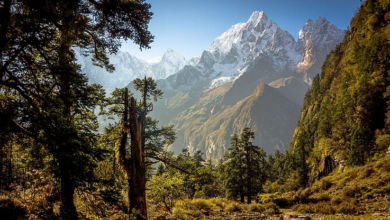
One of the interesting facts about the Manaslu Circuit trek is its vertical journey through Nepal’s biodiversity. The trek begins low, in the humid, subtropical green hills of the Gurung and Hindu villages. You trek through terraced rice fields and lush forests.
Over the course of about two weeks, you ascend through alpine woodlands and waterfalls before reaching the arid, high-altitude trans-Himalayan zone.
This transition is gradual, and it makes the journey feel like a complete experience rather than just a hike to a single viewpoint. One common criticism of high-altitude treks like Everset Base Camp is that one needs to spend the majority of time in the stark and rocky alpine zone. While beautiful, it can be monotonous.
However, it is different in the Manaslu as you physically feel the geography changing under your boots, which adds a raw and adventurous aspect to the experience.
Untouched Trails
The Manaslu Circuit remains a sanctuary for walkers. That is because much of its trail follows ancient footpaths. In contrast, motorable roads have encroached on large sections of the Annapurna Circuit trail. As such, the trekkers are forced to share dusty tracks with jeeps and motorcycles.
But during the trek to Manaslu Circuit, the only traffic you will encounter is a mule train or a herd of yaks. Thus, the modern world remains at a distance, preserving the feeling of an authentic Himalayan journey.
Simple, Communal Accommodation
In the Annapurna and the Everest region, teahouses (where you stay during the trek) have evolved into lodges that often feature attached bathrooms, hot showers, fixed menus, and Wi-Fi. While comfortable, it can sometimes feel like you are trekking from hotel to hotel.
On the other hand, Manaslu’s accommodation is a throwback to what trekking used to be. The teahouses are basic. If you want to be a part of this trek, be ready to eat in a communal dining hall, usually warmed by a central yak-dung stove. Likewise, you will be sleeping in simple rooms with thin plywood walls and using shared facilities.
In the evenings, trekkers huddle around the fire with guides and porters, sharing stories or playing cards. There is no retreating to a private room to scroll through Instagram because the Wi-Fi connection is not good.
This lack of luxury allows you to experience a sense of community. And this atmosphere fosters genuine connections with fellow hikers and locals.
The Raw Challenge of Larkya La Pass
The culmination of the trek is the Larkya La Pass (5,106m), also known as Larke Pass. Reaching here feels like a true mountaineering achievement. Also, unlike the Thorong La on the Annapurna Circuit, which is wider and sees heavier traffic, Larkya La is quieter and more demanding.
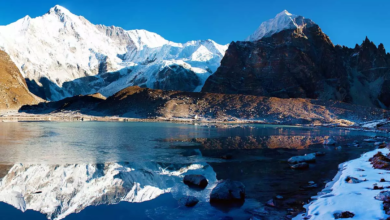
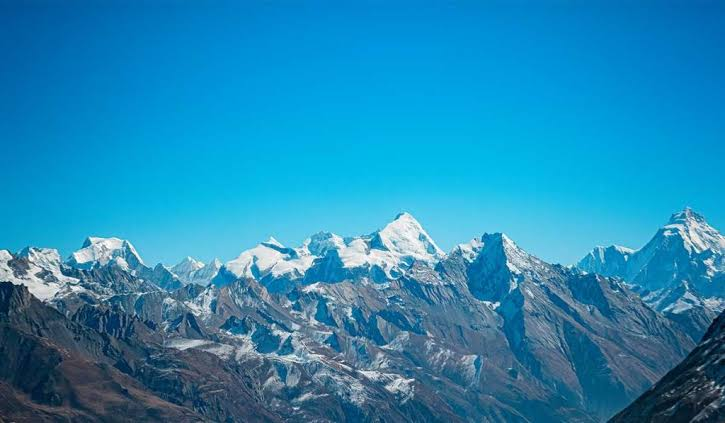
The crossing is long and physically demanding. As such, you need to start the hike to the pass at pre-dawn in freezing temperatures. But the view from the top — staring at Himlung Himal, Cheo Himal, Kang Guru, and Annapurna II — is unadulterated wilderness.
There are no tea shops at the top selling chocolate bars or coffee. It is just you, the prayer flags fluttering in the wind, and the silent presence of the mountains.
The Verdict
Authenticity, in the context of Manaslu, simply means being unpolished. The Manaslu Circuit doesn’t try to make things easy for you. It challenges you. You need a guide to be a part of this trek. In addition, it demands physical resilience and asks you to live with basic amenities for nearly two weeks.
But in exchange, it gives you a version of Nepal that feels honest and uncompromised. It offers a glimpse of the Himalayas before trekking became a carefully packaged commodity.
That said, if your schedule is tight but you still dream of being in the mountains, the Everest Base Camp Helicopter Tour is a perfect alternative. It reduces the weeks of travel into a few hours, while offering a luxurious way to witness the Himalayas.