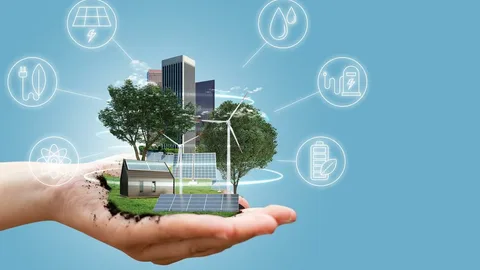
Sustainability is rapidly transitioning from a niche concern to a central consideration in the UK property market. With ambitious national carbon reduction targets, escalating energy costs, and increasing environmental awareness among buyers, green homes are becoming a significant focus for developers, buyers, and industry professionals alike. Estate agents in Durham and across the country are noting a marked increase in buyers specifically enquiring about energy efficiency and sustainable features, signalling a fundamental shift in the market.
The Evolution of Green Property Standards
The UK’s approach to sustainable housing has evolved significantly over the past decade:
From EPC to Future Homes Standard
Energy Performance Certificates (EPCs) introduced in 2007 provided the first standardised measurement of property efficiency. However, the landscape is evolving rapidly:
- The Future Homes Standard, coming into effect in 2025, will require new builds to produce 75-80% less carbon emissions than those built to current standards
- Minimum Energy Efficiency Standards (MEES) now prohibit the letting of properties with EPC ratings below E, with proposals to raise this threshold to C by 2028
- The recently announced £6 billion energy efficiency funding commitment indicates growing policy support for green retrofitting
These regulatory changes are creating both challenges and opportunities across the property sector, with forward-thinking estate agents positioning themselves as advisors on energy efficiency improvements and sustainable features.
The Net Zero Housing Challenge
The UK’s commitment to achieving net zero carbon emissions by 2050 has profound implications for housing:
- Residential buildings account for approximately 20% of the UK’s carbon emissions
- Around 80% of homes that will exist in 2050 have already been built, highlighting the crucial importance of retrofitting
- New construction techniques and materials are rapidly evolving to meet higher sustainability standards
This context is reshaping every aspect of the property market, from development decisions to buyer preferences and property valuations.
Green Features Gaining Market Traction
Several sustainable property features are moving from exceptional to expected in various market segments:
Energy Generation and Management
Self-generation and efficient energy management are becoming significant selling points:
- Solar PV installations have seen a resurgence in popularity as technology costs have decreased while energy prices have risen
- Heat pumps are increasingly common in new builds and higher-end renovations, with installation rates doubling over the past two years
- Smart energy management systems that optimise energy usage throughout the property are becoming standard in premium developments
Market research indicates that these features can add 5-10% to property values in energy-conscious markets, with the premium likely to increase as energy costs rise.
Insulation and Thermal Performance
Building envelope performance has become a focal point for both new construction and retrofitting:
- High-performance insulation standards that exceed building regulations are becoming common in quality new developments
- Triple glazing is transitioning from a premium feature to a standard expectation in higher-end properties
- Thermal bridging reduction and airtightness are increasingly emphasised in both construction and renovation
These improvements deliver visible reductions in energy bills, strengthening their appeal to cost-conscious buyers facing higher energy prices.
Water Efficiency and Management
Water conservation features are gaining prominence, particularly in water-stressed regions:
- Rainwater harvesting systems are increasingly incorporated into new developments
- Greywater recycling for garden irrigation and toilet flushing is becoming more common
- Water-efficient appliances and fixtures are now standard in quality new builds
While perhaps less visible than energy improvements, these water-conscious features are increasingly valued as climate change raises awareness of water security.
Sustainable Materials and Circular Principles
The embodied carbon in building materials is receiving growing attention:
- Timber frame construction is experiencing a resurgence, with cross-laminated timber enabling larger structures
- Recycled and reclaimed materials are increasingly featured in both new builds and renovations
- Low-carbon concrete alternatives are gaining market share in foundation and structural applications
These material choices appeal particularly to environmentally conscious buyers and those seeking homes with distinctive character and reduced environmental impact.
Regional Variations in Green Home Adoption
The transition toward sustainable housing is not occurring uniformly across the UK:
Urban-Rural Divide
Urban and rural areas show different patterns of sustainable feature adoption:
- Urban developments often emphasise energy efficiency, smart technology, and sustainable transport links
- Rural properties more frequently incorporate renewable energy generation, water management, and natural building materials
- The retrofit challenge varies significantly between urban terraces, suburban semis, and rural detached properties
These variations reflect different lifestyle priorities, infrastructure access, and property types across the urban-rural spectrum.
Regional Economic Factors
Economic conditions create significant regional variation in green home demand and supply:
- London and the South East demonstrate the strongest price premiums for high-efficiency properties
- Scotland has shown particular policy leadership in sustainable housing standards
- In regions like the North East, estate agents in Durham report growing interest in energy efficiency primarily driven by cost-saving potential rather than environmental concerns
These regional variations create different business cases for green investments across the country, influencing development and retrofit decisions.
Local Authority Leadership
Local planning policies create substantial variation in new build standards:
- Some forward-thinking local authorities require sustainability standards that significantly exceed national building regulations
- Planning permissions increasingly include conditions related to energy performance, renewable generation, and sustainable drainage
- Local retrofit initiatives and grant schemes vary considerably between regions
This patchwork of local requirements creates challenges for developers operating across multiple regions but also opportunities for innovation.
The Green Premium: Valuation Impacts
The financial impact of sustainability features on property values continues to evolve:
The Emerging Green Premium
Evidence of a “green premium” in UK property values is strengthening:
- Properties with A or B energy ratings achieve sales prices 5-10% higher than equivalent D-rated properties in many markets
- This premium is most pronounced in areas with higher energy costs and environmentally conscious demographics
- Mortgage products offering preferential rates for energy-efficient properties are reinforcing this value differential
This premium is expected to increase as energy costs rise and minimum standards for rental properties are implemented.
From Cost Saving to Value Creation
The business case for sustainable features is shifting from pure cost savings to broader value creation:
- Increased comfort, improved air quality, and reduced noise are increasingly recognised as valuable co-benefits of energy efficiency improvements
- Future-proofing against regulatory changes and carbon taxes is becoming a consideration in investment decisions
- Properties with sustainable features typically achieve faster sales and attract a wider pool of potential buyers
These factors are gradually changing the return-on-investment calculations for green renovations and developments.
The New Build Advantage
New build properties hold distinct advantages in the transition to sustainability:
- Meeting elevated standards is typically more cost-effective in new construction than through retrofitting
- Integrated approach to sustainability can deliver better performance than piecemeal improvements
- Volume builders can achieve economies of scale in adopting new technologies and approaches
This creates both opportunities for developers and challenges for the much larger existing housing stock requiring retrofits.
Industry Adaptation to the Green Transition
The property industry is evolving to address sustainability challenges and opportunities:
Evolving Estate Agency Practices
Estate agents are adapting their practices to the green housing transition:
- Leading estate agents in Durham and nationwide are upskilling to better understand and communicate sustainable features
- Property listings increasingly highlight energy performance and sustainable elements
- Some agencies are developing specialist sustainability teams to advise clients on green improvements before selling
These changes reflect recognition that sustainability knowledge now represents a competitive advantage in the agency sector.
The Growth of Green Retrofit Services
A growing ecosystem of retrofit services is developing to support the transition:
- One-stop-shop retrofit providers that manage entire projects are emerging to simplify the process for homeowners
- Green Home Finance is expanding, with innovative products like Property Assessed Clean Energy (PACE) loans being considered
- Digital platforms that connect homeowners with verified green contractors are gaining traction
This service infrastructure is crucial for scaling up the massive retrofit challenge facing the UK housing stock.
Emerging Professional Standards
Professional standards around sustainable property are becoming more robust:
- Retrofit coordinators are becoming established as key professionals in managing complex home improvements
- Verification and certification of actual energy performance (rather than modelled) is gaining importance
- Training and accreditation in sustainable construction and retrofit are expanding rapidly
These developments are gradually addressing the skills gap that has hampered more rapid adoption of sustainable housing solutions.
The Consumer Perspective: Changing Buyer Priorities
Buyer attitudes toward sustainable features are evolving rapidly:
From Cost to Consciousness
Motivations for seeking sustainable homes are broadening:
- Energy cost savings remain the primary driver, particularly given recent price volatility
- Environmental impact is increasingly cited as a secondary consideration
- Comfort, health, and wellbeing benefits are gaining recognition as important co-benefits
This shift from purely economic to more holistic considerations is gradually changing how sustainable features are valued and marketed.
Knowledge Gap Challenges
Significant consumer knowledge gaps remain:
- Many buyers struggle to interpret EPC information meaningfully
- The long-term value of specific sustainable features is often poorly understood
- Payback periods and return on investment calculations remain challenging for most consumers
This highlights the important role that informed estate agents can play in educating buyers about sustainable property features.
Demographics of Green Demand
Demand for sustainable features varies significantly across buyer segments:
- Younger buyers often express stronger environmental concerns but face greater affordability constraints
- Affluent downsizers frequently lead adoption of high-performance sustainable homes
- Families increasingly prioritise healthy internal environments and future energy security
Understanding these demographic variations is becoming increasingly important for developers and estate agents tailoring their offerings and marketing.
Looking Forward: The Next Decade of Sustainable Housing
Several emerging trends will likely shape the next phase of the UK’s sustainable housing transition:
The Rise of Smart Green Homes
Technology integration will intensify in sustainable housing:
- AI-optimised energy management systems will become standard in new builds
- Home energy systems will increasingly interact with the wider grid, providing storage and demand flexibility
- Real-time performance monitoring will become commonplace, enabling ongoing optimisation
These technologies will transform homes from passive energy consumers to active, intelligent participants in the energy system.
Community Energy Solutions
Sustainability will increasingly extend beyond individual properties:
- Shared community renewable energy schemes are gaining traction in both urban and rural settings
- Neighbourhood heat networks are expanding, particularly in denser urban developments
- Communal green spaces with climate adaptation features are increasingly valued amenities
This community-scale approach often delivers better economics and performance than purely individual solutions.
Circular Economy Housing
Principles of circularity will increasingly influence housing design and construction:
- Design for disassembly will enable easier future adaptation and material recovery
- Material passports that document building components will facilitate future reuse
- Adaptable design that enables changing use over a building’s lifetime will become more common
These approaches address the substantial embodied carbon in buildings while creating more adaptable homes for changing needs.
Conclusion: Preparing for a Sustainable Housing Future
The direction of travel for UK housing is clear—toward higher sustainability standards, improved energy performance, and reduced environmental impact. This transition presents both challenges and opportunities for all property market participants:
- Homeowners can enhance both the comfort and value of their properties by prioritising green improvements
- Buyers increasingly need to consider the energy and environmental performance of potential purchases as both a cost factor and a future-proofing consideration
- Developers who move beyond minimum compliance to embrace leading sustainability practices can achieve market differentiation and value premiums
- Estate agents who develop expertise in sustainability features and their benefits can provide enhanced value to both sellers and buyers
For estate agents in Durham and across the UK, building knowledge about sustainable housing is becoming not just an environmental responsibility but a business imperative. Those who can effectively communicate the value and benefits of green features will be better positioned to serve an increasingly sustainability-conscious market.
As regulatory standards tighten, energy costs rise, and environmental awareness grows, sustainable features will continue their transition from market differentiator to basic expectation. The question for property professionals is not whether to engage with this green transition, but how proactively to embrace it as a core aspect of their service and expertise.