Anthony Harding: A Fearless Springboard Diver Chasing Greatness — and the Brutal Price of Precision
From Ashton-under-Lyne to Olympic Bronze, the rise of Team GB’s men’s 3m synchro standout

Introduction
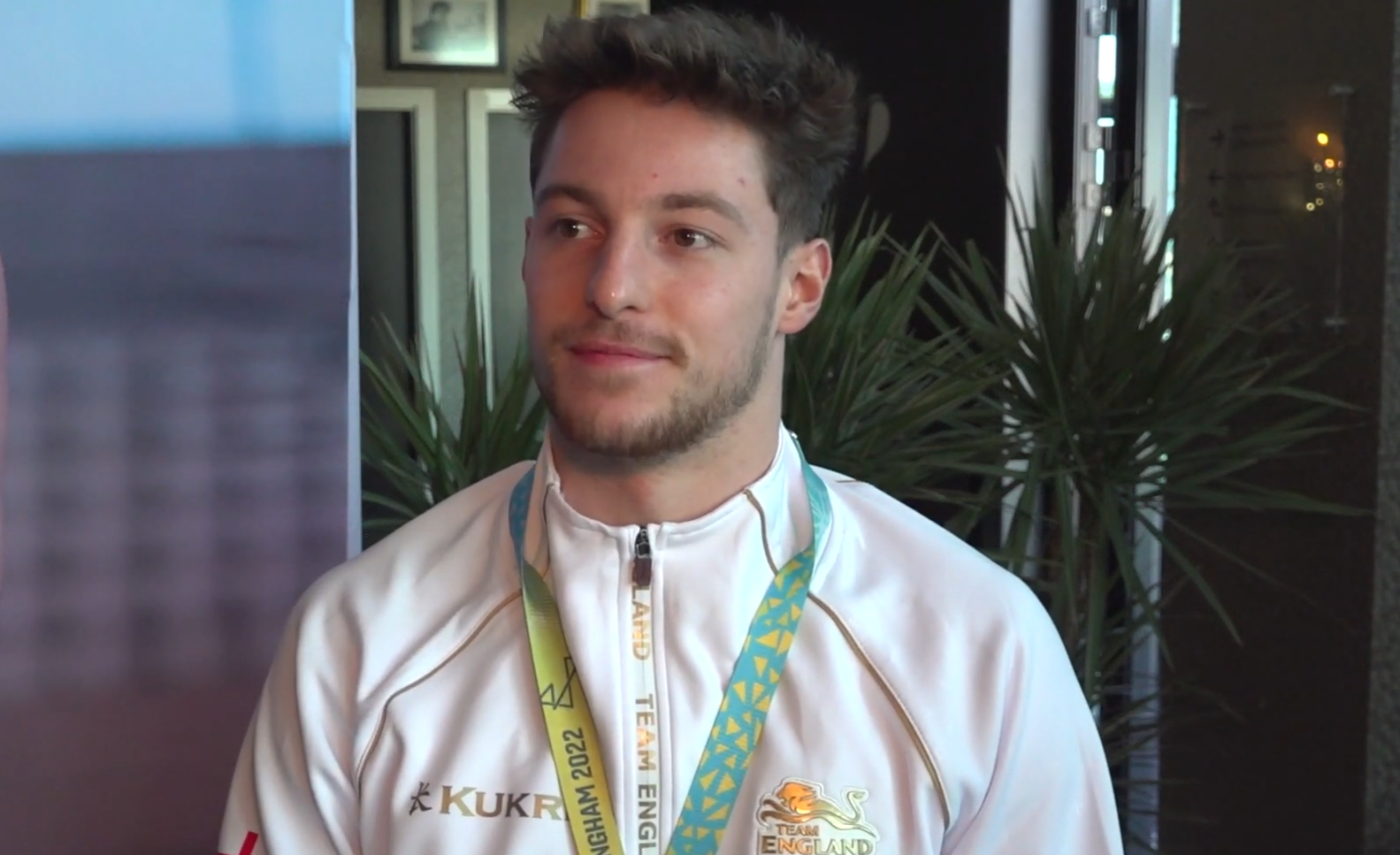
Anthony Harding is a British springboard diver who has built a reputation on control, repeatability, and nerve. In a sport where a tiny mistake can erase months of preparation, he has still climbed onto podiums at the Olympics and World Championships, proving that consistency can be just as powerful as flair.
Table of Contents
ToggleHis story is inspiring, but it is not soft-edged. Diving rewards bravery and punishes hesitation, and Harding’s path includes tough decisions, like leaving home young to chase elite training. The result is a career defined by high stakes, sharp margins, and moments that land perfectly when it matters most.
| Quick Bio | Details |
|---|---|
| Full Name | Anthony Harding |
| Date of Birth | 30 June 2000 |
| Age (as of 3 Dec 2025) | 25 |
| Nationality | British (Great Britain) |
| Birthplace / Hometown | Ashton-under-Lyne, England |
| Sport | Diving |
| Discipline | Springboard (notably men’s 3m synchronized) |
| Height | 1.73 m |
| Weight | 67 kg |
| Education | Elliott Hudson College; Leeds City College (electronic/electrical engineering course) |
Who Is Anthony Harding?
Anthony Harding is best known as an English springboard diver specializing in men’s 3m synchronized springboard. In synchronized events, success is not only about individual execution but also timing, rhythm, and matching positions with a partner. Harding’s profile rose rapidly when he became part of Great Britain’s leading men’s 3m synchro pairing.
At his best, Harding’s diving reads as calm and clinical: a fast approach, a decisive take-off, and clean lines in the air. But that calmness is hard-earned. Competitive diving is a pressure sport, and maintaining form across multiple rounds demands mental discipline as much as physical preparation.
Early Life in Ashton-under-Lyne and the Start of His Diving Journey
Harding is from Ashton-under-Lyne in Greater Manchester. He began diving at a young age—reported as around five—and grew into the sport through structured training rather than overnight luck. That kind of early start matters in diving, where body awareness, flexibility, and technique compound over years.
A major step arrived when he joined City of Leeds Diving Club at age 10. Later, at 16, he moved to Leeds without his family to pursue training more seriously. It is a bold decision for a teenager, and it shows the level of commitment required to reach world-class level in a sport where time and access to expert coaching can shape everything.
Education Alongside Elite Sport
Harding continued his education while developing as an athlete. He studied at Elliott Hudson College and later began a course in electronic/electrical engineering at Leeds City College. Balancing study with high-performance sport is demanding because training, recovery, and travel don’t neatly fit around coursework.
This dual focus highlights an important reality: even elite athletes often build skills beyond sport, especially in disciplines where professional club salaries are not the norm. It also adds context to the mental resilience needed to handle both academic responsibility and the relentless repetition required to perfect competitive dives.
Physical Profile and What It Means for Springboard Diving
Harding is listed at 1.73 m and 67 kg. In springboard diving, the “right” physique is less about size and more about control: speed on the hurdle step, spring conversion off the board, rotational efficiency, and the ability to enter the water with minimal splash.
Body control is the currency of a springboard diver. It shows in posture, tight tuck or pike positions, and the capacity to hit consistent angles under fatigue. Those details are exactly where medals are won—and where they are lost—because judges reward precision and punish messy alignment.
The First Big International Breakthrough
One of Harding’s early headline results came at the 2018 Youth Olympic Games in Buenos Aires, where he won silver in the boys’ 3m springboard. Youth-level success does not guarantee senior dominance, but it often signals that an athlete can handle major-event pressure.
That silver medal mattered because it placed him on a global radar while still young. It also reflected the quality of Britain’s pathway system for diving, where talented athletes can progress from strong domestic coaching environments into international competition with a clear development arc.
The Jack Laugher Partnership and the Demands of Synchro
Harding’s most recognized era has been his men’s 3m synchronized partnership with Jack Laugher. They began training together after the Tokyo Olympic cycle, and the pairing quickly produced major results. In synchro, you can’t simply “do your own dive”; you must mirror timing, height, and rotation so closely that two separate athletes appear as one.
This partnership also illustrates a tough truth: synchro magnifies errors. Even if one diver performs well, a small mismatch in take-off timing or body shape can drag the synchronization score down. The upside is huge—when everything clicks, the performance looks unstoppable and judges respond accordingly.
Career Highlights and Major Medals (Senior Level)
Harding’s medal record at the highest level includes multiple podiums. At the 2022 World Aquatics Championships in Budapest, he won silver in men’s 3m synchronized. He followed with another world silver in 2023 at the World Aquatics Championships in Fukuoka, reinforcing that the pairing’s success was not a one-off.
He also won major titles closer to home, including gold at the 2022 European Championships in Rome and gold at the 2022 Commonwealth Games in Birmingham (representing England) in men’s 3m synchronized. These events are fiercely competitive, and winning across different championships shows the ability to travel, adapt, and deliver under changing conditions.
Paris 2024 — Olympic Bronze and a Defining Moment
The Olympics are the sport’s loudest stage, and Harding reached it with an Olympic bronze medal at the Paris 2024 Games in men’s synchronized 3m springboard. Earning an Olympic medal is a career-shaping achievement because it compresses years of work into a few minutes of execution.
Still, an Olympic medal comes with a shadow: the pressure to repeat it. Fans remember podiums, not near-misses, and the cycle restarts almost immediately. For a springboard diver, that means going back to training to make hard landings look effortless again, even when the sport’s margins stay unforgiving.
2025 Season Momentum and Competitive Staying Power
In 2025, Harding and Laugher won the men’s 3m synchronized national title at the Aquatics GB Diving Championships. Domestic wins matter because they confirm form, protect selection opportunities, and show that an athlete remains sharp outside the spotlight of global finals.
Harding also added another major international medal in 2025: bronze at the World Aquatics Championships in Singapore (men’s 3m synchronized). That result matters because it proves longevity. Staying on the world podium across multiple years is difficult in a sport where confidence can swing quickly and every new cycle brings new challengers.
Funding, Income Context, and the Reality of Olympic Sports
Elite British divers may be supported through the UK Sport system via Athlete Performance Awards (APA), which are funded by the National Lottery and are means-tested. UK Sport has stated that top APA levels can reach figures such as £29,000 annually under the framework effective from 1 April 2025, offering context for how Olympic athletes can be supported.
This is helpful background, but the bigger point is simple: diving success is not automatically matched by celebrity-level earnings. For many athletes, the “job” is training, recovery, and competition, supported by structured funding and limited time windows to capitalize on peak performance.
Legacy So Far
Harding’s legacy is already meaningful: he is an Olympic medallist and a consistent presence on world podiums in men’s 3m synchronized springboard. His story shows how a springboard diver can rise through a clear pathway—early start, strong club environment, and high-level partnerships—to reach the sport’s biggest results.
At the same time, his legacy is still being written. Diving careers can shift quickly, and the next chapters depend on health, consistency, and adapting to judging trends and rising competition. What remains clear is that Harding has already proven he can deliver when the moment is loudest.
Conclusion
Anthony Harding’s career is a study in precision under pressure. From a young start in Ashton-under-Lyne to elite training in Leeds, he has turned commitment into medals—Youth Olympic silver, world podium finishes, and Olympic bronze in Paris 2024. He represents what modern springboard diving demands: technical quality, mental steadiness, and the willingness to pay the daily price of perfect repetition.
If you follow diving for drama, you will find it in Harding’s story too—because every clean entry is earned against the constant risk of error. That is what makes his achievements powerful: he succeeds in a sport that never stops testing you.
FAQ
What is Anthony Harding known for?
He is known as a British springboard diver, especially for men’s 3m synchronized springboard, including an Olympic bronze medal at Paris 2024.
When and where was Anthony Harding born?
He was born on 30 June 2000 and is from Ashton-under-Lyne, England.
What are Anthony Harding’s biggest medals?
Key highlights include Olympic bronze (Paris 2024, men’s 3m synchronized), world silvers (2022 Budapest and 2023 Fukuoka, men’s 3m synchronized), and world bronze (2025 Singapore, men’s 3m synchronized).
Which club is associated with Anthony Harding’s development?
He joined City of Leeds Diving Club at age 10 and later moved to Leeds at 16 to pursue elite training.
What is Anthony Harding’s height and weight?
He is listed at 1.73 m and 67 kg.
Did Anthony Harding study while training as an athlete?
Yes. He studied at Elliott Hudson College and began an electronic/electrical engineering course at Leeds City College.