Zeinab Badawi: A Powerful Global Voice in Journalism and Academic Leadership
From International Broadcasting to President of SOAS, University of London

Introduction
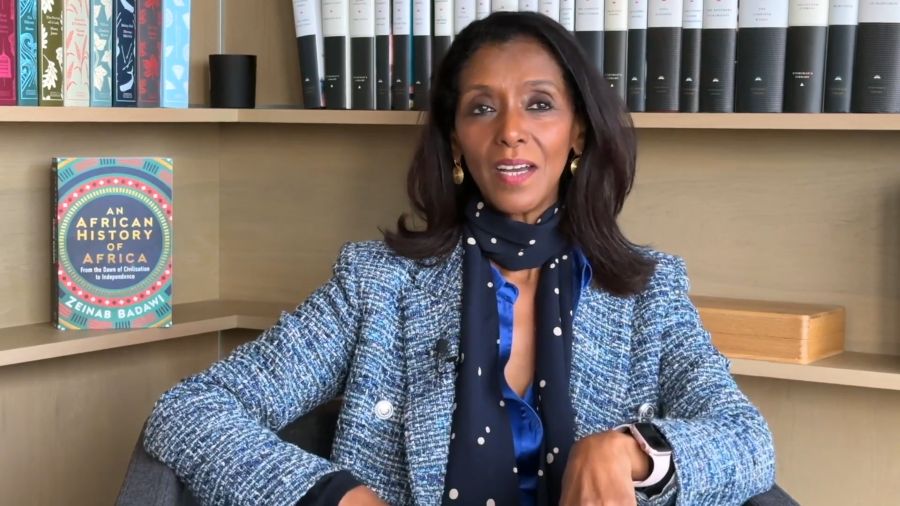
Zeinab Badawi is widely recognised as one of the most authoritative and intellectually rigorous voices in international journalism. Known for her calm but commanding presence, she has spent decades questioning world leaders, shaping global debates, and amplifying perspectives that are often underrepresented in mainstream media. Her career reflects both strength and restraint—strength in confronting power, and restraint in maintaining journalistic balance.
Table of Contents
ToggleBeyond broadcasting, Zeinab Badawi has also built a formidable legacy in education and public service. As President of SOAS, University of London, she stands at the intersection of media, academia, and global cultural dialogue. Her journey is a story of influence earned through credibility rather than controversy, proving that thoughtful journalism can be both powerful and enduring.
Quick Bio of Zeinab Badawi
| Field | Details |
|---|---|
| Full Name | Zeinab Mohammed-Khair Badawi |
| Known As | Zeinab Badawi |
| Date of Birth | 3 October 1959 |
| Age | 66 (as of 2025) |
| Birthplace | Khartoum, Sudan |
| Nationality | Sudanese-British |
| Profession | Journalist, Broadcaster, Academic Leader, Author |
| Current Role | President of SOAS, University of London |
Early Life and Cultural Roots
Zeinab Badawi was born in Khartoum, Sudan, before relocating to the United Kingdom at a very young age. Growing up in London, she was raised in an intellectually rich household where education, public service, and global awareness were deeply valued. This early exposure to different cultures shaped her worldview and later influenced her approach to international journalism.
Her family background is closely linked to education and reform. Coming from a lineage that valued learning and social progress, she developed a natural curiosity about politics, history, and power structures. These formative years laid the foundation for a career defined by thoughtful questioning and cross-cultural understanding.
Education and Academic Foundation
Zeinab Badawi’s academic journey reflects both excellence and purpose. She completed her secondary education in London before going on to study Philosophy, Politics and Economics (PPE) at St Hilda’s College, University of Oxford. This multidisciplinary background equipped her with analytical tools essential for political journalism.
She later earned a master’s degree with distinction in Middle East History and Anthropology from SOAS, University of London. This advanced study deepened her understanding of global histories and societies, strengthening her ability to contextualise international events with nuance and accuracy.
Start of a Distinguished Journalism Career
Zeinab Badawi began her professional career in broadcasting in the early 1980s at Yorkshire Television. Working as a researcher, producer, and presenter, she gained hands-on experience in news production and storytelling. This period was crucial in shaping her disciplined work ethic and editorial standards.
Her early roles demanded adaptability and resilience, qualities that would later define her success on national and international platforms. Rather than chasing visibility, she focused on substance, gradually building a reputation for credibility and professionalism.
Rise Through British Broadcasting
Her transition to national television marked a turning point. Zeinab Badawi became the first presenter of ITV Morning News and later a prominent co-presenter of Channel 4 News. During this phase, she covered major political and global events, earning respect for her measured delivery and incisive questioning.
This period was not without challenges. Operating in highly competitive and male-dominated newsrooms required both confidence and composure. Her success demonstrated that authority in journalism comes not from volume, but from clarity and preparation.
BBC Career and Global Recognition
In 1998, Zeinab Badawi joined the BBC, where her international profile expanded significantly. She became a familiar face on BBC World News, presenting programmes that reached global audiences. Her work on HARDtalk in particular cemented her reputation as a formidable interviewer.
On these platforms, she engaged presidents, prime ministers, and influential thinkers, balancing firmness with fairness. While praised for her intellectual rigor, she also faced criticism from those uncomfortable with direct questioning—an inevitable tension in serious journalism. This balance of praise and critique underscores the impact of her work.
Documentary Work and Authorship
Beyond live broadcasting, Zeinab Badawi has made substantial contributions through long-form storytelling. Through her production company, she developed major documentary projects, including a landmark BBC series on African history produced in partnership with UNESCO.
Her commitment to historical accuracy and African perspectives culminated in her book An African History of Africa. The work reflects her belief that history should be told by those deeply connected to it, challenging simplified narratives while remaining accessible to a broad audience.
Leadership as President of SOAS
Zeinab Badawi’s appointment as President of SOAS, University of London marked a significant expansion of her public role. In this position, she represents one of the world’s leading institutions for the study of Asia, Africa, and the Middle East.
Her presidency is symbolic as well as practical. It reinforces the importance of global scholarship, cultural understanding, and academic freedom at a time when such values are often under pressure. Supporters praise her ability to bridge media, education, and diplomacy, while critics question whether public figures should hold academic leadership roles—an ongoing debate she navigates with professionalism.
Influence, Impact, and Legacy
Zeinab Badawi’s legacy is defined by consistency rather than spectacle. She has helped elevate African and Global South perspectives in international media while maintaining high editorial standards. Her influence extends beyond television screens into education, public discourse, and cultural institutions.
While admired for her authority and intelligence, she has also faced scrutiny—an unavoidable aspect of public life at her level. Yet her career demonstrates that integrity, preparation, and intellectual honesty can sustain long-term influence in both journalism and leadership.
Conclusion
Zeinab Badawi’s journey from a young broadcaster to a global journalist and academic leader is a testament to purposeful ambition. She represents a model of leadership rooted in knowledge rather than noise, and influence built on credibility rather than controversy.
As President of SOAS, University of London, and as Zeinab Mohammed-Khair Badawi the journalist, she continues to shape conversations that matter. Her career reminds us that powerful voices do not need to shout—they need to be heard.
Frequently Asked Questions (FAQ)
Who is Zeinab Badawi?
Zeinab Badawi is a Sudanese-British journalist, broadcaster, author, and academic leader, best known for her work with the BBC and her role as President of SOAS, University of London.
What is Zeinab Badawi known for?
She is known for international political journalism, presenting programmes such as HARDtalk, and for her leadership in education and global cultural dialogue.
What is Zeinab Mohammed-Khair Badawi’s current role?
She currently serves as President of SOAS, University of London, alongside her ongoing work as an author and public intellectual.
Why is Zeinab Badawi influential?
Her influence comes from decades of credible journalism, authoritative interviewing, and her role in promoting global perspectives in media and academia.