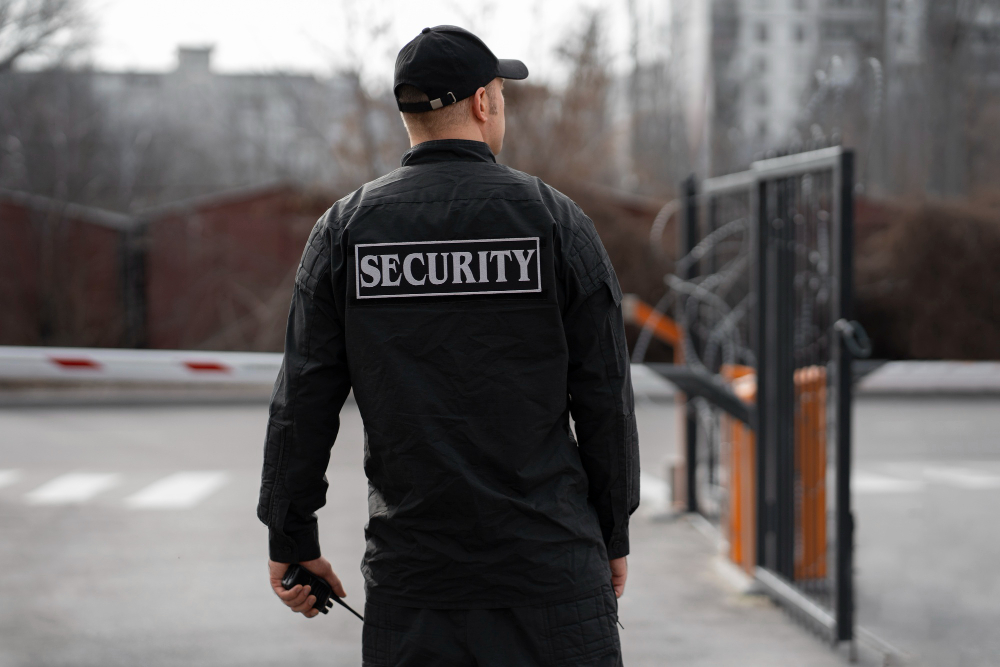
When it comes to securing your business premises, the choice often boils down to two main contenders: physical security guard services or electronic surveillance via CCTV. It’s a debate that has shifted over the years as technology has advanced, yet the human element remains a critical component of safety strategies.
For business owners, facility managers, and security directors, the decision isn’t always straightforward. Is the unblinking eye of a camera enough to deter crime, or do you need boots on the ground to respond to incidents in real-time? The answer, as is often the case in business, depends entirely on your specific risks, budget, and operational needs.
In this guide, we’ll break down both approaches, explore why a hybrid model might be the smartest move, and help you determine which security service company solution fits your sector best.
The Case for CCTV Surveillance
Closed-Circuit Television (CCTV) has become ubiquitous in the UK. From high street retailers to remote industrial estates, cameras are the first line of defence for many.
Cost-Effectiveness
The most significant advantage of CCTV is the cost. Once installed, the ongoing maintenance costs are generally lower than paying an hourly wage for a physical guard. For small businesses operating on tight margins, a robust camera system offers 24/7 monitoring without the salary overheads.
Evidence Gathering
CCTV excels at retrospective action. If a break-in occurs, high-definition footage provides irrefutable evidence for police investigations and insurance claims. Modern systems with night vision and motion tracking ensure that even out-of-hours incidents are captured in clarity.
Remote Monitoring
Technology now allows business owners to view live feeds from their smartphones or laptops anywhere in the world. This peace of mind is invaluable for entrepreneurs who can’t be on-site around the clock.
The Power of Physical Security Guard Services
Despite the rise of tech, the demand for professional security guard services remains high. Why? Because technology cannot replicate human judgement and physical presence.
Immediate Intervention
The primary benefit of a manned patrol is the ability to react instantly. If an alarm goes off or a suspicious individual is spotted, a guard can intervene immediately—challenging intruders, locking down areas, or contacting emergency services while the crime is in progress, not after the fact.
The Deterrence Factor
A visible, uniformed security officer is a far more potent psychological deterrent than a camera. Criminals are opportunistic; they are far less likely to target a site with an active security presence. This is particularly true for sectors like construction or luxury retail, where the assets are high-value and the risk of theft is significant.
Customer Service and Versatility
Security guards often perform dual roles. In corporate offices or hotels, they act as front-of-house staff, signing in guests and providing a welcoming environment while maintaining safety. They can perform fire safety checks, monitor heating systems, and ensure health and safety protocols are followed—tasks a camera simply cannot do.
Sector-Specific Needs: One Size Does Not Fit All
To make the right choice, you must look at your specific industry risks.
Retail and Public-Facing Businesses
For shops and shopping centres, the risk isn’t just theft; it’s anti-social behaviour and staff safety. Here, a hybrid approach often works best. CCTV covers the aisles to catch shoplifters, while security guards provide a reassuring presence at entrances to deter aggression and handle conflicts.
Construction and Industrial Sites
These sites are often large, poorly lit, and full of valuable equipment. They are prime targets for opportunistic theft. While CCTV towers are popular, mobile security patrols are often more effective here. A patrol can check perimeter fences, inspect locked gates, and ensure no unauthorised access has occurred in blind spots that fixed cameras might miss.
Corporate Offices
In an office environment, the focus is often on access control and data security. A security guard service here is as much about concierge duties as it is about protection. They verify ID badges and manage visitor logs, adding a layer of professional scrutiny that automated barriers cannot match.
The Hybrid Approach: The Best of Both Worlds
For many modern businesses, the debate of “guards vs. cameras” is becoming obsolete. The most robust security strategies integrate both.
By combining the relentless monitoring of CCTV with the responsive capability of manned guarding, you close the gaps that exist in singular systems. For example, a “remote monitoring” setup allows off-site teams to watch CCTV feeds and dispatch a mobile security patrol unit immediately if suspicious activity is detected. This model offers the responsiveness of a guard at a fraction of the cost of having someone permanently on-site.
Furthermore, integrating technology such as body-worn cameras on guards or using AI-driven analytics on CCTV to alert guards to unusual movement creates a cohesive security ecosystem.
Making the Decision
When choosing a security service company, ask yourself these three questions:
- What is my primary risk? (e.g., Is it internal theft, external vandalism, or staff safety?)
- What is my budget? (Can I afford 24/7 manned guarding, or is a mobile patrol supported by CCTV more realistic?)
- What is the response time? (If a camera spots a crime, how long until someone arrives? If the answer is “too long,” you need physical presence.)
Security is an investment in continuity. Whether you choose the unblinking eye of the lens or the discerning eye of a professional officer, ensuring your assets are safe is the foundation of a resilient business.