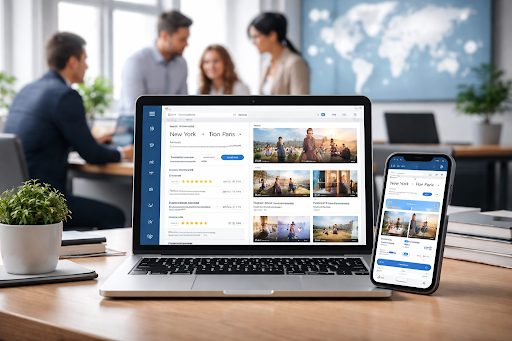
In the digital age, the travel industry has transformed beyond brochures and desk bookings. Travelers today expect seamless online experiences from discovering destinations and comparing prices to booking flights, hotels, and experiences instantly. With this shift in consumer behavior, travel industry software solutions are no longer a luxury; they’re a business imperative.
If you’re in the travel business and exploring ways to stay competitive, you’ve likely asked: “How do I build a booking platform that scales, converts, and delights travelers?” The answer lies in custom travel software and the smartest strategy is to hire custom software development company with specialization in travel solutions. In this post, we’ll guide you through why custom travel software matters, the key features it should include, best practices for building it, and how to choose the right partner.
Why Custom Travel Software Matters?
The travel industry is fiercely competitive. Generic, off-the-shelf systems often fail to differentiate brands or accommodate unique business models. That’s where travel software development makes a difference.
- Unique Branding & Personalized User Experience
Custom software lets you tailor every interaction to your brand. Visitors aren’t just clicking through a template; they’re engaging with a journey that reflects your identity, values, and promise. Personalization features, seamless UI/UX, and tailored recommendations aren’t extras; they’re expectations.
- Scalability & Flexibility
Travel trends evolve rapidly. Whether it’s adding new service lines, integrating additional APIs, or accommodating seasonal traffic spikes, custom solutions are built to grow with you. Modern tech stacks make it easier to expand features or pivot strategy without massive redesigns.
- Higher Efficiency & Automation
Travel businesses handle complex inventory (flights, hotels, cars, tours), pricing algorithms, cancellations, refunds, and customer support. Custom travel software can automate these tasks, significantly reducing manual effort and human error.
- Data Ownership & Security
When you use proprietary systems, you control your data, meaning you can analyze customer behavior, segment markets, and optimize pricing strategies securely. Compliance with GDPR, PCI DSS, and other regulations can be embedded into your platform from day one.
Essential Features in Travel Booking Platforms
Whether you’re a startup travel agency or an established tour operator, key features should be central to your travel agency software development company roadmap:
- Advanced Search & Filtering
Users expect to find what they want instantly. Search tools that filter by date, price, rating, destination, and travel type reduce friction and increase conversion.
- Real-Time Inventory & API Integrations
Integrations with GDS (Global Distribution Systems), hotel databases, airline partners, and car rentals ensure accurate availability and pricing. Real-time updates avoid double bookings and outdated listings.
- Secure Booking & Payment Gateways
Travel bookings involve financial transactions across borders. Multiple payment options, currency conversions, fraud prevention, encrypted storage, and compliance with security standards instill trust.
- Personalized Recommendations
AI-driven suggestions based on search history improve engagement and increase upsell opportunities. These can be recommended tours, ancillary services, or destination guides.
- User Accounts & Travel Portals
Allow users to create profiles, save trips, track itineraries, and receive updates. Loyalty programs, membership perks, and exclusive deals can be integrated into the portal.
- Mobile Optimization
Travelers increasingly book via smartphones. A responsive or dedicated mobile app experience is critical for conversions and customer satisfaction.
Travel Industry Software Solutions: More Than Just Booking
Aeroplane tickets and hotel rooms are just the beginning. The most successful travel platforms integrate a suite of services that elevate the traveler experience and boost revenue:
Tour Package Customization
Allow travelers to build their own packages, choose destinations, activities, accommodations, and add-ons, empowering flexibility and control.
Travel Management Tools
For corporate clients, features like expense tracking, approval workflows, and reporting dashboards make the platform indispensable.
Chatbots & Virtual Assistants
Instant support features reduce customer service costs and improve responsiveness. AI chatbots can handle common queries from flight status to cancellation policies.
Analytics & Reporting Dashboards
Business owners need insights, not just data. Dashboards that show booking trends, conversion funnels, and customer segmentation help with strategic decisions.
Multilingual & Multicurrency Support
To attract global travelers, your platform must speak their language both literally and financially.
How to Successfully Build Your Travel Booking Platform?
Building a travel booking platform isn’t a side project, it’s a strategic investment. Here’s a step-by-step approach:
- Define Clear Goals & Requirements
Start with a discovery phase. What types of travel services will you offer? Who are your target users? What markets are you entering? Clear documentation of features, workflows, and user journeys sets a strong foundation.
- Choose the Right Tech Stack
Your technology choices influence performance, scalability, and future enhancements. Modern travel platforms often use:
- Front-end: React, Angular, or Vue.js
- Back-end: Node.js, Python (Django/Flask), or .NET
- Cloud: AWS, Azure, or Google Cloud
- Database: PostgreSQL, MongoDB, or MySQL
- Mobile: Flutter or React Native
A seasoned travel software team will recommend the best fit for your objectives.
- Prioritize Seamless Integrations
From API connections to third-party travel inventories (GDS, payment systems, loyalty programs), ensure smooth data flow. Rigorous testing is key here, especially for real-time booking engines.
- Build with Security & Compliance
Travel platforms handle sensitive user data and payments. Security measures like encryption, firewalls, secure authentication, and compliance checks should be part of your roadmap from day one.
- Test User Experience (UX) Thoroughly
Usability testing reveals friction points that could kill conversions. Conduct A/B tests, gather user feedback, and iterate until the experience feels effortless.
- Launch & Evolve Continuously
Post-launch support and feature enhancement aren’t optional. Monitor performance, fix bugs, refine workflows, and introduce features based on customer behavior and feedback.
Why You Should Hire the Right Development Partner?
Travel software development is complex, and success hinges on expertise. That’s why the best businesses choose to hire custom software development company rather than attempt DIY or templated systems.
Here’s why:
Industry Expertise
An experienced partner understands travel tech challenges, such as dynamic pricing, inventory management, and API complexities.
Faster Time to Market
Skilled teams help you launch faster with fewer iterations, accelerating your revenue journey.
Quality & Reliability
Professional developers write clean code, apply best practices, and ensure your platform performs reliably under load.
Dedicated Support
Your software evolves with the business. A reliable partner offers updates, maintenance, and scalability planning, keeping your platform optimized over time.
If your goal is to hire custom software development agency that can deliver performance, creativity, and long-term value, look for teams with proven travel tech portfolios.
How to Choose Your Travel Software Development Partner?
Selecting the right development company is as important as the platform itself. Here’s a quick checklist:
Proven Portfolio in Travel Industry Software Solutions
- Look for past projects in booking engines, travel portals, and itinerary apps.
Strong Technical Expertise
- Check for full-stack capabilities and fluency with modern architectures.
Agile Development Practices
- Flexible, iterative delivery keeps your software aligned with changing priorities.
Transparent Communication
- Regular updates, clear timelines, and documented milestones matter.
Support & Maintenance
- Post-launch support ensures stability and future growth.
Testimonials & Case Studies
- Real client feedback gives confidence in execution quality.
Final Thoughts
Travel is an experience, and your software should reflect that. In a world where travelers expect fast, intuitive, and personalized booking journeys, building a custom platform isn’t just smart, it’s essential.
From improved user experience to powerful automation and data control, travel software development offers measurable returns. And by choosing to hire custom software development company with expertise in Travel Industry Software Solutions, you’re positioning your business for growth, differentiation, and long-term success.
Ready to build your travel booking platform? Start today and turn every traveler interaction into a competitive advantage.