Automotive Custom Metal Parts Manufacturing: High-Volume Solutions That Actually Scale

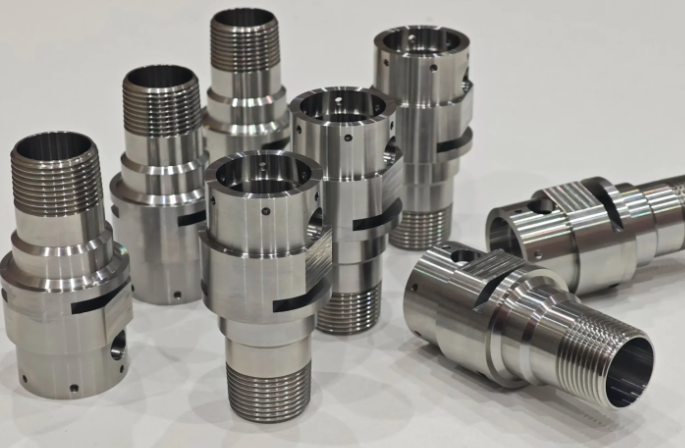
In 2023, a Michigan transmission component supplier faced $340,000 losses scaling from 800-piece prototype run to 45,000-unit production contract. Initial approach: replicate low-volume CNC setup with added shifts. Results: 27% scrap rate from tool wear inconsistency, 6-week delivery delay, $18/part cost vs $12 budgeted. Root cause: treating high-volume manufacturing as “more of the same” instead of fundamentally different process requiring tooling investment, automation, and statistical process control.
This exemplifies custom metal parts manufacturing reality: automotive high-volume production demands different technology, quality systems, and cost structures than prototype/low-volume work. This guide uses February 2026 industry data, volume breakpoints, and method selection frameworks enabling successful scaling.
High-Volume Automotive Manufacturing Requirements
Automotive production distinctiveness:
- Tolerances: ±0.01mm (±0.0004″) typical critical dimensions, ±0.02-0.05mm general features
- Quality standards: IATF 16949 (automotive quality management), PPAP (Production Part Approval Process), ongoing SPC (Statistical Process Control)
- Volume consistency: Identical parts across 10,000-500,000+ units annually
- Uptime requirements: 85-95% OEE (Overall Equipment Effectiveness) typical
- Cost pressure: Continuous year-over-year price reduction (1-3% annually contractual)
Critical insight: Prototype success (engineering validation) doesn’t predict production success (manufacturing capability at scale and cost targets).
Manufacturing Method Selection by Volume
| Method | Economic Volume Range | Tooling Cost | Unit Cost (typical) | Lead Time | Best Applications |
|---|---|---|---|---|---|
| CNC Machining | 1-50,000 annual | $500-$15K (fixtures) | $8-$85/part | 2-6 weeks | Complex geometry, tight tolerances, design flexibility |
| Stamping | 50,000-5M+ annual | $25K-$250K (dies) | $0.50-$8/part | 12-20 weeks tooling | Sheet metal brackets, panels, structural parts |
| Die Casting | 25,000-2M+ annual | $40K-$300K (molds) | $3-$25/part | 14-24 weeks tooling | Aluminum housings, complex 3D shapes |
| Forging | 10,000-1M+ annual | $30K-$200K (dies) | $4-$35/part | 12-18 weeks tooling | Strength-critical (crankshafts, suspension) |
| MIM (Metal Injection Molding) | 100K-10M+ annual | $50K-$150K (molds) | $0.25-$5/part | 16-22 weeks tooling | Small complex parts (<100g), high volume |
Volume breakpoint decision:
- <5,000 annual: CNC metal machining economical (tooling amortization minimal)
- 5,000-50,000: Hybrid (CNC for complexity + stamping/casting for simple features)
- 50,000: Dedicated tooling methods (stamping/casting/forging) justified by volume
Tooling ROI calculation example (bracket component):
- CNC: $12/part × 30,000 units = $360,000 total
- Stamping: $80,000 tooling + ($2/part × 30,000) = $140,000 total
- Breakeven: ~10,000 units (where tooling investment pays off)
CNC Metal Machining for Automotive High-Volume
CNC advantages at scale:
- Design flexibility (engineering changes without tooling replacement)
- Multi-axis capability (complex geometries single setup)
- Tight tolerances (±0.005-0.02mm repeatability)
- Material versatility (aluminum, steel, stainless, titanium)
High-volume CNC optimization strategies:
Automation integration: Pallet changers, robotic loading, bar feeders enabling lights-out operation (16-24 hour unmanned runtime). ROI typically 18-36 months through labor reduction + increased utilization.
Tool life management: Predictive replacement schedules (not reactive breakage). Carbide insert costs $8-$25 each; premature replacement wastes money, delayed replacement causes scrap. Optimal: replace at 85-90% expected life based on part count.
Process optimization: Reducing cycle time 15% through toolpath optimization, better work holding, simultaneous operations often more impactful than faster machines.
Case study: Engine bracket manufacturing (January 2025)
Application: 35,000 annual aluminum 6061-T6 brackets, 4 critical dimensions ±0.015mm, 6 holes ±0.025mm positional tolerance Initial CNC approach: Single-spindle vertical machining center, manual loading, 8.5-minute cycle time, $28/part cost Optimized approach:
- Horizontal machining center with pallet changer (2 pallets)
- Tombstone fixture holding 4 parts
- Cycle time: 6.2 minutes per 4-part batch = 1.55 min/part
- Automation enabled 18-hour daily runtime vs 16-hour manual
- Results: $11/part cost (61% reduction), 42,000 capacity (20% headroom), 99.4% on-time delivery
Investment: $185,000 (machine upgrade + fixture tooling) Payback: 14 months through labor reduction ($85K/year) + increased capacity capturing additional orders
Critical Bottlenecks Preventing Successful Scaling
Tool wear unpredictability: Manual inspection-based replacement creates 8-15% scrap spikes when tools fail mid-production. Solution: Tool life counters, automatic offset compensation, predictive monitoring.
Material batch variation: Aluminum alloy hardness varying 10-15 HB between lots changes machining behavior, surface finish, tool life. Solution: Incoming material certification, test cutting protocol, adaptive feeds/speeds.
Process drift: Temperature changes (±5°C shop environment) cause ±0.008-0.015mm dimensional shift on precision parts. Solution: Thermal compensation, climate-controlled production areas for critical operations.
Inspection bottlenecks: Manual CMM inspection (15-20 minutes/part) unsustainable at volume. Solution: In-process probing (30-second verification), automated vision systems, SPC monitoring (measure every 25th part, trend analysis).
Automotive Quality Standards: IATF 16949 and PPAP
IATF 16949 (International Automotive Task Force quality standard) mandates:
- Advanced Product Quality Planning (APQP): Structured development from design through production
- Failure Mode Effects Analysis (FMEA): Risk assessment preventing defects
- Statistical Process Control (SPC): Real-time capability monitoring (Cpk ≥1.33 required)
- Measurement System Analysis (MSA): Ensuring measurement equipment capable
- Continuous improvement: Year-over-year defect reduction targets
PPAP (Production Part Approval Process) requires submitting:
- Dimensional inspection reports (full layout showing all features measured)
- Material test reports (chemistry, mechanical properties, certifications)
- Process Flow Diagrams showing manufacturing sequence
- FMEA documentation identifying risks/controls
- Capability studies (Ppk/Cpk data demonstrating process stability)
- Appearance approval (if cosmetic requirements exist)
- Sample parts from production tooling/processes
Non-compliance consequences: OEM rejection delaying production launch 4-12 weeks, potential contract termination, lost future business.
Design for Manufacturability (DFM) Impact
DFM optimization examples:
Corner radii: Changing internal corner from sharp (0.5mm radius requiring 1mm endmill, 4 passes, 2.8 min) to 3mm radius (8mm endmill, single pass, 0.4 min) reduced cycle time 40% while improving tool life 3×.
Hole standardization: Part requiring 6.2mm, 8.7mm, 12.4mm holes (custom tooling, $180/tool set) redesigned to 6mm, 9mm, 12mm (standard drills, $35/set) saving $145 per tool replacement + reduced cycle time (standard tools run faster).
Tolerance rationalization: Applying ±0.01mm to all features (regardless of function) increased inspection time 35%. Analysis showed only 4 of 18 dimensions actually required tight tolerance—relaxing others to ±0.05mm reduced inspection 40% without affecting function.
Wall thickness optimization: Aluminum housing designed 2.5mm walls throughout (conservative) analyzed via FEA showing 1.8mm adequate for non-structural areas—material savings 22%, machining time reduced 18% (less material removal).
Material Selection for Automotive Applications
Common automotive metals:
- Aluminum 6061-T6: General structural (tensile 290 MPa, good machinability, $4-7/kg)
- Aluminum 7075-T6: High-strength aerospace-grade (tensile 570 MPa, challenging machinability, $12-18/kg)
- Steel 1018: Low-carbon mild steel (economical, weldable, $2-4/kg)
- Steel 4140: Medium-carbon alloy (strength + machinability balance, $5-9/kg)
- Stainless 303: Free-machining stainless (corrosion resistance, $8-15/kg)
- Stainless 316L: Superior corrosion resistance (difficult machining, $12-22/kg)
Cost Structure Breakdown (High-Volume Production)
Typical automotive component cost allocation (CNC machined, 25,000 annual volume):
- Material: 30-45% (raw stock + scrap factor)
- Machine time: 20-35% (hourly rate × cycle time)
- Tooling consumption: 8-15% (inserts, drills, endmills)
- Labor: 5-12% (setup, loading if not automated, inspection)
- Overhead: 15-25% (facilities, quality systems, administration)
- Profit margin: 8-18% (competitive automotive market)
Cost reduction levers by impact:
- Cycle time reduction (direct machine hour savings): 1% cycle time = 0.25-0.4% total cost
- Automation (labor + utilization): 15-30% total cost reduction potential
- Material optimization (design efficiency): 5-15% savings
- Tool life extension: 2-8% savings
- Scrap reduction: 1-5% savings (assuming reasonable baseline <3%)
Volume Progression Strategy
Recommended scaling approach:
Phase 1 (Prototype, <100 units): Manual CNC machining, offline programming, full inspection, establish process baseline
Phase 2 (Pilot Production, 100-2,000): Semi-automated loading, in-process probing, SPC monitoring, PPAP submission, process validation
Phase 3 (Low-Volume Production, 2,000-10,000): Dedicated fixtures, optimized programs, sampling inspection (every 25th part), capability studies confirming Cpk >1.33
Phase 4 (High-Volume, >10,000): Full automation evaluation, potentially transition to stamping/casting if volumes justify tooling, or optimize CNC with pallets/robots for continued production
FAQs: Automotive Custom Metal Parts Manufacturing
- What is custom metal parts manufacturing for automotive?
Production of precision automotive components from metals using CNC, stamping, or casting, meeting strict quality, tolerance, and volume requirements. - How much does automotive CNC machining cost?
Costs range from $8 to $280 per part, depending on complexity, material, tolerance, and production volume, decreasing with scale. - What certifications are required for automotive manufacturing?
Key certifications include IATF 16949, ISO 9001, and PPAP approval, ensuring quality, compliance, and eligibility to supply automotive OEMs. - Can CNC machining handle high-volume automotive production?
Yes, CNC supports high-volume production with automation, offering precision and flexibility, but less cost-effective than stamping at extreme volumes. - What is PPAP in automotive manufacturing?
PPAP is a formal approval process proving manufacturing capability through documentation, inspections, and samples before mass automotive production begins. - How do you scale from prototype to high-volume automotive production?
Scale through prototype validation, pilot runs, automation, and full production, optimizing processes, quality systems, and costs over 12–24 months.
Strategic Automotive Manufacturing Success
Custom metal parts manufacturing for automotive high-volume demands fundamentally different approach than prototype/low-volume work: dedicated automation, statistical process control, IATF 16949 quality systems, and continuous cost reduction focus. CNC metal machining remains competitive through 50,000+ annual volumes when optimized with automation, appropriate fixtures, and process discipline.
Success factors: volume-appropriate method selection (avoiding premature tooling investment or late automation), DFM optimization reducing cycle time 15-40%, PPAP documentation preventing launch delays, and cost structure understanding enabling realistic pricing.
What automotive manufacturing scaling challenge is preventing confident production commitment—volume breakpoint uncertainty, IATF 16949 compliance complexity, automation ROI analysis, or PPAP documentation requirements?