Sir John Kingman: Visionary Leader and Controversial Reformer in UK Finance and Governance
From steering Britain through the financial crisis to reshaping corporate governance, his journey blends achievement with debate

Introduction
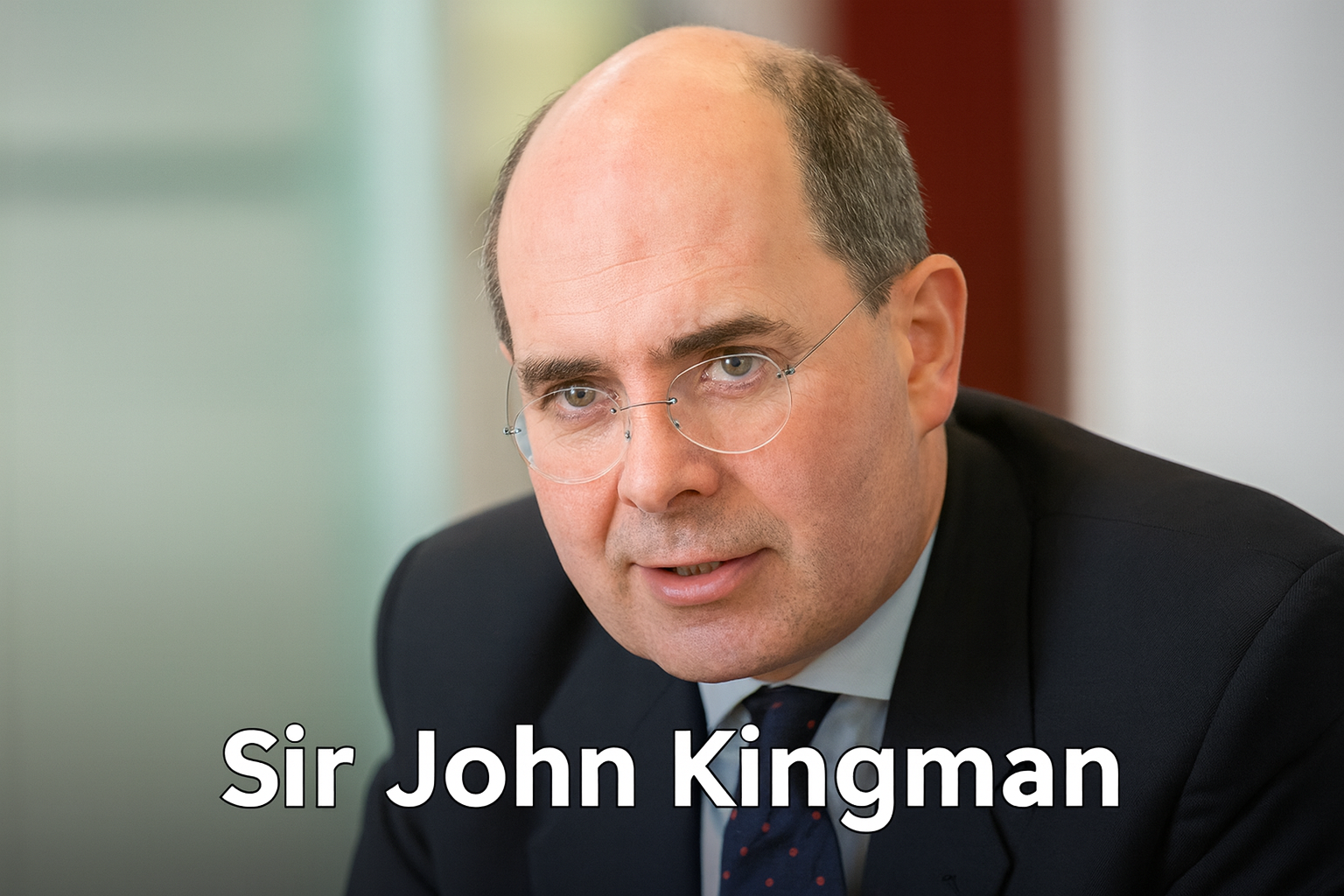
Sir John Kingman stands among the most influential British business leaders of the 21st century, known for his strategic acumen, public service dedication, and leadership in both government and the corporate world. His career has spanned journalism, civil service, financial crisis management, and boardroom governance, making him a prominent figure in the UK’s financial and policy landscape. While celebrated for his decisive actions during critical moments, his approaches have also attracted scrutiny, adding complexity to his legacy.
With a career that bridges the highest levels of government and private enterprise, Sir John has left a lasting mark on institutions such as HM Treasury, UK Research and Innovation (UKRI), Legal & General, and Barclays. His journey reflects both the challenges and triumphs of modern leadership in times of economic uncertainty and structural change.
Quick Bio
| Attribute | Details |
|---|---|
| Full Name | Sir John Oliver Frank Kingman KCB FRS |
| Date of Birth | 24 April 1969 (Age: 56) |
| Nationality | British |
| Education | Westminster School; St John’s College, Oxford (Modern History, First-class) |
| Current Roles | Chair of Legal & General Group plc, Chair of Barclays Bank UK plc, Deputy Chair of the National Gallery |
| Former Roles | Second Permanent Secretary, HM Treasury; CEO of UK Financial Investments; Chair of UKRI |
| Key Recognition | Knight Commander of the Order of the Bath (KCB), Fellow of the Royal Society (FRS) |
Early Life and Education
Born on 24 April 1969, Sir John Kingman grew up with a strong intellectual influence, being the son of eminent mathematician Sir John Frank Charles Kingman. His early academic path was defined by excellence, securing a Queen’s Scholarship to Westminster School, one of the UK’s most prestigious institutions.
He then went on to St John’s College, Oxford, where he read Modern History and graduated with a first-class degree. His academic achievements were later honoured when he was named an Honorary Fellow of the college. This foundation in history, combined with analytical skills and communication ability, set the stage for his versatile career.
Journalism and Corporate Beginnings
Sir John’s professional journey began in journalism, working as a Lex columnist for the Financial Times between 1995 and 1997. This role sharpened his ability to analyse complex economic and corporate developments, translating them into accessible insights for the public.
After his time in the media, he transitioned into the corporate sphere, joining BP in 1997 and working in the Chief Executive’s office. These early roles built his understanding of both public perception and corporate operations—skills that would prove vital in later leadership positions.
Civil Service and HM Treasury Leadership
Sir John’s most defining public service chapter came during his years at HM Treasury, where he ultimately rose to the role of Second Permanent Secretary. His portfolio covered business, financial services, infrastructure, and science policy, positioning him at the centre of critical decision-making.
His leadership was most visible during the 2007–2009 global financial crisis. Sir John played a central role in orchestrating the nationalisation of Northern Rock, leading negotiations for a £37 billion recapitalisation of RBS, Lloyds, and HBOS, and overseeing major asset sales. These moves stabilised the financial system but also sparked public debate about government intervention and long-term market impacts.
UK Financial Investments and Market Reforms
Following the crisis, Sir John became the inaugural Chief Executive of UK Financial Investments (UKFI), the government body responsible for managing the public’s shareholdings in bailed-out banks. Under his leadership, UKFI began the complex process of selling stakes in Lloyds and RBS while aiming to maximise returns for taxpayers.
Beyond crisis management, he influenced reforms in areas such as competition policy, migration, infrastructure planning, and science funding. His strategic thinking often aimed to combine economic growth with long-term structural improvements.
Transition to the Private Sector
In 2010, Sir John joined Rothschild as Global Co-Head of the Financial Institutions Group. This role allowed him to apply his government experience to advising major financial institutions on strategic transactions. His time in the private sector broadened his corporate network and deepened his understanding of global capital markets.
By 2016, his reputation for leadership in complex environments led to his appointment as Chair of Legal & General Group plc, one of the UK’s leading financial services companies. This marked the beginning of his most prominent phase in corporate governance.
Leadership at Legal & General and Barclays
As Chair of Legal & General, Sir John has overseen strategies to strengthen the company’s role in asset management, insurance, and long-term infrastructure investment. His tenure has been marked by a focus on sustainability, technological innovation, and the delivery of strong shareholder returns.
In 2023, he added another significant responsibility—Chair of Barclays Bank UK plc, the retail banking arm of Barclays PLC. This role placed him at the heart of one of the UK’s largest banking brands, where he contributes to shaping customer service strategies, regulatory compliance, and market positioning.
Science and Innovation Leadership
From 2016 to 2021, Sir John served as the first Chair of UK Research and Innovation (UKRI), overseeing approximately £8 billion in annual science and innovation funding. He worked to create a unified, strategic approach to supporting research excellence and driving innovation across the UK economy.
His commitment to science governance was further reflected in his election as a Fellow of the Royal Society (FRS), acknowledging his role in championing UK research.
Latest Developments and Public Engagement
In recent years, Sir John has remained active in public policy debates, contributing to reports and think-tank discussions on economic management, governance reform, and the future of public services. His 2018 review of the Financial Reporting Council recommended significant regulatory changes, many of which were adopted, reshaping the UK’s audit and corporate oversight framework.
In 2025, he provided a foreword to a policy report addressing civil service efficiency and pay, signalling his continued interest in government performance and reform.
Legacy and Impact
Sir John Kingman’s legacy is multifaceted. On one hand, he is celebrated as a stabilising force during one of the UK’s most challenging economic crises and a visionary leader in science funding and corporate governance. On the other, his decisions—particularly around bank rescues and asset sales—remain subjects of debate among economists and policymakers.
His ability to move between public service and private enterprise while influencing policy, governance, and market direction demonstrates a rare versatility. Whether viewed as a reformer, strategist, or crisis manager, his contributions have shaped the UK’s economic and institutional landscape for decades to come.
Conclusion
Sir John Kingman embodies the complexities of modern leadership—balancing the demands of political oversight, corporate responsibility, and public trust. His career reflects both decisive action in times of crisis and a willingness to challenge established systems in pursuit of long-term reform. While opinions on his methods may differ, his influence on the UK’s financial and governance structures is undeniable, ensuring his place in the history of British leadership.
FAQ
Who is Sir John Kingman?
He is a British businessman and former senior civil servant, currently serving as Chair of Legal & General Group plc and Barclays Bank UK plc.
What is Sir John Kingman best known for?
He is known for his leadership during the 2007–2009 financial crisis, his role as CEO of UKFI, and his tenure as the first Chair of UKRI.
What is his educational background?
He attended Westminster School as a Queen’s Scholar and graduated with a first-class degree in Modern History from St John’s College, Oxford.
What major companies has he led?
Legal & General Group plc, Barclays Bank UK plc, and UK Financial Investments.
What recognition has he received?
He has been knighted as a Knight Commander of the Order of the Bath (KCB) and is a Fellow of the Royal Society (FRS).