Jack Parsons: The Visionary Rocket Pioneer and Controversial Occultist
A Genius Who Revolutionized Rocketry but Faced a Mysterious and Tragic End

Introduction
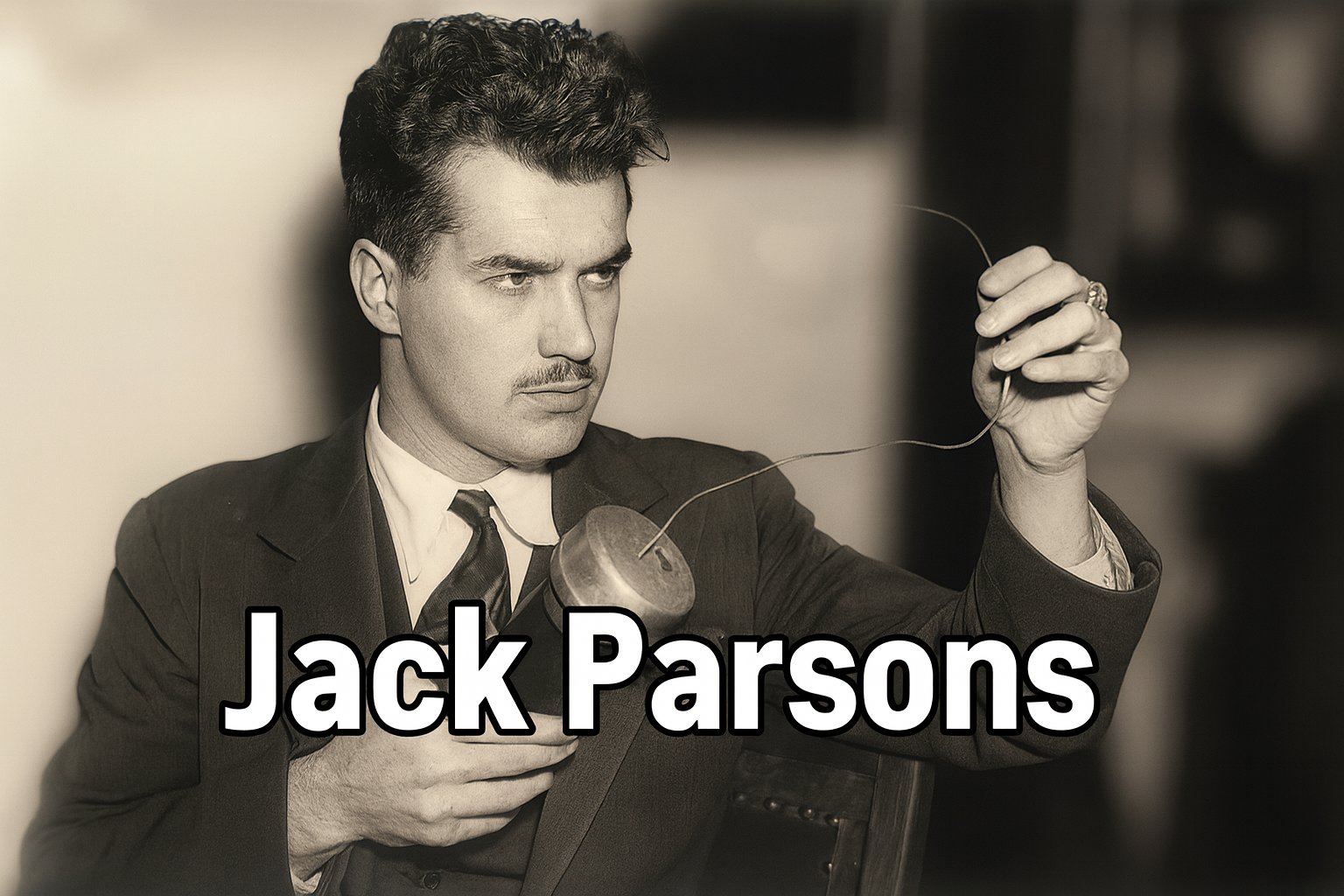
Jack Parsons was one of the most influential figures in the history of modern rocketry. Known as both a brilliant American chemist and a passionate dreamer, he played a key role in developing rocket technology that laid the foundation for space exploration. His life, however, was as extraordinary as it was controversial. Parsons was not only a co-founder of the Jet Propulsion Laboratory (JPL) and Aerojet Engineering Corporation, but he also became deeply involved in occult practices, which shocked the scientific community. His life story reflects both the heights of innovation and the depths of mystery, making him a truly remarkable yet misunderstood figure.
In this article, we explore his complete journey—from his early childhood to his groundbreaking career, personal beliefs, and the mysterious events surrounding his untimely death. Jack Parsons’ legacy continues to influence both the scientific and cultural worlds, inspiring admiration and intrigue even decades after his passing.
Quick Bio
| Category | Details |
|---|---|
| Full Name | John Whiteside Parsons (born Marvel Whiteside Parsons) |
| Date of Birth | October 2, 1914 |
| Birthplace | Los Angeles, California, U.S. |
| Date of Death | June 17, 1952 |
| Place of Death | Pasadena, California, U.S. |
| Nationality | American |
| Parents | Marvel H. Parsons (Father), Ruth Whiteside Parsons (Mother) |
| Spouses | Helen Northrup (div. 1945), Marjorie Cameron (m. 1946) |
| Education | Pasadena Junior College, Stanford University, USC (no degree) |
| Key Contributions | Co-founder of GALCIT, Aerojet, and JPL; development of JATO technology |
| Cause of Death | Laboratory explosion (accidental) |
| Legacy | Rocketry pioneer, cultural icon |
Early Life of Jack Parsons
Jack Parsons was born on October 2, 1914, in Los Angeles, California. His original name was Marvel Whiteside Parsons, but after his parents divorced, his mother changed his name to John Whiteside Parsons, and he was commonly known as Jack. Raised in an affluent neighborhood of Pasadena, he grew up surrounded by privilege, but his childhood was far from easy. His father left the family when Jack was very young, leaving his mother to raise him alone.
From a very young age, Jack showed a keen interest in mythology, science fiction, and space travel. This fascination drove him to experiment with small-scale rockets in his backyard. By the age of 14, alongside his friend Edward Forman, Jack began conducting homemade experiments with explosives and rocket fuels. This early passion would later define his career and place him among the pioneers of modern rocketry.
Education and Foundation of a Career
Parsons attended Pasadena Junior College, Stanford University, and USC, but financial difficulties during the Great Depression prevented him from completing a degree. Despite this, his determination and natural talent for chemistry and engineering set him apart. At just 18, he secured a job at Hercules Powder Company, where he gained valuable hands-on experience with explosives.
His unique skills and fearless experimentation attracted the attention of the scientific community. In 1934, Jack co-founded the GALCIT Rocket Research Group at the California Institute of Technology (Caltech) with Edward Forman and Frank Malina. Under the mentorship of Theodore von Kármán, the group embarked on revolutionary research that would change the course of aerospace history.
Breakthroughs in Rocket Science
The GALCIT Group
The GALCIT Rocket Research Group achieved its first major success on October 31, 1936, when they successfully launched a small solid-fuel rocket. This experiment marked a pivotal moment in the development of American rocket science. Jack’s innovative thinking and chemical expertise were instrumental in creating new fuel formulas that were both powerful and efficient.
Jet-Assisted Take-Off (JATO)
During World War II, Parsons and his team worked on military projects, leading to the invention of Jet-Assisted Take-Off (JATO) systems. These devices enabled heavily loaded aircraft to take off from shorter runways, providing a significant advantage to the U.S. military. This innovation was a direct result of Jack Parsons’ determination and vision.
Founding Aerojet and JPL
In 1942, Parsons co-founded Aerojet Engineering Corporation, which later became one of the most important aerospace companies in the United States. A year later, the GALCIT group evolved into the Jet Propulsion Laboratory (JPL). Today, JPL is part of NASA and continues to lead groundbreaking space exploration missions, a testament to Parsons’ lasting contributions.
Occult Beliefs and Personal Life
Beyond his scientific career, Jack Parsons lived a complex personal life that drew significant controversy. In 1939, he and his first wife, Helen Northrup, joined the Ordo Templi Orientis (O.T.O.), an occult organization founded by Aleister Crowley. By 1942, Parsons had become the leader of the Pasadena branch, known as the Agape Lodge.
Jack believed in Thelema, a spiritual system centered on individual freedom and mystical exploration. During this time, he met Marjorie Cameron, whom he married in 1946. Their relationship was deeply connected to Parsons’ spiritual practices. However, his involvement with the occult created tension with his scientific peers and eventually damaged his professional reputation.
His association with L. Ron Hubbard, who lived at the lodge for a time, ended in betrayal when Hubbard deceived Parsons in a business scheme, causing him significant financial loss.
Later Career and Challenges
By 1944, Jack Parsons was forced out of Aerojet and JPL due to growing concerns over his unorthodox lifestyle and occult affiliations. Despite this setback, he continued to work as a freelance explosives consultant, even contributing special effects to the film industry. However, during the early Cold War era, his security clearance was revoked amid fears of espionage and ideological suspicion.
Tragic Death
On June 17, 1952, Jack Parsons died in a catastrophic explosion at his home laboratory in Pasadena. The explosion was officially ruled accidental, though some speculated about foul play or even suicide. His sudden death shocked both the scientific and occult communities, leaving many unanswered questions about the true circumstances.
Legacy of Jack Parsons
Jack Parsons’ life was a paradox of brilliance and controversy. Scientifically, his work revolutionized rocket propulsion, directly contributing to technologies that would eventually send humans into space. Institutions like JPL and Aerojet continue to thrive, serving as living monuments to his achievements.
Culturally, Parsons remains a symbol of unconventional genius. His life story has been chronicled in books, documentaries, and the television series Strange Angel. While his occult beliefs caused skepticism during his lifetime, they also added a layer of mystique that continues to captivate historians and enthusiasts alike.
Conclusion
Jack Parsons was a man of extraordinary vision and complexity. As an American chemist and rocket scientist, he paved the way for modern space exploration. Yet, his personal life, marked by spiritual experimentation and controversy, ultimately led to his downfall. Despite his tragic end, Parsons’ contributions to science and his fearless pursuit of discovery ensure that his legacy lives on. He remains an inspiring yet cautionary figure—a reminder that greatness often comes with both triumph and tragedy.
Frequently Asked Questions (FAQ)
Q1: Who was Jack Parsons?
Jack Parsons was an American chemist, rocket pioneer, and co-founder of the Jet Propulsion Laboratory and Aerojet Corporation.
Q2: What was Jack Parsons’ most important invention?
He was instrumental in developing Jet-Assisted Take-Off (JATO) technology and composite solid rocket fuels.
Q3: Was Jack Parsons involved in the occult?
Yes, he was a practitioner of Thelema and led the Agape Lodge of the Ordo Templi Orientis in Pasadena.
Q4: When did Jack Parsons die?
Jack Parsons died on June 17, 1952, in a laboratory explosion at his home in Pasadena, California.
Q5: What is Jack Parsons’ legacy today?
Parsons is remembered as a visionary scientist whose innovations helped shape modern rocketry and space exploration, while his controversial personal life continues to fascinate historians and the public.