David Alter: The Visionary Inventor Who Changed Science Forever
A Journey Through Innovation, Spectroscopy, and 19th-Century Discovery

Introduction
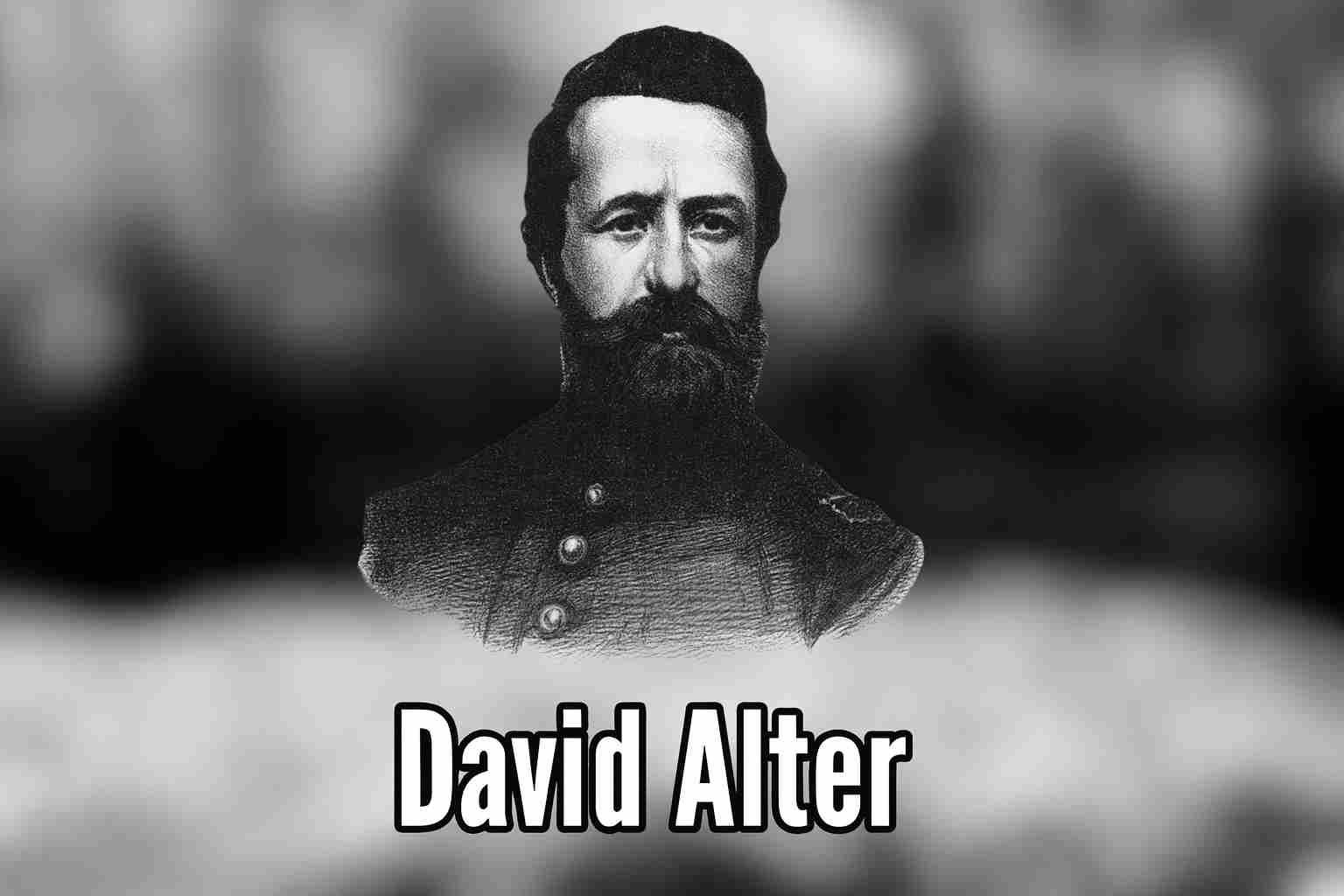
Dr. David Alter was a brilliant 19th-century American inventor, physician, and scientist whose pioneering work laid the foundation for modern spectroscopy and other groundbreaking technologies. His inventive spirit and scientific curiosity transformed industries, from communication to chemistry. Though his name is not as widely known as some of his contemporaries, his contributions remain vital to the advancement of science.
This article explores his early life, career achievements, scientific discoveries, and lasting legacy, while providing valuable insights into the life of a man who was truly ahead of his time.
Quick Bio
| Attribute | Details |
|---|---|
| Full Name | Dr. David Alter |
| Date of Birth | December 3, 1807 |
| Birthplace | Westmoreland County, Pennsylvania, USA |
| Date of Death | September 18, 1881 |
| Death Place | Freeport, Pennsylvania, USA |
| Nationality | American |
| Parents | John Alter (Swiss origin), Eleanor Sheetz (German origin) |
| Education | Reformed Medical College (New York), Cincinnati Medical School |
| Profession | Physician, Inventor, Scientist, Photographer |
| Key Inventions | Electric Telegraph, Electric Buggy, Bromine Extraction Process, Spectroscopy Studies, Coal and Shale Oil Extraction |
| Spouses | Laura Rowley (first wife), Amanda B. Rowley (second wife) |
| Children | 11 |
Early Life and Education
David Alter was born on December 3, 1807, in Westmoreland County, Pennsylvania. His father, John Alter, was of Swiss descent, while his mother, Eleanor Sheetz, came from a German family. Growing up in a rural community, David displayed a natural curiosity and inventive mind.
Despite limited formal schooling during his youth, Alter pursued knowledge with passion. Inspired by stories of Benjamin Franklin, he developed an early interest in electricity and scientific exploration. Determined to succeed, he later earned a medical degree from the Reformed Medical College in New York City and studied further at the Cincinnati Medical School between 1841 and 1842.
Marriage and Family Life
David Alter married Laura Rowley, with whom he had three children. After Laura’s death in 1842, he later married her sister, Amanda B. Rowley, and they had eight more children together. In total, David Alter fathered 11 children, including Myron Hale Alter, who followed in his father’s footsteps by becoming a physician.
Start of Career as a Physician
David began his professional career as a physician in Elderton, Pennsylvania, in the early 1830s. He was known for his dedication to medicine and the well-being of his community. Around 1837, he moved to Freeport, Pennsylvania, where he continued to practice medicine while also pursuing his passion for scientific experimentation.
His medical background provided him with a unique perspective on chemistry, biology, and applied sciences, fueling many of his later inventions.
Major Inventions and Scientific Contributions
Electric Telegraph (1836)
In 1836, before Samuel Morse’s system became famous, David Alter independently invented an electric telegraph. He successfully connected his house to a nearby barn using this system, demonstrating its potential for long-distance communication. This invention showed his visionary understanding of how electricity could be used to revolutionize communication.
Electric Buggy Prototype
Around 1840, Alter created an electric buggy, an early predecessor of the modern electric car. While this invention was far ahead of its time, it demonstrated his ability to apply theoretical knowledge to practical innovations in transportation.
Bromine Extraction Process (1845)
David Alter developed and patented a method to extract bromine from salt-well brine. This innovation was incredibly important for the iron industry during the mid-19th century. His process was later showcased at the 1853 World’s Fair in New York, cementing his reputation as an industrial innovator.
Spectroscopy Pioneer (1854–1855)
One of Alter’s most significant contributions was his work on spectroscopy, the study of light emitted by different substances. In 1854 and 1855, he published groundbreaking papers proving that each metal and gas produces unique spectral lines when heated.
This discovery laid the foundation for modern analytical chemistry and astrophysics, predating the better-known work of Gustav Kirchhoff and Robert Bunsen.
Coal and Shale Oil Extraction (1858)
In 1858, Alter patented a process to extract oil from coal and shale in partnership with Samuel Hill. Although this method was later replaced by petroleum extraction, it marked a crucial step in the evolution of industrial fuel technology.
Complete Career Overview
Throughout his career, David Alter balanced his roles as a physician, scientist, and inventor. He set up a laboratory in Freeport, where he developed and tested many of his groundbreaking inventions.
His contributions extended beyond science and industry. Alter was also one of the first photographers in his area, using daguerreotype techniques to capture images of the people and landscapes of his community. Additionally, he managed a weather station, gathering data that contributed to local knowledge about weather patterns.
Alter was known not only for his genius but also for his modesty and humility. He worked tirelessly, often without widespread recognition, and remained dedicated to improving the lives of others through science and innovation.
Legacy of David Alter
David Alter’s work continues to influence modern science and technology. His early discoveries in spectroscopy helped pave the way for tools used in chemistry, physics, and astronomy today. His inventive spirit demonstrated the power of curiosity and perseverance, inspiring future generations of scientists and inventors.
Though not as widely celebrated as figures like Thomas Edison or Alexander Graham Bell, Alter’s contributions were no less significant. His life is a reminder that innovation often comes from those willing to explore uncharted paths.
Conclusion
Dr. David Alter was a visionary whose ideas transformed the world in ways that are still felt today. From the electric telegraph to groundbreaking work in spectroscopy, he exemplified the spirit of scientific discovery. His legacy is one of persistence, brilliance, and service to humanity.
By understanding and celebrating the life of David Alter, we honor not just the man himself, but the transformative power of science and invention.
Frequently Asked Questions (FAQ)
Who was David Alter?
David Alter was a 19th-century American inventor, physician, and scientist known for his pioneering work in spectroscopy, communication technology, and industrial chemistry.
What was David Alter’s most important discovery?
His most significant contribution was his early research in spectroscopy, proving that every metal and gas has a unique light spectrum. This discovery laid the foundation for modern analytical chemistry.
When and where was David Alter born?
David Alter was born on December 3, 1807, in Westmoreland County, Pennsylvania, USA.
What inventions did David Alter create?
Some of his key inventions include the electric telegraph, an electric buggy, a bromine extraction process, and a patented method for coal and shale oil extraction.
Where did David Alter spend most of his life?
He spent much of his adult life in Freeport, Pennsylvania, where he practiced medicine and conducted his experiments.
How many children did David Alter have?
David Alter had 11 children with his two wives, Laura Rowley and Amanda B. Rowley.
Why is David Alter considered important in the history of science?
His groundbreaking research in spectroscopy and early technological innovations influenced the development of modern science and industrial processes.