A Detailed Comparison of the Best Action Camera for Adventure Filming

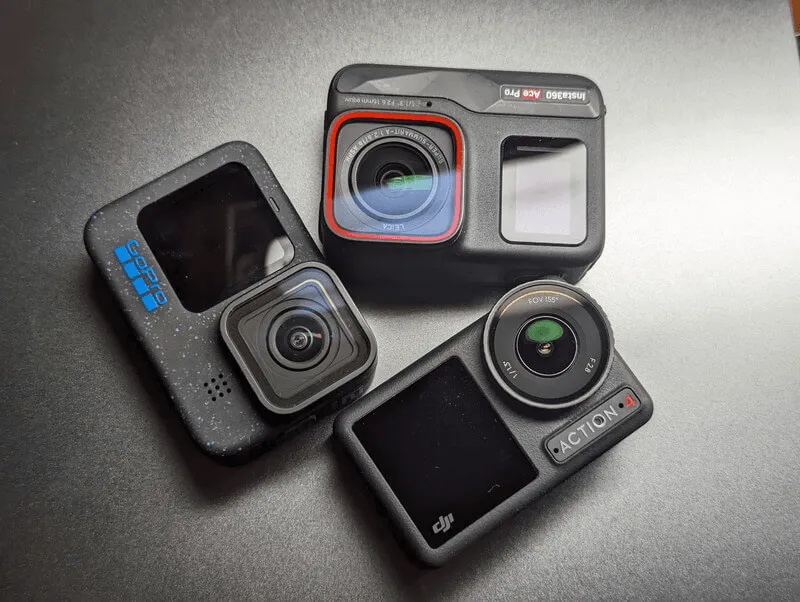
When it comes to capturing the thrill of adventure, an action camera is one of the most reliable tools for adventurers, travellers, and content creators alike. Whether you’re hitting the slopes, hiking rugged trails, or diving into the depths of the ocean, these cameras can withstand extreme environments and deliver stunning footage. But with so many options on the market, how do you choose the best action camera for your needs? In this article, we’ll compare the top action cameras for adventure filming, examining their features, performance, and value.
Why You Need an Action Camera for Adventure Filming
Adventure filming is about capturing raw, dynamic moments, often in challenging environments. Traditional cameras just don’t cut it for these situations—they’re bulky, delicate, and limited in their versatility. The key features that make action cameras a must-have for adventure filming are their durability, portability, and ease of use. Most action cameras are waterproof, shockproof, and freeze-proof, making them ideal for activities like surfing, skiing, and mountain biking. Additionally, they offer wide-angle lenses to capture expansive landscapes, and many have built-in stabilisation to smooth out shaky footage—perfect for action-packed scenes. As you plan your next adventure, an action camera can elevate your filming experience.
Key Features to Look for in the Best Action Camera
When choosing an action camera for adventure filming, it’s essential to understand the key features that can make or break your experience. Here are the top specifications to consider:
- Resolution: Most high-quality action cameras today offer at least 4K video recording, allowing you to capture every detail in stunning clarity. If you plan to shoot slow-motion footage or vast landscapes, a high-resolution camera will help you get the most out of your shots.
- Image Stabilisation: A key feature for filming in dynamic environments. Optical and electronic stabilisation technologies smooth out jerky movements, making your footage look more professional.
- Waterproofing and Durability: Action cameras are often used in extreme conditions, so ensure the model you choose is waterproof, shockproof, and dust-resistant. Some models even come with additional housing for deep-water use.
- Battery Life: While adventure filming often takes you far from the nearest outlet, a long battery life is crucial. Look for cameras that can record for several hours, or choose models with interchangeable batteries for extended sessions.
- Mounting Options: One of the benefits of an action camera is its versatility in mounting. Whether it’s on your helmet, bike, or even a drone, action cameras typically come with a variety of mounting accessories to help you film from any angle.
GoPro HERO11 Black: The Benchmark for Adventure Filming
GoPro has long been the leader in the action camera space, and the HERO11 Black continues to set the standard for adventure filming. With its sleek design and rugged build, the HERO11 Black is packed with top-tier features. It offers 5.3K video at 60 frames per second, ensuring crystal-clear footage, even in fast-moving scenarios. The camera’s HyperSmooth 5.0 technology provides excellent stabilisation, making it ideal for activities like mountain biking, snowboarding, and surfing.
DJI Osmo Action 3: A Strong Contender with Competitive Features
DJI has made a name for itself in the drone world, and its Osmo Action 3 camera is a formidable competitor to the GoPro. It comes with an impressive set of features, including 4K/120fps video, which allows for smooth slow-motion footage. With RockSteady 3.0 electronic stabilisation and HorizonSteady, you can trust that your footage will be steady even during high-impact activities like motocross or kayaking. The Osmo Action 3 also has an impressive front-facing display, making it an excellent choice for vloggers and content creators who want to frame themselves while filming easily. Additionally, the camera is waterproof without an external case, which enhances its convenience for underwater filming. Its battery life is on par with the HERO11 Black, offering up to 160 minutes of recording time.
Insta360 ONE R: The Modular Action Camera
The Insta360 ONE R takes a unique approach with its modular design, offering a level of versatility that other action cameras can’t match. The ONE R consists of three parts: the battery, the camera core, and the lens module. This modular design allows you to swap out lenses for different shooting styles, such as a 360-degree lens or a standard wide-angle lens. One of the most significant advantages of the ONE R is its ability to shoot 5.7K video at 30fps, and its 360-degree mode lets you capture immersive footage that traditional action cameras can’t. The camera also features FlowState stabilisation, which ensures smooth video even in turbulent conditions. While it may take a bit of time to get used to the modular design, the customisation options it provides are worth considering for serious adventurers.
Sony RX0 II: A Compact Powerhouse for Professional Adventure Filming
For professional filmmakers or those seeking superior image quality, the Sony RX0 II is a top-tier choice. While it doesn’t offer the exact resolution as the GoPro HERO11 Black or the DJI Osmo Action 3, its 1-inch sensor provides superior image quality and low-light performance, making it ideal for shooting in challenging environments such as caves or forests. The RX0 II is incredibly compact, making it easy to mount on helmets or drones, or even to hide in small spaces. It can shoot 4K video with high dynamic range (HDR) and supports slow-motion video at up to 960 fps, making it perfect for creating cinematic footage. Its rugged, waterproof, and shockproof design ensures it can handle extreme conditions.
The Future of Action Cameras: What’s Next?
We can expect to see improvements in resolution, stabilisation, and connectivity. Additionally, with the rise of augmented reality (AR) and virtual reality (VR), we may see action cameras that integrate more seamlessly with immersive experiences, allowing adventurers to capture footage that can be instantly shared in 360 degrees or through VR headsets.