Albert Rivera: The Rise, Influence, and Legacy of a Spanish Political Trailblazer
Exploring the life, career, and leadership of Spain’s Former Member of the Congress of Deputies of Spain

Introduction
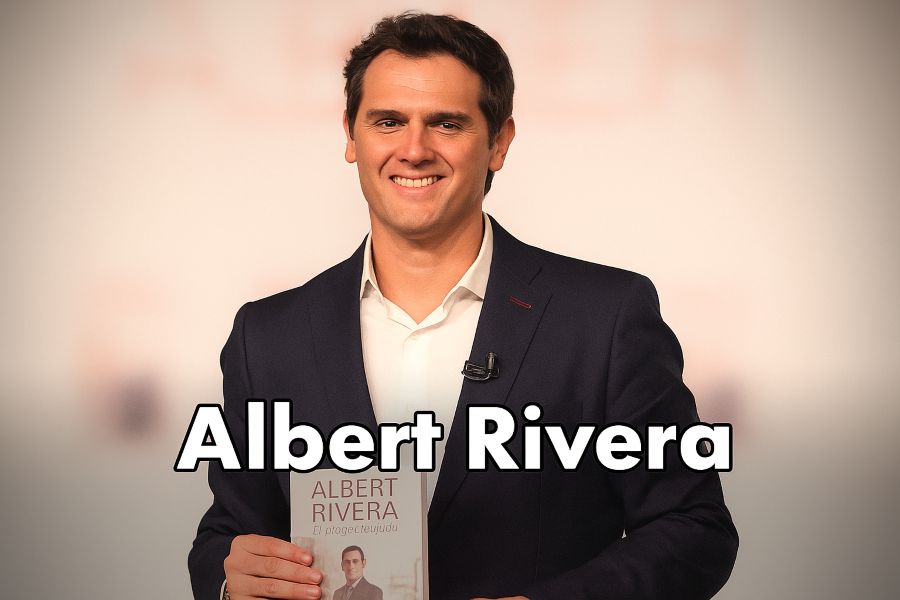
Albert Rivera, born Alberto Carlos Rivera Díaz, is a Spanish former politician and lawyer best known for leading the centrist political party Ciudadanos (Citizens) from its founding in 2006 until 2019. A charismatic figure with a strong belief in national unity, Rivera became one of Spain’s most influential voices during a time of intense regional division.
As a Former Member of the Congress of Deputies of Spain, Rivera’s political journey reflects both the promise and challenges of modern European politics. His leadership, public presence, and later withdrawal from politics showcase a remarkable trajectory marked by ambition, controversy, and reform-driven vision.
Quick Bio
| Full Name | Alberto Carlos Rivera Díaz |
|---|---|
| Date of Birth | 15 November 1979 |
| Age (2025) | 45 Years |
| Birthplace | Barcelona, Catalonia, Spain |
| Nationality | Spanish |
| Parents | Agustín Rivera (Father), María Jesús Díaz (Mother) |
| Spouse | Mariona Saperas (m. 2000–2013) |
| Children | Lucía Rivera Sánchez, Daniela Rivera |
| Education | ESADE (Law & Constitutional Law), The George Washington University (2009) |
| Occupation | Lawyer, Politician |
| Political Party | Ciudadanos – Partido de la Ciudadanía |
| Previous Office | Member of the Congress of Deputies of Spain (2016–2019) |
Early Life and Education
Albert Rivera was born in Barcelona on November 15, 1979. His family roots reflect both Catalan and Andalusian heritage — his father, Agustín Rivera, was from Barcelona, while his mother, María Jesús Díaz, came from Cútar in Málaga. Raised as an only child, Rivera grew up in a modest household that valued education, discipline, and perseverance.
He attended ESADE Law School at Ramon Llull University, where he graduated with a degree in Law and later earned a Master’s in Constitutional Law. In 2009, he further expanded his academic horizon through a specialized course in political marketing at The George Washington University in the United States. His education equipped him with a deep understanding of constitutional frameworks, which later became central to his political ideology.
Professional Beginnings and Political Entry
Before entering the political arena, Rivera worked as legal counsel for La Caixa, one of Spain’s largest banks. His experience in corporate law and public administration shaped his pragmatic approach to governance.
In 2006, Rivera co-founded the Ciudadanos (Citizens) party in Catalonia, responding to growing regional separatism. His youthful image and persuasive communication style helped him gain immediate attention. Rivera became the face of a new, centrist political movement aimed at defending constitutional rights and Spanish unity.
Political Career and Achievements
Albert Rivera’s political career took off when he became the President of Ciudadanos in 2006. Under his leadership, the party gained seats in the Catalan Parliament the same year. His platform emphasized equal rights, opposition to Catalan independence, and a strong belief in Spain’s unity within a European framework.
From 2006 to 2015, Rivera served as a Member of the Parliament of Catalonia, building his reputation as a defender of constitutional values. In 2016, he entered national politics as a Member of the Congress of Deputies of Spain, representing Madrid.
Rivera positioned Ciudadanos as a reformist, pro-European alternative to Spain’s traditional parties. The 2019 general election marked the peak of his career when Ciudadanos became the third-largest party in the Spanish Congress. His influence extended beyond politics, as he frequently appeared in televised debates and programs such as 7D: El Debate Decisivo and El Comecocos.
Challenges and Departure from Politics
Despite early success, Rivera’s leadership faced challenges. By late 2019, strategic miscalculations and political polarization led to a sharp decline in Ciudadanos’ parliamentary representation. The November 2019 general election resulted in significant losses, prompting Rivera to resign as party leader.
His resignation marked a turning point — a decision that demonstrated accountability and humility in the face of political failure. Rivera chose to step away from public office, ending a 13-year political career characterized by both admiration and criticism.
Personal Life
Albert Rivera’s personal life has often drawn public attention. He married Mariona Saperas in 2000, and the couple remained together until 2013. Rivera has two children, Lucía Rivera Sánchez and Daniela Rivera, who are central to his private life.
Known for his reserved personality off-camera, Rivera balances intellectual rigor with an appreciation for family. His decision to leave politics allowed him to refocus on personal priorities, including spending more time with his children and returning to his professional roots in law.
Post-Political Career
After leaving politics, Rivera rejoined the legal profession, applying his expertise in corporate and constitutional law. In 2020, he joined Martínez-Echevarría & Associates, a prominent Madrid-based law firm, where he worked on legal consultancy projects.
Although he has largely stayed away from partisan politics, Rivera occasionally participates in conferences and interviews discussing democracy, reform, and civic responsibility. His ability to reinvent himself professionally demonstrates the same adaptability that marked his political career.
Legacy and Impact
Albert Rivera’s legacy lies in his transformation of Ciudadanos from a small Catalan regional party into a national political force. His leadership introduced a centrist and modern voice in Spanish politics, bridging the gap between right and left ideologies.
Rivera’s unwavering defense of national unity during a time of deep political division made him a defining figure in Spain’s democratic evolution. Despite controversies and political setbacks, his efforts contributed to reshaping how Spaniards perceive constitutionalism, reform, and civic equality.
Conclusion
Albert Rivera’s life and career embody the essence of modern Spanish politics — ambitious, reformist, and deeply human. From his humble beginnings in Barcelona to becoming a Former Member of the Congress of Deputies of Spain, Rivera’s journey reflects resilience and a dedication to democratic principles.
While he may no longer hold office, his voice and influence continue to inspire political thinkers and reformers across Europe. Albert Rivera remains a symbol of the balance between conviction and adaptability, leaving behind a legacy that continues to shape the conversation about Spain’s future.
FAQs
Q1: Who is Albert Rivera?
Albert Rivera is a Spanish lawyer and former politician, best known as the founder and former leader of the political party Ciudadanos (Citizens).
Q2: What was Albert Rivera’s main political role?
He served as a Member of the Catalan Parliament (2006–2015) and later as a Member of the Congress of Deputies of Spain (2016–2019).
Q3: What is Albert Rivera’s educational background?
Rivera earned a Law degree and a Master’s in Constitutional Law from ESADE and studied political marketing at The George Washington University in 2009.
Q4: Who was Albert Rivera’s spouse?
He was married to Mariona Saperas from 2000 to 2013 and has two daughters, Lucía and Daniela.
Q5: What is Albert Rivera doing now?
After leaving politics in 2019, he returned to the legal sector, continuing his work as a lawyer and legal consultant in Madrid.