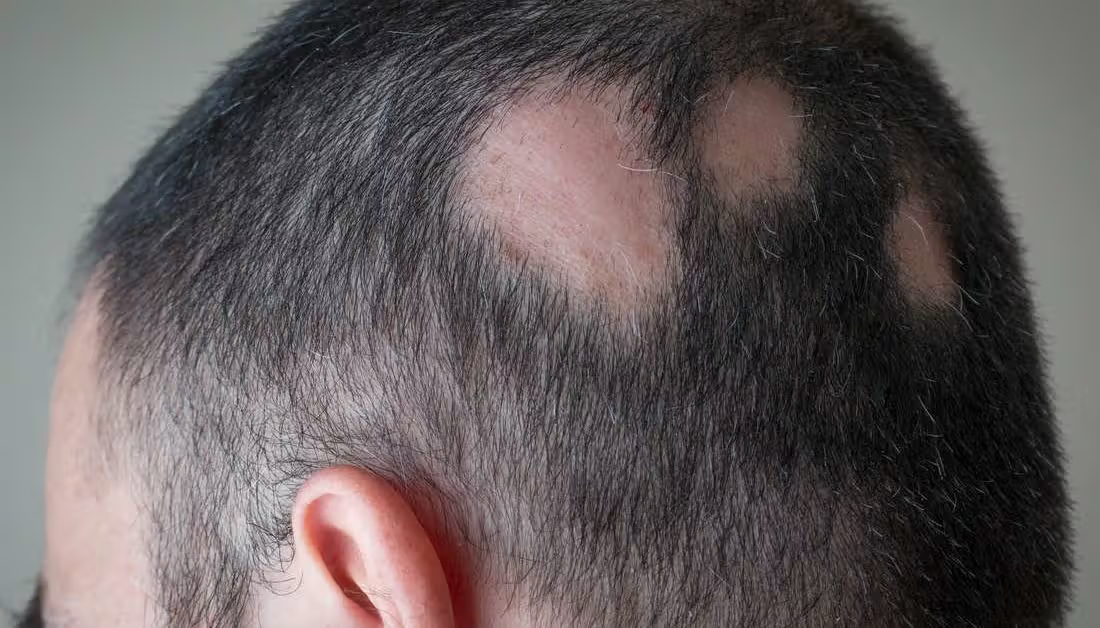
No one likes to think of hair loss, much less experience it.
If you deal with alopecia areata, you know all too well the misconceptions surrounding this condition. If you don’t, here’s the truth behind several commonly held misconceptions about this condition.
Myth #1: Only men experience alopecia areata
False! Women can experience alopecia areata as well. The reason this myth exists stems from the larger myth that only men can experience hair loss.
Myth #2: Alopecia areata is contagious
Definitely not true. Alopecia areata is not a contagious condition (scalp lice, or nits, are an example of a contagious condition). Alopecia areata is an autoimmune condition in which the body mistakes your hair follicles as harmful and then attacks them, causing hair loss.
Myth #3: Alopecia areata can’t be treated
While no cure for alopecia currently exists, the good news is that alopecia areata can be treated. These treatments include minoxidil, topical immunotherapy, platelet rich plasma, and revolutionary Exosome Hair Therapy. Compared to other hair loss treatments, Exosome Hair Therapy is painless, requires no downtime, is suitable for all hair types, and stimulates natural hair growth—no nasty chemicals involved.
How does Exosome Hair Therapy work? Exosomes are powerful microscopic cellular “delivery trucks” that carry growth factors throughout your body. When applied to your scalp, exosomes help reactivate dormant follicles.
Myth #4: Alopecia areata is 100% caused by genetics
It’s true genetics can play a role in causing alopecia. But other factors, such as extreme stress and viruses, can trigger alopecia areata.
The one exception to this myth is androgenic alopecia, or male pattern baldness, which is mostly genetic.
Myth #5: There’s only one type of alopecia
False. There are other types of alopecia. The most well known is alopecia areata, an autoimmune condition. Traction alopecia is hair loss caused by repeatedly wearing tight hairstyles, causing breakage along the hairline and your part.
Myth #6: Alopecia areata only affects the scalp
While alopecia areata most visibly affects the scalp, the condition can also cause hair loss in eyelashes and eyebrows.
Myth #7: Alopecia areata equals complete baldness
Not always. Alopecia areata can be categorized into three types:
- Patchy alopecia: small, coin sized patches of hair loss on your scalp
- Alopecia universalis: hair loss across the entire scalp
- Alopecia totalis: hair loss across the whole body (loss of eyebrows and eyelashes)
Myth #8: Alopecia areata is a result of poor hair care
Hair care, or lack thereof, has no correlation with alopecia areata. As an autoimmune condition, alopecia areata stems from inside the body, as cells attack hair follicles. An individual with alopecia areata can take the best care of their hair, and it would make no difference.
Myth #9: Alopecia areata is a sign of cancer
Alopecia areata stems from the body’s immune system attacking hair follicles, not cancer. It’s worth pointing out that cancer itself rarely causes hair loss; rather, it’s cancer treatments, such as chemotherapy, that cause hair loss in cancer patients.
Myth #10: Only unhealthy and/ or old individuals get alopecia
Alopecia can affect young and healthy individuals. In fact, over 80% of those with the condition experience hair loss symptoms before the age of 40. Alopecia areata most commonly peaks between ages 25-29.
Myth #11: Alopecia areata is only a cosmetic concern
Tell this to someone dealing with alopecia areata and see how that goes! Hair loss affects more than your aesthetic; it also can deeply affect your self-esteem and even your quality of life. Studies even show that individuals suffering from alopecia are at higher risk of developing anxiety and depression.
Myth #12: Hair lost from alopecia areata is gone forever
False. Alopecia areata is a non-scarring condition, meaning follicles are not permanently destroyed by the condition. This means hair can grow back. However, what makes alopecia areata even more agonizing to deal with is how unpredictable the condition can be. Some individuals lose their hair, then it grows back, only for their hair to fall out again. Others lose their hair and experience regrowth without recurring hair loss.
Consider Exosome Hair Therapy for Alopecia
Painless and stimulating natural hair growth, Exosome Hair Therapy treatments can be tailored for your needs. With Exosome Hair Therapy, you may notice less shedding in as little as 2 to 4 weeks, while in 8 to 12 weeks you may notice hair growth, with a noticeably denser scalp at about 4 to 6 months.
This article was written by Leah Campbell for Third Loft Marketing.