Carlos Queiroz: The Visionary Portuguese Association Football Manager Who Redefined Global Coaching
From Mozambique to Manchester — A Journey of Triumphs, Tactics, and Tenacity

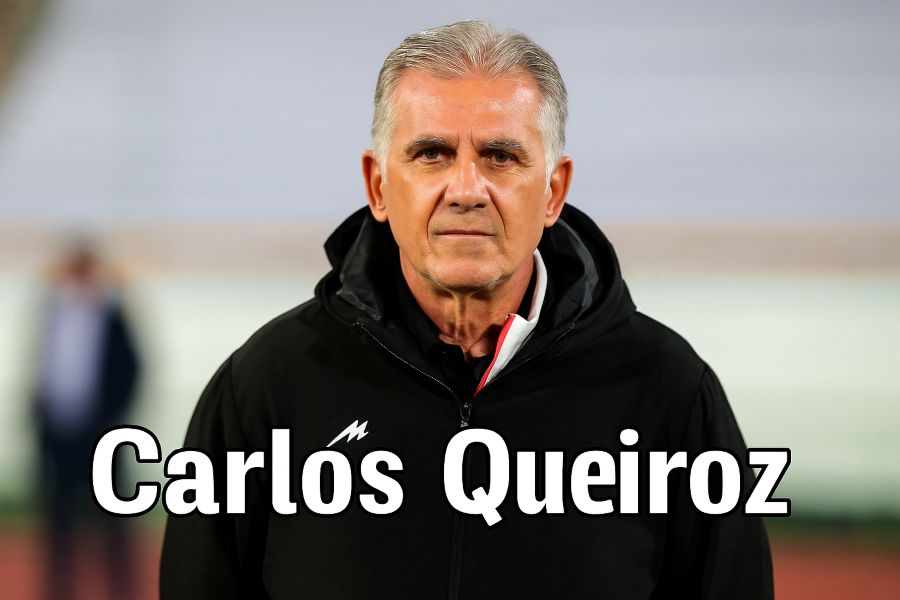
Table of Contents
ToggleIntroduction
Carlos Queiroz is a name synonymous with tactical brilliance, resilience, and the evolution of modern football management. A Portuguese association football manager with an illustrious career spanning over four decades, Queiroz’s journey has seen him rise from humble beginnings in Mozambique to managing some of the world’s most prestigious teams and national squads. Known for his meticulous planning and disciplined coaching style, he has left an indelible mark on international football, inspiring generations of players and coaches alike.
Throughout his extensive career, Carlos Queiroz has proven both a visionary strategist and a relentless perfectionist. His ability to adapt to different football cultures — from Europe to the Middle East and Africa — reflects his deep understanding of the global game. Though his career includes both triumphs and controversies, his passion for developing teams and empowering players continues to shape his legacy as one of football’s most influential figures.
Quick Bio
| Attribute | Details |
|---|---|
| Full Name | Carlos Manuel Brito Leal de Queiroz |
| Date of Birth | 1 March 1953 |
| Place of Birth | Nampula, Portuguese Mozambique |
| Nationality | Portuguese |
| Height | 1.83 m (6 ft 0 in) |
| Profession | Portuguese Association Football Manager |
| Current Role | Head Coach of Oman National Football Team |
| Education | Degree in Physical Education, Master’s in Sports Training Methodology |
| Achievements | FIFA U-20 World Cup titles (1989, 1991), multiple FIFA World Cup qualifications with Iran |
| Net Worth | Estimated $5 – 10 million |
| Known For | Tactical discipline, youth development, and international coaching success |
Early Life and Education
Born on March 1, 1953, in the Mozambican city of Nampula, Carlos Queiroz grew up under Portuguese colonial rule. From a young age, he showed an exceptional interest in football, particularly as a goalkeeper. After Mozambique gained independence in 1975, Queiroz moved to Portugal, where his academic and professional journey took a defining turn.
He enrolled at the Instituto Superior de Educação Física in Lisbon (now the Faculty of Human Kinetics) and completed his degree in physical education. Later, he earned a master’s degree in sports training methodology, laying the foundation for his analytical and methodical coaching philosophy. His educational background played a key role in developing his unique coaching style, which emphasizes preparation, discipline, and team structure.
The Beginning of His Coaching Career
Carlos Queiroz began his coaching journey with the Portuguese Football Federation in the 1980s, where he was appointed to lead youth national teams. His first major success came when he managed the Portugal Under-20 team, winning back-to-back FIFA U-20 World Cups in 1989 and 1991. These victories established him as one of the brightest coaching minds of his generation.
His work with the “Golden Generation” — including future legends like Luís Figo and Rui Costa — highlighted his talent for nurturing young talent. The success at the youth level not only earned him national acclaim but also global recognition, paving the way for his transition into senior football management.
Career Timeline & Overview
Early National and Club Roles
Following his success with Portugal’s youth teams, Queiroz became the head coach of the Portugal senior national team in 1991. Although he faced challenges in translating youth success to senior level, he demonstrated tactical sophistication that would define his later years.
In the mid-1990s, he moved into club management, coaching Sporting CP in Portugal, followed by stints with Nagoya Grampus Eight in Japan and the NY/NJ MetroStars in the United States. These experiences broadened his tactical perspective and introduced him to different footballing cultures.
Global Coaching Expansion
From 1998 to 2002, Carlos Queiroz managed the national teams of the United Arab Emirates and South Africa, guiding the latter to qualification for the 2002 FIFA World Cup. His reputation for structure and strategic awareness made him a sought-after figure on the international stage.
In 2002, he joined Manchester United as assistant manager to Sir Alex Ferguson. This partnership proved pivotal — Queiroz was credited with refining the team’s tactical approach and mentoring emerging stars. A year later, Real Madrid appointed him as head coach, although his tenure there was short-lived due to inconsistent results.
Return to International Management
After returning to Manchester United, Queiroz once again took charge of the Portugal national team in 2008, successfully leading them to the 2010 FIFA World Cup. His next defining chapter came with Iran, where he achieved historic milestones by qualifying for three consecutive World Cups — 2014, 2018, and 2022 — a record unmatched in Iranian football history.
In later years, he managed Colombia, Egypt, and Qatar before taking over as head coach of the Oman national football team in 2025. His adaptability across continents and cultures showcases his status as one of the most globally experienced managers in modern football.
Coaching Style and Philosophy
Carlos Queiroz is known for his meticulous attention to detail, structured defense, and disciplined team play. His coaching philosophy revolves around tactical awareness, fitness, and maximizing individual strengths within a collective framework.
A key hallmark of his career has been his emphasis on player development. From youth teams to national squads, Queiroz has consistently focused on building systems that prioritize teamwork, technical precision, and mental toughness. His balanced approach has made him both admired and sometimes criticized for prioritizing defense over flair.
Achievements and Recognition
As a Portuguese association football manager, Queiroz’s achievements span multiple decades and continents. He led Portugal’s U-20 team to two world titles, guided Iran to multiple World Cups, and served in key roles for elite clubs such as Manchester United and Real Madrid.
His longevity and consistency are testaments to his professionalism. Whether mentoring future stars or building national squads from diverse backgrounds, Queiroz’s contribution to global football has been remarkable. His disciplined approach has influenced many modern coaches who cite him as a mentor and tactical pioneer.
Controversies and Challenges
Despite his accomplishments, Carlos Queiroz’s career has faced criticism and controversy. His tenure at Real Madrid ended prematurely after mixed performances. In 2009, he faced a suspension from the Portuguese Anti-Doping Authority, which was later annulled.
At times, his strict tactical methods have clashed with players and football associations, yet such challenges only reinforced his determination. His commitment to structure and discipline often divided opinion but undeniably produced consistent and competitive teams.
Legacy
Carlos Queiroz’s legacy transcends trophies and titles. He is celebrated for transforming national teams, developing talent, and modernizing football coaching across continents. His blend of European tactical intelligence and global adaptability positions him among the sport’s most respected figures.
For aspiring managers, Queiroz remains a symbol of perseverance, professionalism, and evolution. From winning youth championships to coaching world-class clubs, his story illustrates that true success lies in resilience, innovation, and lifelong learning.
Conclusion
Carlos Queiroz’s journey from Mozambique to the world’s top football arenas is one of dedication, intelligence, and courage. His influence as a Portuguese association football manager has reshaped how football is taught and managed internationally. Though his career saw both triumphs and trials, his passion for the game and commitment to excellence continue to inspire football professionals worldwide.
Today, Queiroz stands as one of the most accomplished and respected coaches in global football — a testament to how persistence, education, and vision can build a lasting legacy.
Frequently Asked Questions (FAQ)
1. Who is Carlos Queiroz?
Carlos Queiroz is a Portuguese association football manager known for coaching elite clubs and national teams, including Portugal, Iran, and Real Madrid.
2. What are Carlos Queiroz’s major achievements?
He won two FIFA U-20 World Cups with Portugal and led Iran to three consecutive FIFA World Cups.
3. What is Carlos Queiroz’s coaching style?
He emphasizes tactical discipline, defensive organization, and strong team cohesion.
4. Which teams has Carlos Queiroz managed?
His career includes Portugal, Iran, Colombia, Egypt, Qatar, Oman, and clubs such as Sporting CP, Real Madrid, and Manchester United (as assistant).
5. What makes Carlos Queiroz influential in world football?
His global coaching experience, structured approach, and success in developing young players make him one of football’s most impactful modern managers.