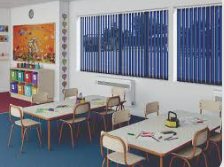
Schools are busy, shared environments where safety and practicality come before appearance. Every fitting decision affects pupils, staff, and visitors throughout the day. That’s especially true for window coverings, which are within easy reach of pupils of all ages in classrooms, corridors, and shared spaces.
Choosing the right blinds helps with managing light. But in schools, they also need to protect children, meet UK regulations, and ensure long-term reliability. Read on to understand what really matters when selecting commercial blinds for school settings.
Child Safety Is the Top Priority
In UK schools, child safety isn’t optional. Blinds must comply with BS EN 13120, the safety standard that governs internal window coverings. This regulation requires blinds to be safe by design, meaning they’re supplied and installed in a way that reduces the risk of injury or accidents involving children.
Traditional hanging cords and chains pose a known risk in spaces used by young pupils. For that reason, school environments demand blind systems that remove or control these hazards rather than relying on supervision alone.
Durability for Daily School Use
School blinds are used frequently and often by different members of staff throughout the day. That makes strength and build quality just as important as safety. Materials, fixings, and internal components need to cope with repeated operation without wearing down or becoming unreliable.
Blinds that are made to measure tend to perform better in this respect. A precise fit helps reduce strain on mechanisms and ensures the blind operates smoothly over time. So, when evaluating commercial blinds for schools, it’s important to know that durability directly affects maintenance schedules and long-term costs.
Reducing Risks From Cords and Chains
One of the most important considerations is how the blind operates. Systems with exposed cords or loops need careful assessment, as they might create avoidable risks in classrooms or early years areas. Safer alternatives are often preferred in education settings, including:
- Crank operated blinds, where the handle can be removed after use
- Spring operated blinds, which use an internal mechanism instead of cords
- Motorised blinds, where all working parts are enclosed
These options help limit access to moving parts while still allowing staff to control light levels during lessons.
Understanding Built-in Safety Features
In situations where chain operated blinds are still used, integrated safety devices become essential. These features are designed to minimise harm if a chain is pulled or placed under tension.
Examples include breakaway connectors that separate under pressure, along with secure fixing methods that keep chains out of reach. While these features support compliance, many schools now choose systems that avoid cords altogether to simplify risk management.
Meeting Legal Responsibilities in Schools
Schools have a duty of care that extends to fixtures and fittings. Choosing compliant blind systems helps schools and contractors meet their legal and safeguarding responsibilities. It also provides reassurance to governors, parents, and inspectors that risks have been properly addressed.
Clear documentation, compliant products, and professional installation all support this process and reduce uncertainty during audits or inspections.
Conclusion: Informed Choices Lead to Safer Schools
Choosing commercial blinds for schools is a more complex process than most people would initially think. Schools need to carefully consider factors such as child safety, compliance, reliability and more. By prioritising safe operation, robust construction, and suitability for daily use, education providers can create spaces that support learning without added risk.
If you’re responsible for specifying or supplying blinds for education settings, it’s worth reviewing safety standards carefully and choosing systems designed with schools in mind.
Read Also: westernbusiness.co.uk