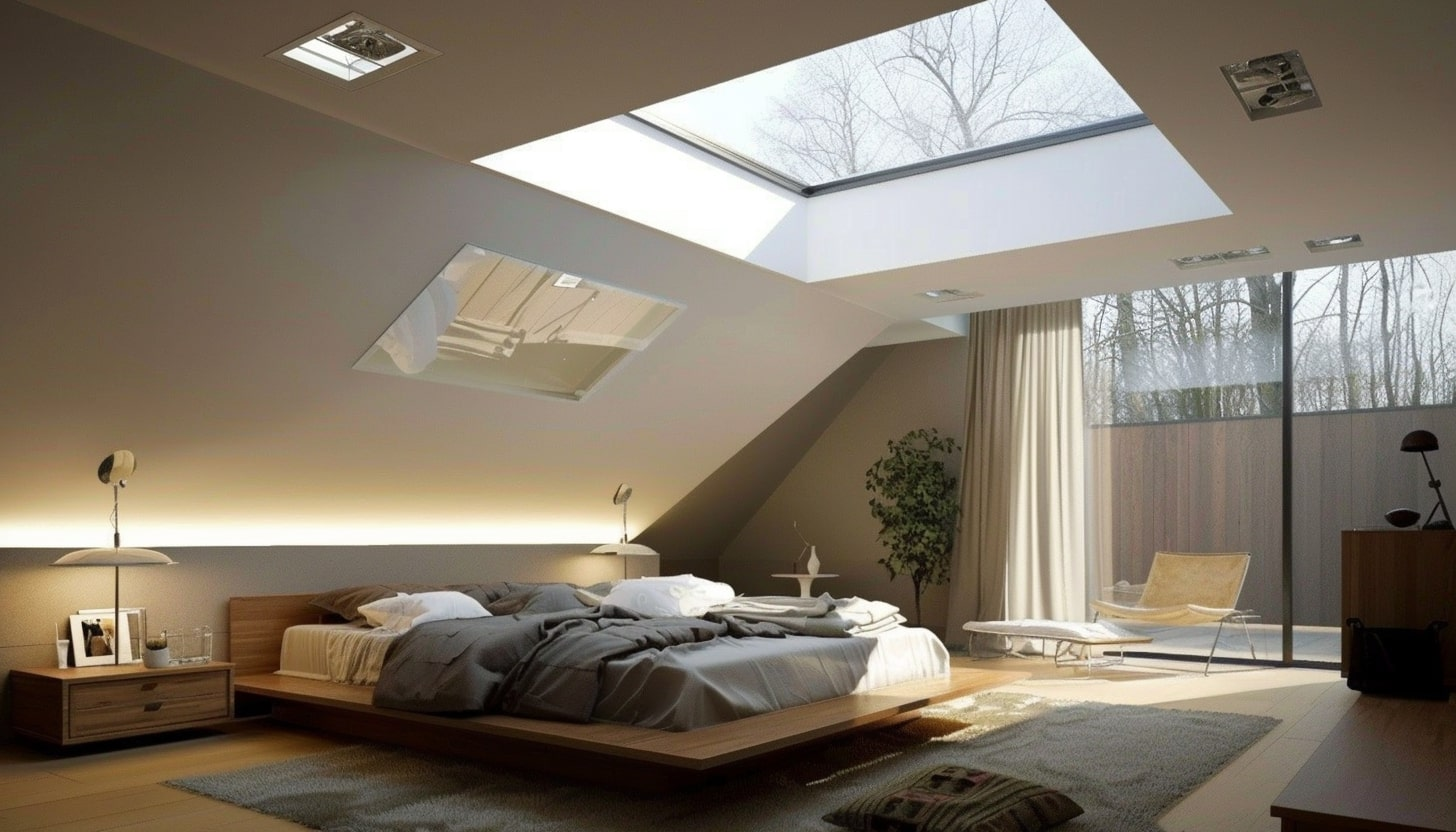
Skylights bring daylight from overhead instead of relying on wall windows. What you pick changes how bright your bedroom gets, what your energy bills look like and whether the room feels comfortable year-round.
Knowing what’s available helps you choose something that actually fits your bedroom instead of buying whatever the sales person recommends.
Different Types of Skylights
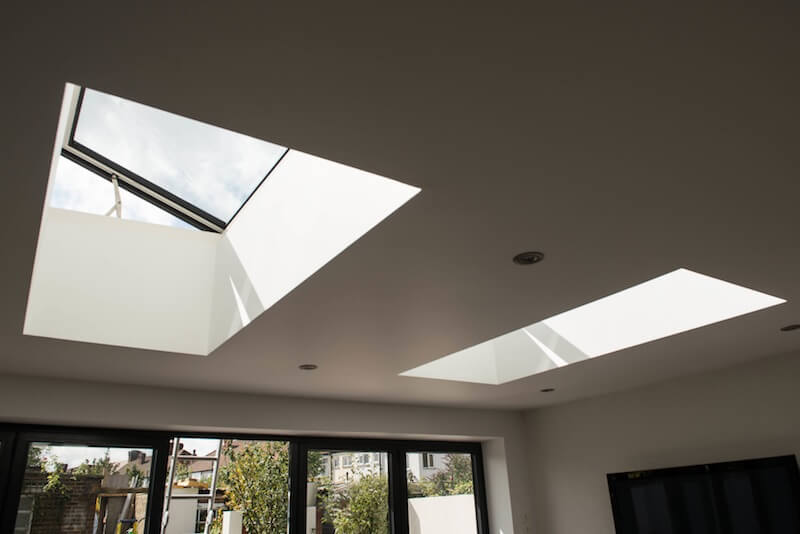
Fixed skylights stay shut. They’re just roof windows that let light through without opening for air. Fewer moving parts means fewer places for leaks to start. When you want daylight but don’t care about ventilation, fixed works fine.
Ventilated skylights open up to let air move through your bedroom. They deal with heat buildup and stale air. The opening parts cost more but if your bedroom gets stuffy, the ventilation is worth paying for.
Tubular skylights use a reflective tube to carry light from the roof down to your ceiling. These squeeze into spots where regular skylights won’t fit. You get less light overall but they’re cheaper and cutting the hole is easier.
Dome skylights bulge upward. Rain and snow slide right off instead of sitting there. That curve also spreads light around better instead of creating one bright patch on your floor.
Flat skylights sit level with your roof. They look tidier on newer houses but you need to think about drainage because water can sit on flat glass.
Benefits of a Skylight in Your Bedroom
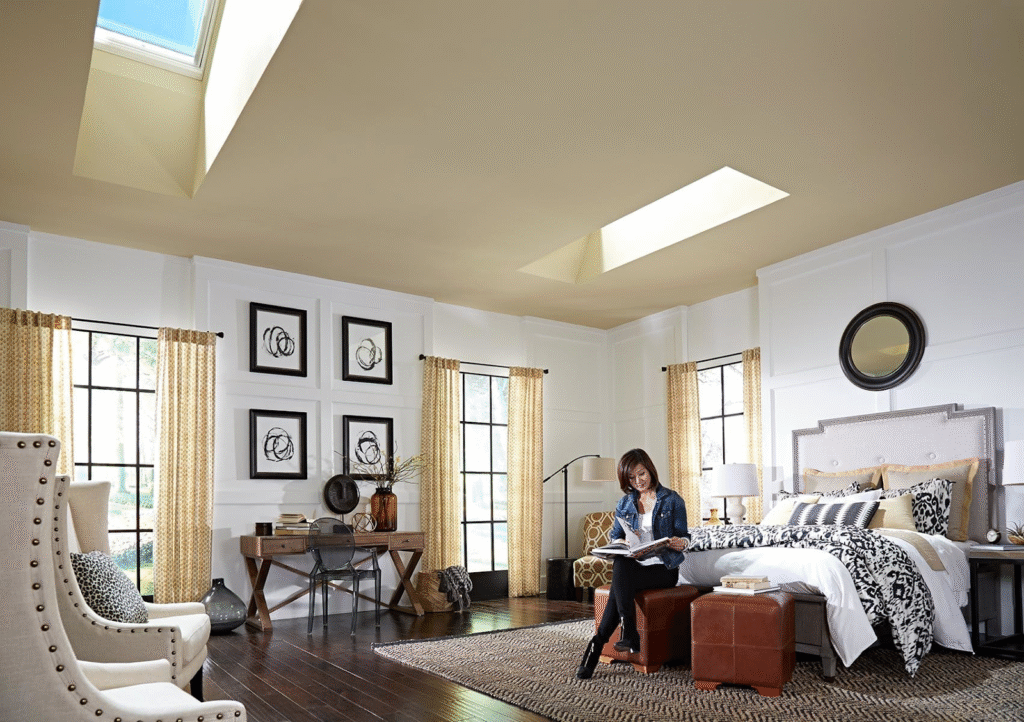
Light coming from above hits parts of your room that side windows miss. Those dim corners brighten up. The whole space feels bigger when light comes from above and the sides both.
Waking up to actual sunlight works differently than an alarm jerking you awake. Your body reacts to real daylight in ways it doesn’t respond to bedroom lamps.
Bedroom skylights fix privacy problems while keeping the room bright. You get plenty of light without wondering if neighbors can see in.
Ventilated ones suck stale air out the top. Fresh air comes in through your regular windows or vents lower down. Air moves naturally without needing to run fans.
Looking up at clouds moving past or seeing stars from your bed gives you something side windows can’t. The view straight up connects you to what’s happening outside differently.
Energy Efficiency and Comfort
Low-E glass has coatings thinner than you can see that bounce heat back. Summer heat stays outside while light comes through. Your bedroom gets brighter without getting hotter.
Multiple glass layers with air gaps between them slow down heat moving through. Winter warmth from your heater stays in instead of leaking out through the glass. That shows up on your heating bill.
Solar shades made for skylights run on tiny solar panels. No wires go to the skylight. Close them when afternoon sun is beating down and open them back up when it cools off.
Flashing is what seals the gap where your skylight pokes through the roof. Bad flashing lets air sneak in even when the glass itself works well. Getting someone who knows what they’re doing matters because flashing determines whether you have problems later.
UV film stops the sun rays that fade your curtains and damage wood finishes. Light still gets in but the harmful stuff gets blocked. Your furniture holds up better.
Best Location for Your Skylight
North-facing skylights give you steady light without sun blasting straight down on the glass. Brightness stays pretty even all day long. Heat coming in stays low no matter what time of year.
South-facing grabs maximum sun and warmth. Works great in cold places where you want that heat. Hot climates need serious shading or you’ll roast.
East-facing catches morning sun coming up. Light builds gradually which helps you wake up easier. By afternoon the sun has moved past and your bedroom stays cooler.
West-facing gets hit with strong late-day sun. Afternoon and evening heat can be miserable in summer but feels good in winter. Think about what summers are like where you live.
Roof slope changes how light gets in. Steep roofs need bigger skylights to get the same brightness as the same skylight on a flatter roof. Rooflights & Skylights UK installers measure your particular roof and figure out what size actually works.
Put skylights away from beams, pipes and air ducts in your attic. You need space for the skylight itself plus the shaft that connects it down to your bedroom ceiling.
Budgeting for Installation
Basic fixed skylights cost less than the ones that open. Smaller ones are cheaper than big ones. Getting someone to install it adds on top depending on whether your roof is easy to get to and if anything structural needs changing.
Ventilated models run higher than fixed because of the opening hardware and better seals. Installation labor is similar unless you’re adding motors that need electrical hookup.
Tubular skylights are cheaper all around. The units cost less and installation is simpler since you’re cutting a smaller hole in your roof.
Sometimes installers find problems when they open up your roof. Rotted wood or broken rafters have to get fixed before the skylight goes in. Keep extra money available for stuff that shows up unexpectedly.
Permits depend on where you live. Some places make you get permits and inspections for skylights. Others don’t care. Call your local building department first so you know what paperwork and fees you’re dealing with.
Conclusion
What skylight you pick affects your bedroom for a long time. Fixed brings daylight. Ventilated adds airflow. Where you put it changes the light quality and temperature. North gives steady light without much heat. South maximizes both. Good glass and someone who installs it right prevent leaks and energy waste that old skylights had. Plan for paying both for materials and someone who knows how to do the work. Done right, a skylight makes your bedroom noticeably better.