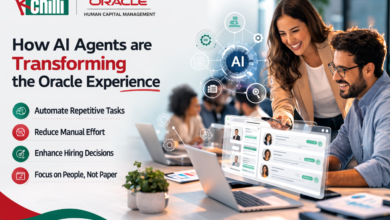
Artificial Intelligence (AI) is evolving faster than ever, and Generative AI is leading this transformation. From creating content and writing code to designing products and predicting trends — generative AI is helping businesses become more innovative, efficient, and competitive.
As we enter 2025, companies across industries are realizing that generative AI isn’t just a futuristic tool — it’s a practical, game-changing technology reshaping how business is done.
What Is Generative AI?
Generative AI refers to AI systems that can create new content — text, images, videos, audio, or even code — based on patterns learned from data. Unlike traditional AI, which only analyzes or classifies information, generative AI produces something new.
For example:
- Chatbots like ChatGPT can generate articles, emails, or reports.
- Tools like Midjourney create unique visual designs.
- AI coders like GitHub Copilot assist developers in writing clean, efficient code.
This creative power allows businesses to automate repetitive tasks and focus on innovation.
1. Content Creation Made Easy
For years, creating marketing content, blogs, and social media posts took time and effort. Generative AI has changed that.
Today, companies can produce personalized emails, ad copies, and articles within minutes using AI-powered tools. What once required a full marketing team can now be done by one person with the right AI software.
Example:
A digital marketing agency uses AI to generate 10 versions of an ad, tests them automatically, and picks the best-performing one.
This speed and scalability give businesses a massive advantage in today’s fast-paced market.
2. Smarter Product Design and Development
Generative AI doesn’t just write — it creates designs, prototypes, and solutions.
In industries like automotive, fashion, and architecture, AI can analyze design data and generate new ideas that meet performance or aesthetic goals. Engineers use it to create optimized parts, while fashion brands use it to design collections based on customer preferences.
When supported by professional machine learning development services, businesses can integrate generative AI directly into their product design workflows, making innovation faster and more data-driven.
3. Revolutionizing Customer Service
Customer service is one of the biggest beneficiaries of generative AI. Intelligent chatbots and virtual assistants can now understand natural language, answer questions, and even solve problems in real time.
Unlike earlier bots that relied on fixed scripts, generative AI chatbots can hold meaningful, human-like conversations and continuously learn from interactions.
Example:
A telecom company uses AI-powered chatbots to handle 80% of customer queries automatically, freeing human agents to focus on complex issues.
This not only reduces costs but also improves customer satisfaction and 24/7 availability.
4. Data-Driven Decision Making
Generative AI helps businesses interpret complex data and generate actionable insights. It can create summaries, visualizations, and reports from raw information — saving analysts hours of manual work.
Example:
A financial firm uses generative AI to summarize thousands of transaction records into a few key risk indicators for decision-makers.
By combining it with expert machine learning consulting service providers, companies can fine-tune models that turn business data into strategy — predicting sales, optimizing pricing, or identifying new opportunities.
5. Personalization at Scale
Customers today expect experiences that feel personal and relevant. Generative AI makes this possible by analyzing user behavior and automatically generating personalized content for each individual.
Example:
An eCommerce brand can use AI to generate personalized product descriptions, tailored recommendations, and email offers for every shopper.
This level of personalization was once only achievable for large corporations — now, even small businesses can offer the same experience with AI-powered automation.
6. Faster Software Development
Generative AI is becoming an assistant for programmers. Tools like GitHub Copilot and ChatGPT’s code models can write, debug, and optimize code automatically.
Software teams use generative AI to reduce development time, identify errors faster, and accelerate innovation. In 2025, many organizations will have AI-integrated development environments that make coding easier, even for non-programmers.
7. Human + AI Collaboration
The real power of generative AI lies in collaboration — humans guiding AI to achieve better outcomes.
AI can handle repetitive or technical parts, while humans provide creativity, strategy, and emotional understanding. Together, they form a new kind of workforce where efficiency meets innovation.
Example:
A copywriter uses AI to generate a draft, then edits it for tone and creativity — saving time while maintaining quality.
Businesses that embrace this balance will lead the future workplace.
8. Ethical and Responsible AI Use
As AI becomes more capable, ethical considerations become essential. Companies must ensure that generative AI is used responsibly — avoiding plagiarism, bias, and misinformation.
Many organizations are now setting up internal AI policies and working with consultants to ensure compliance, fairness, and transparency in AI-generated content.
What the Future Holds
By 2025 and beyond, generative AI will become part of nearly every business function — from marketing and HR to design, product development, and analytics.
It will not replace humans but empower them to do more with less effort. Businesses that invest in AI strategy, strong data foundations, and professional guidance will stay ahead of the curve.
Final Thoughts
Generative AI is not just the future — it’s already here, reshaping how companies operate and compete. From creativity to efficiency, the benefits are clear and measurable.
By partnering with experts who offer machine learning development services and trusted machine learning consulting service, businesses can harness the full potential of generative AI — building smarter systems, better products, and a more innovative future.