Nobody plans to replumb their house. It’s the kind of job that finds you, usually after a leak, a damp survey, or a plumber lifting a floorboard and going very quiet for a moment too long.
So what does it actually cost? And how do you know if you genuinely need it, rather than just being told you do?
The honest answer is that replumbing prices vary enormously, by house size, pipe material, location, and how awkward your floors are to lift. But there are solid benchmarks worth knowing, and some hidden costs that catch almost everyone off guard.
Here’s a straight-talking breakdown of what to expect.
Why Would a House Need Replumbing?
Before we talk money, it helps to understand what actually drives the decision.
Most homes built before the 1970s were plumbed with lead pipes. Homes from the 70s through to the 90s often used copper, generally reliable, but prone to corrosion over time, particularly in areas with acidic water. Some properties built in the 1980s were fitted with polybutylene pipe, a grey plastic material that was everywhere for a while, until it became clear it could degrade and fail without much warning.
If your home was built before 1970 and the pipework has never been touched, there’s a fair chance it’s due some attention. That’s not alarmism, it’s just the reality of how long pipes last.
Watch out for these warning signs:
- Discoloured water from the taps, brown, orange, or grey
- Persistent low pressure throughout the whole house, not just one tap
- Leaks cropping up in different parts of the property over time
- A metallic taste to your tap water
- Visible corrosion or pitting on any exposed pipes
- A surveyor flagging the pipework as life-expired
Any one of these on its own might not mean a full replumb. But if you’re ticking several boxes at once, it usually does.
What Does Replumbing Actually Involve?
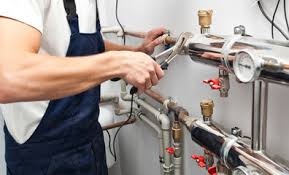
A full replumb means replacing all the water supply pipes running through the property, from where the mains supply enters the building, right through to every tap, toilet, shower, and appliance.
It doesn’t typically include the heating system (radiators, boiler circuits, that sort of thing), though plenty of homeowners choose to tackle both at once, since the house is already being opened up anyway.
The work itself involves lifting floorboards, cutting into walls, threading new pipe through the building, and then putting everything back together again. That last part, the patching, plastering, and decorating — is where the costs have a habit of creeping up when you’re not looking.
How Much Does Replumbing Cost by House Size?
These are realistic UK averages for standard properties using modern plastic push-fit or copper pipework. Prices cover labour and materials, but not decoration or finishing work, more on that shortly.
One-bedroom flat or small terraced house Expect to pay somewhere between £2,500 and £4,500. Fewer rooms, shorter pipe runs, less disruption, it’s about as straightforward as replumbing gets.
Two or three-bedroom semi-detached or terraced house This is the bread-and-butter scenario for most people. Budget between £4,500 and £8,000. A three-bed semi with two bathrooms, a kitchen, and a downstairs loo sits comfortably in the middle of that range.
Four-bedroom detached house Costs typically run from £7,500 to £12,000 or more. Bigger floor plans mean longer pipe runs, more fittings, and more days on site.
Larger or more complex properties Period properties, homes with multiple bathrooms, or houses with particularly awkward access, solid concrete floors, tight voids, can push costs well past £15,000. If you’ve got a Victorian terrace with original floorboards and a kitchen extension, don’t be surprised if the number comes in at the higher end.
All of these figures assume the property is empty, or that you can move out while the work happens. Replumbing an occupied home takes longer and costs more, simply because the plumbers like Royal Flush Plumbing (https://www.royalflushplumbingnorfolk.co.uk/) are working around you.
What Affects the Final Price?
The size of the house is just the starting point. These are the things that really move the needle.
Type of pipework Copper is more expensive than modern plastic push-fit systems, but a lot of plumbers still prefer it for longevity. Expect copper to add roughly 20–30% to material costs. It’s not always the wrong choice — just worth discussing before work starts.
Access This is the big one that people underestimate. Lifting a suspended timber floor to run new pipes is relatively quick and clean. Breaking up a solid concrete screed is a completely different job — it’s noisy, dusty, time-consuming, and expensive to reinstate. If your ground floor is concrete, get that flagged in your quote before you agree to anything.
Where you live in the UK A plumber in London or the South East will typically charge day rates of £250–£400. In East Anglia, the Midlands, or the North, rates generally run between £150 and £250 per day. For a job that might take two plumbers a week or more, that regional difference adds up to a meaningful chunk of money.
Number of bathrooms Every bathroom adds complexity and time. A single-bathroom house is a very different job to one with an en suite, a family bathroom, and a downstairs cloakroom. Count your wet rooms before you budget.
Whether you’re doing the heating at the same time If the central heating pipework is being replaced alongside the water supply — which makes a lot of sense if the house is already being torn apart — add roughly £3,000 to £6,000 on top, depending on how many radiators you’ve got and the size of the system.
The Hidden Costs That Catch People Out
This is where replumbing projects blow their budgets. The pipework is only part of the story.
Making good Once the pipes are in, someone still has to patch the walls, relay the floors, and sort out the decoration. That work almost always falls to a separate tradesperson — a plasterer, a carpenter, a decorator. For a standard three-bedroom house, budget an extra £1,500 to £4,000 on top of the plumbing quote, depending on how much disruption the job creates. Some people are genuinely shocked when this isn’t included.
Somewhere to live Replumbing a three-bedroom house typically takes five to ten working days. During that time you’ll have no running water. If staying with family isn’t an option, a week in a local rental or a Travelodge needs to go into the budget too.
Old fittings showing their age Opening up the pipework has a way of revealing that the taps, valves, and stopcocks are also well past their best. It makes sense to replace them while everything’s already open — but it’s an extra cost that catches people off guard.
Boiler compatibility If the new pipework changes the flow characteristics of your heating circuit, your existing boiler may need reconfiguring. In some cases, it may need replacing altogether. Ask your plumber to assess this before any work begins, not halfway through.
How Long Does the Job Take?
For a typical three-bedroom semi, the plumbing work itself will usually take five to eight working days with two plumbers on site. Bigger properties, or those with difficult access, can stretch to two weeks or more.
Factor in the making good after that — plastering sets, floors need time, decorating takes as long as it takes — and you’re realistically looking at two to three weeks before the house feels normal again. Plan for that upfront and it won’t blindside you.
Can You Do It in Stages to Spread the Cost?
It’s a reasonable question, and the short answer is: you can, but it’ll probably cost you more in the long run.
Every time a plumber mobilises — drives to your property, sets up, isolates the water supply — that’s time they’re charging for. Doing that five times instead of once adds real money. The disruption also drags on for months rather than weeks, which most people find far more stressful than one big hit.
If budget is the genuine constraint, a smarter approach is triage. Get a plumber to assess which sections are most urgent — often the cold mains supply and kitchen are the priority — and tackle those first. Then plan the rest in a logical sequence as the money becomes available.
How to Get a Quote You Can Actually Trust
Two plumbers can look at the same house and come back with prices £3,000 apart. That doesn’t automatically mean one is ripping you off — it often reflects different assumptions about materials, access, or what the making good involves.
To get a quote that means something:
- Get at least three, in writing, from qualified plumbers
- Make sure each one specifies materials, expected days on site, and exactly what is and isn’t included
- Ask directly whether making good is in the price or excluded
- Check membership of a recognised trade body — WaterSafe or the Chartered Institute of Plumbing and Heating Engineering (CIPHE) are the ones to look for
- Never agree to a price based on a phone call alone — a proper quote needs someone to physically walk the property
If one quote comes in significantly lower than the others and there’s no obvious reason why, be cautious. Underquoting and then adding variations once work is underway is one of the most common complaints against trades. If it looks too good to be true, ask exactly why it’s cheaper before you sign anything.
Is It Actually Worth the Money?
For most older properties, genuinely yes — and not just because of the obvious practical benefits.
Modern pipework produces better pressure, better flow, and is far easier for any future plumber to work on. Lead pipes carry real health risks — the NHS is clear that there is no safe level of lead exposure, and old lead supply pipes in pre-1970s homes are a legitimate concern, not just a theoretical one.
There’s a financial case too. A surveyor flagging life-expired or lead pipework can knock thousands off a buyer’s offer, stall a sale, or put people off entirely. Sort it proactively and that conversation never needs to happen.
Really, the question isn’t whether replumbing is worth the money. If your pipes are old enough to be a problem, the question is whether you do it now — planned, budgeted, on your terms — or later, when a failure makes the decision for you at the worst possible time.
And emergency plumbing, as anyone who’s had a burst pipe on a Sunday evening will tell you, costs a great deal more than the planned kind.