Kehinde Andrews: A Powerful Voice Redefining Race, Education, and Modern Britain
The bold rise of Kehinde Nkosi Andrews, a British academic and author challenging history, power, and uncomfortable truths

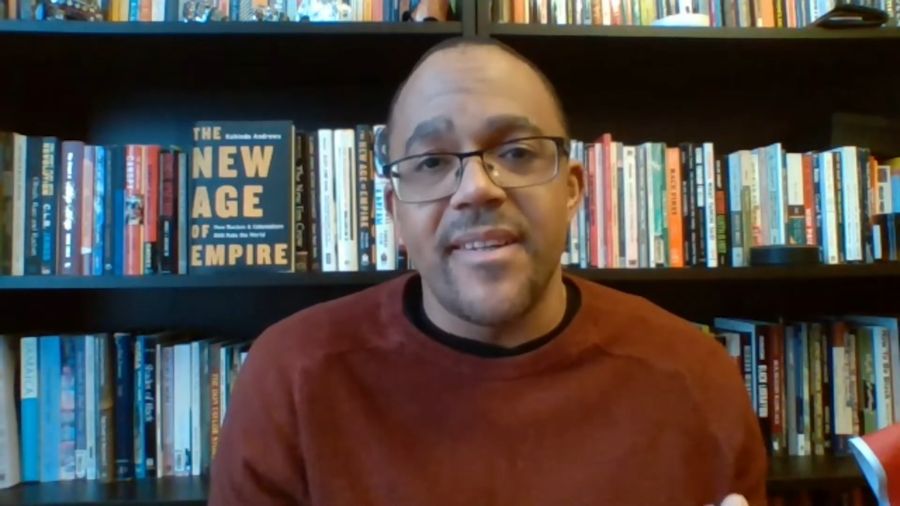
Table of Contents
ToggleIntroduction
Kehinde Andrews is one of the most influential and controversial intellectual voices in contemporary Britain. As a British academic and author, he has reshaped how race, colonialism, and power are discussed within universities and the wider public sphere. Admired by supporters for his courage and clarity, and criticised by opponents for his uncompromising stance, Andrews occupies a rare position as both a respected scholar and a public provocateur.
Known formally as Kehinde Nkosi Andrews, he is widely recognised for breaking academic barriers and pushing debates that many institutions avoided for decades. His work sits at the intersection of scholarship and activism, combining rigorous research with moral urgency. This biography explores his life, education, career, and lasting influence.
Quick Bio
| Field | Details |
|---|---|
| Full Name | Kehinde Nkosi Andrews |
| Known As | Kehinde Andrews |
| Year of Birth | 1983 |
| Birthplace | Birmingham, England |
| Nationality | British |
| Ethnicity | British African-Caribbean |
| Profession | British academic and author |
| Known For | First Professor of Black Studies in the UK |
Early Life and Background
Kehinde Andrews was born in Birmingham, England, a city shaped by migration, industry, and racial politics. He grew up in a household deeply connected to Black community activism, where education and political awareness were central to daily life. This environment played a crucial role in shaping his worldview and later academic focus.
During his early years, Andrews encountered racism within the British education system, an experience he has openly discussed in interviews and lectures. These encounters were not merely personal struggles but formative moments that pushed him toward understanding how structural inequality operates. Rather than distancing himself from education, he chose to confront it from within.
Education and Academic Formation
Andrews pursued higher education with a strong interest in psychology, sociology, and social research. His academic journey culminated in a PhD in Sociology and Cultural Studies from the University of Birmingham, completed in 2011. His doctoral research focused on Black radicalism and community-based education, themes that would later define his career.
His education provided him with both theoretical depth and practical insight. Importantly, his academic training did not detach him from lived realities; instead, it sharpened his ability to connect scholarly work with social movements and community struggles.
Start of Academic Career
The early stages of Kehinde Andrews’ career were marked by teaching, research, and growing public engagement. He entered academia at a time when Black Studies had little formal recognition in the United Kingdom. Rather than adapting to existing academic limitations, Andrews challenged them directly.
His work gained increasing attention for its clarity and directness. He questioned traditional narratives around British history, empire, and race, positioning himself as a scholar unwilling to soften his conclusions for institutional comfort.
Becoming a Pioneer in Black Studies
Kehinde Andrews made history by becoming the first Professor of Black Studies in the UK at Birmingham City University. This achievement was both celebrated and contested, highlighting the tension his work often generates. For supporters, it represented long-overdue progress. For critics, it symbolised a challenge to established academic norms.
He also played a central role in developing Europe’s first undergraduate degree in Black Studies. This initiative transformed Black Studies from a marginal topic into a recognised academic discipline within British higher education.
Career Overview and Intellectual Focus
As a British academic and author, Andrews’ career spans teaching, research, writing, and public commentary. His intellectual focus includes racism, colonialism, empire, education, and Black radical thought. He argues that racism is not an occasional failure of society but a foundational structure shaping modern institutions.
His books and lectures are known for their direct language and moral clarity. While some praise his refusal to compromise, others criticise what they see as an overly confrontational approach. This balance of admiration and resistance has become a defining feature of his career.
Books and Written Work
Kehinde Nkosi Andrews has authored several influential books that examine race and power from historical and contemporary perspectives. His writing combines academic research with accessible language, allowing his work to reach audiences beyond universities.
His publications explore themes such as structural racism, colonial legacies, and the psychological impact of racial hierarchy. These works have contributed significantly to public debates and academic curricula across the UK and beyond.
Public Commentary and Media Presence
Beyond academia, Andrews is a prominent public commentator. He regularly participates in televised debates, panel discussions, and public lectures. His media presence has amplified his influence while also placing him at the centre of controversy.
He is known for challenging national myths and questioning symbols of British identity. While supporters see this as necessary truth-telling, critics argue that his views provoke division. Regardless of perspective, his impact on public discourse is undeniable.
Praise, Criticism, and Controversy
Kehinde Andrews’ career includes both praise and criticism. Positively, he is recognised for opening academic doors and forcing institutions to confront uncomfortable realities. Negatively, his uncompromising tone has attracted strong opposition from commentators who disagree with his conclusions.
These opposing reactions reflect the broader cultural debates around race and history in Britain. Andrews does not position himself as neutral; instead, he embraces the role of a challenging and disruptive intellectual.
Legacy and Long-Term Influence
The legacy of Kehinde Andrews lies in his ability to institutionalise Black Studies while keeping it politically relevant. He has changed how race is taught, discussed, and understood within British universities. More importantly, he has influenced a generation of students to question dominant narratives rather than accept them passively.
As a British academic and author, his long-term influence will likely be measured not only by his books or titles but by the conversations he forced society to have. Whether admired or criticised, his work has reshaped modern debates on race, power, and education.
Conclusion
Kehinde Andrews stands as a powerful and polarising figure in contemporary Britain. His journey from a politically engaged upbringing in Birmingham to becoming the UK’s first Professor of Black Studies reflects determination, intellectual courage, and resistance to conformity. While his ideas generate strong reactions, they also ensure that critical conversations about race and history remain impossible to ignore.
Frequently Asked Questions (FAQ)
Who is Kehinde Andrews?
Kehinde Andrews is a British academic and author known for his work on race, colonialism, and Black Studies.
Why is Kehinde Andrews important?
He is the first Professor of Black Studies in the UK and a key figure in establishing Black Studies as a recognised academic discipline.
What is Kehinde Nkosi Andrews known for?
He is known for his academic research, books, and public commentary on racism, empire, and structural inequality.
Is Kehinde Andrews controversial?
Yes, his outspoken views attract both strong support and strong criticism, making him a central figure in public debates on race.
What is his lasting legacy?
His legacy lies in transforming Black Studies in the UK and reshaping how race and history are discussed in education and society.