Leading by Listening: Sabeer Nelli’s Customer-First Philosophy Powers Zil Money’s Success

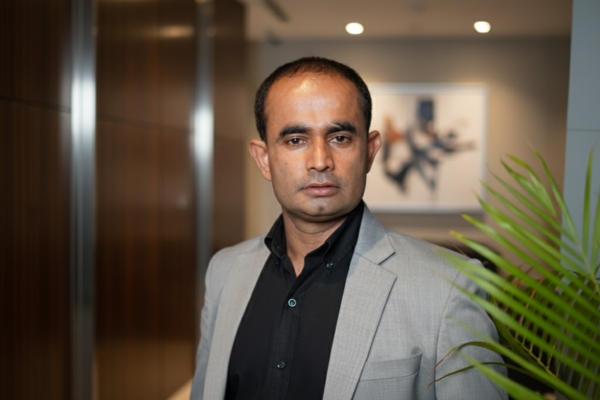
Why do most customer experience transformations fail? Because they start too far from the top. According to Gallup, only 1 in 4 employees believe their leaders consistently prioritize customer interests. For Sabeer Nelli, CEO of Zil Money, that statistic isn’t just a red flag—it’s a leadership failure.
While others trumpet innovation from the stage, Sabeer embeds it in silence. His philosophy? Customer-first isn’t a value you list. It’s a behavior you model, a metric you track, and a culture you repeat until it becomes second nature. And in a crowded fintech market rife with overbuilt dashboards and vague AI promises, that posture has helped Zil Money win not just attention—but trust.
Sabeer doesn’t talk about disruption. He talks about pain points. He doesn’t launch features to wow; he subtracts complexity until the work becomes invisible. This isn’t a company profile or a personal biography. It’s a map of how customer-first leadership—done right, from the top—can transform an entire organization.
Empathy, Not Ego
When Sabeer Nelli launched Zil Money, it wasn’t from a desire to dominate fintech. It was out of frustration. Running his previous business, he spent nights navigating half-baked financial tools that barely spoke to each other. He didn’t set out to build a company. He set out to fix a workflow—his own. That origin remains etched in Zil Money’s DNA. Today, every product sprint, team meeting, and strategic roadmap begins not with quarterly targets but with customer narratives.
Leadership here isn’t about commanding the room. It’s about listening well enough to leave it better.
Sabeer treats customer support tickets like product briefs. He scours them personally. His engineers sit in on user calls. His team’s guiding metric isn’t monthly active users—it’s how long it takes a small business to close its books with confidence. “If a user can’t reconcile Tuesday’s payments by Wednesday morning,” he often says, “we’re not done yet.”
Culture as Operating System
Customer-centricity in most organizations is a platitude. At Zil Money, it’s the OS. Town halls open with customer stories, not financial updates. Support wins are celebrated company-wide. Engineers are evaluated not just on uptime or throughput, but on NPS movements and user feedback loops.
Sabeer understands what many executives forget: employees who feel connected to customers create better products. Gallup research backs this up—employees engaged with customer outcomes are four times more likely to take pride in their company’s offerings.
Zil Money’s internal scorecards feature real-world metrics like time-to-resolution and customer retention. And while the company processes billions annually, what matters more to the leadership team is how quickly and clearly a contractor gets paid, or how a non-profit tracks disbursements without breaking into spreadsheets.
Saying No to Noise
Where some CEOs chase features for the sake of roadmap fireworks, Sabeer practices subtraction. His rule: innovation isn’t adding complexity. It’s removing friction. That means skipping flashy capabilities if they don’t serve the core job the customer is trying to do.
When a merchant asked for instant ACH, the team didn’t roll out a generic toggle. They built a compliant, auditable, and intuitive flow that mirrored how SMBs move money—step by step. Likewise, while others flaunt AI integrations, Zil Money quietly automated receipt categorization and reconciliation. No press release, just fewer hours spent by a tired business owner.
This philosophy puts Zil Money in rare company. It mirrors Amazon’s famed “work backwards” approach. It channels the cultural discipline of Zappos, where every employee owns the customer’s experience. It aligns with Starbucks’ current turnaround strategy under Laxman Narasimhan: show up, sleeves rolled, eyes open.
Governance with a Human Face
Sabeer has reengineered decision-making itself around the customer. No new feature, partnership, or policy gets greenlit without a full walk-through of its customer impact. Product teams routinely build customer personas into presentations. Even regulatory compliance is framed as customer reassurance, not just a legal checkbox.
That’s governance by empathy. And it’s measurable.
When Zil Money redesigned its pricing tiers to reflect the seasonal cash flow of contractors, churn dropped. When they introduced transparent audit trails for payments, trust soared—a crucial win in fintech, where opacity is often tolerated but never loved.
Tech That Serves, Not Showcases
The fintech CEO doesn’t romanticize technology. For him, it’s a servant, not a centerpiece. The goal isn’t to wow users with what tech can do, but to help them reclaim minutes, clarity, and sanity.
Virtual cards? Sure—but only if they reduce fraud and speed up reconciliations. Mobile apps? Yes—but they must allow a founder to run payroll from an airport gate. AI? Only if it auto-categorizes vendor receipts so no one else has to.
In this worldview, automation isn’t about cost-cutting. It’s about energy redirection—from admin to actual business-building.
A Blueprint for the C-Suite
Sabeer Nelli is not the loudest voice in fintech. But his influence is growing. Leaders across sectors would do well to study his model: show up for the customer, remove friction, empower employees to do the same, and measure only what the customer actually feels.
Because when the CEO leads with empathy, everything else—product, trust, loyalty, growth—compounds.
In an age of customer rhetoric,Sabeer offers rare evidence: a fintech where leadership really does put customers first.
And that might be the most radical innovation of all.