Limestone vs Sandstone: The Buyer’s Shortcut to Natural Stone That Looks “Architect-Grade”

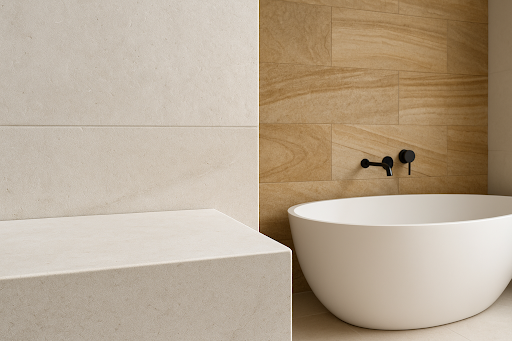
The trend shift: “soft-stone luxury” is replacing glossy, high-contrast surfaces
If you’ve noticed interiors and façades becoming calmer in recent years, that’s not coincidence. Designers and architects are moving away from glossy, high-contrast finishes and toward materials that feel warm, tactile, and stable over time. Instead of stone acting as a decorative layer, it’s increasingly treated as part of the building system itself.
This shift is most visible in hospitality lobbies, villa exteriors, spa-style bathrooms, and landscaped outdoor spaces. Buyers are no longer asking only “which colour looks good,” but “how will this surface behave after a year of sunlight, water, foot traffic, and cleaning?” That mindset is exactly where limestone and sandstone perform best.
For sourcing teams, this is why selection often starts at the manufacturer level. Reviewing a full stone library reveals how materials are categorized, finished, and controlled for real projects. A practical starting point is a natural stone manufacturer that presents stone by application rather than isolated photos.
Why buyers choose limestone and sandstone for “luxury without drama”
Limestone and sandstone sit in a rare middle ground. They look premium across large surfaces, yet they don’t create visual fatigue when repeated over floors, walls, columns, façades, or landscape elements. This matters because real projects repeat material at scale.
What these stones consistently solve for buyers is cohesion. They soften harsh contrast in modern architecture, keep large surfaces visually unified, pair naturally with wood, microcement, bronze, and brushed metals, and support both heritage-inspired and minimalist design without conflict.
Just as importantly, they allow luxury to feel durable, not fragile. That durability—visual and functional—is what increasingly defines “architect-grade” stone today.
Limestone: warmth, restraint, and predictable aging
Limestone is widely used because it reads soft even in modern architecture. Its fine-grain structure diffuses light gently, creating the calm, matte luxury that designers favor for interiors. In exteriors, limestone delivers a restrained European character that feels established rather than trendy.
From a buyer’s perspective, limestone performs best when specified professionally. Finish selection directly affects slip resistance and cleaning behaviour. Defining a tone window prevents patchy results across large areas. Climate exposure—freeze-thaw cycles, coastal air, or dry heat—must be matched to the limestone type. Thickness and flatness tolerances need to align with installation methods.
When buyers build a shortlist, starting from a structured limestone category is far more reliable than comparing random images. Limestone often appears “similar” until grain density, absorption rate, and finish feel are compared side by side.
How limestone weathers over time—and why buyers value that
One of limestone’s biggest advantages is how it ages. Rather than deteriorating visually, well-selected limestone develops a softer, more uniform patina. Edges round subtly, colour tones even out, and the surface begins to feel integrated into the building rather than freshly applied.
Maintenance frequency is moderate and predictable. In most interior and façade applications, routine neutral cleaning and periodic inspection are sufficient. Problems typically arise only when limestone is over-polished, exposed to aggressive cleaners, or used outside its intended environment. When specified correctly, limestone’s aging behaviour is a feature—not a flaw.
Sandstone: texture, grip, and outdoor reliability
Sandstone is often underestimated until buyers see it perform outdoors. Its naturally textured surface and layered grain structure make it ideal for façades, paving, steps, pool surrounds, and landscape architecture. Where limestone emphasizes softness, sandstone emphasizes grip and material honesty.
Successful sandstone sourcing depends on grain orientation, finish choice (sawn, sandblasted, brushed, tumbled), appropriate thickness, and a sealing strategy matched to exposure level. When these variables are controlled, sandstone delivers long-term stability in environments where smoother stones struggle.
For exterior-heavy projects, buyers typically compare options within a dedicated sandstone category to align material performance with weather, foot traffic, and maintenance expectations.
Weathering, aging, and maintenance: limestone vs sandstone in real life
Both stones age well—but differently. Limestone ages by softening visually, developing an even patina that enhances architectural calm. Sandstone ages by reinforcing texture; its surface continues to hide dust, water marks, and minor wear, especially outdoors.
Maintenance frequency reflects this difference. Limestone usually requires gentler, more consistent care to preserve its uniform appearance, particularly indoors. Sandstone, by contrast, is more forgiving in exterior and landscape applications, often requiring less frequent visual maintenance once properly sealed.
This distinction matters more than appearance. “Architect-grade” stone isn’t defined by how dramatic it looks on day one—it’s defined by how reliably it performs after years of use.
Limestone vs sandstone: how buyers decide in real projects
Buyers rarely choose based on which stone is “better.” They choose based on where the stone will live.
Limestone is the smarter choice for interior walls and floors, spa and wellness spaces, villa façades aiming for refined simplicity, and projects that value tailored visual calm.
Sandstone is the smarter choice for outdoor paving, steps, pool surrounds, earthy façades, landscapes, and commercial exteriors where texture hides wear and enhances safety.
A simple rule applies: if the project prioritizes touch-and-feel luxury, limestone often wins. If it prioritizes weather and wear reality, sandstone usually leads.
The buyer checklist that prevents expensive surprises
Experienced buyers lock the fundamentals early. They define the application precisely, select finish based on usage, approve an acceptable tone range instead of a single sample, confirm thickness and flatness tolerances, request batch grouping, and verify packaging standards that protect edges and faces during transport.
These steps don’t complicate sourcing—they simplify outcomes.
Why “architect-grade” really means durable, controllable, and repeatable
In today’s market, “architect-grade” no longer means visually striking. It means predictable aging, manageable maintenance frequency, stable performance across zones, and the ability to reorder without visual shock.
This is why more buyers work factory-direct. Fewer layers mean clearer control over finish consistency, thickness accuracy, batch grouping, and packing discipline. Suppliers that think in systems—not just slabs—reduce long-term project risk.
That’s why many buyers shortlist partners like FOR U STONE when sourcing limestone and sandstone across multiple applications. The value isn’t just material variety—it’s the ability to maintain design intent from selection through installation and future expansion.
FAQ
1) Is limestone a good choice for outdoor use?
It can be, but it depends on the limestone type, finish, and climate exposure. Buyers should match limestone selection to freeze-thaw risk, moisture exposure, and the required slip resistance for steps and wet zones.
2) Which is better for pool surrounds: limestone or sandstone?
Sandstone is often preferred for pool surrounds because textured finishes can provide better grip and a more forgiving outdoor surface feel. The best choice depends on finish, local climate, and maintenance expectations.
3) How do I avoid a patchy look when ordering natural stone in bulk?
Don’t approve a single sample and hope for the best. Approve an acceptable tone and movement range, then ask the supplier to group slabs or tiles by visual family so large areas stay cohesive.
4) What finish looks most “high-end” for limestone interiors?
Many modern luxury projects favor honed or brushed finishes because they look calm under layered lighting and reduce glare. The finish should match the room’s lighting plan and usage, not just showroom appearance.
5) Does sandstone require sealing?
Often yes—especially in outdoor or wet applications. Sealing strategy depends on sandstone porosity, finish, and exposure level. Buyers should align sealing and cleaning guidance with real-world usage, such as hospitality versus residential settings.
Conclusion: long-term value beats first-day beauty
Limestone and sandstone are gaining ground because they deliver calm, architectural luxury that lasts. But the real advantage isn’t the stone—it’s the method. When buyers define application, control finish, approve tone ranges, and plan for aging and maintenance, natural variation becomes character instead of chaos.
The smartest buyers don’t choose a stone for how it looks today. They choose one for how it will perform, age, and support the building over time. That’s where limestone and sandstone prove their long-term value—and why they continue to earn their place in architect-grade projects.