Monica Turner: A Trailblazing American Ecologist – Positive Impact on Science and Challenges Faced
Transforming Landscape Ecology Through Groundbreaking Research and Inspiring Future Generations

Introduction
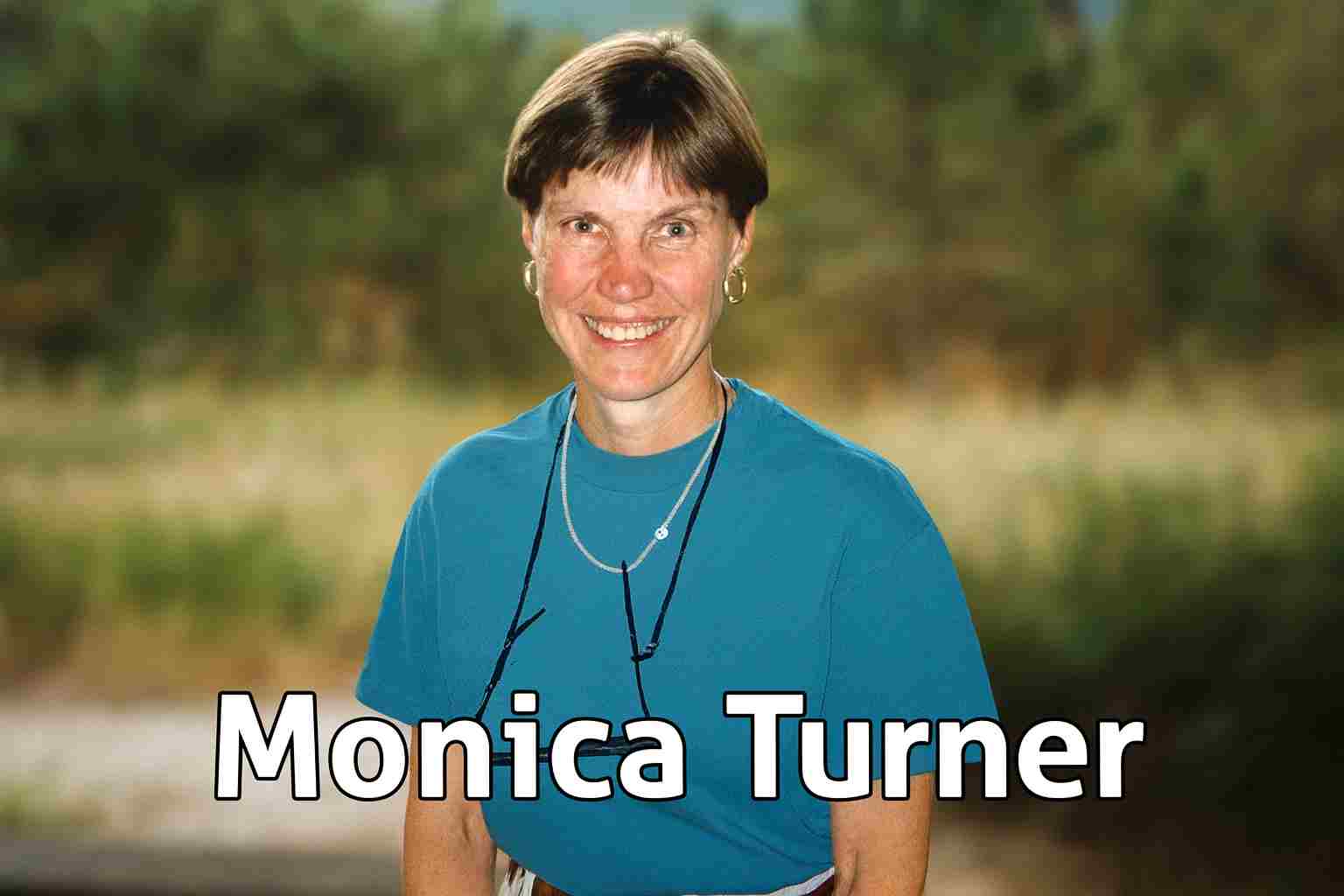
Monica Turner stands out as a remarkable American ecologist whose groundbreaking work in landscape ecology has transformed our understanding of ecosystems, resilience, and climate impacts. With a career spanning decades, she has made significant contributions to research, education, and ecological awareness. Her journey offers not only inspiring successes but also lessons learned through challenges, reflecting the reality of scientific exploration.
This article delves into Monica Turner’s life, career achievements, research milestones, and the legacy she continues to build. It also presents her quick biography and addresses common questions about her work and influence.
Quick Bio
| Attribute | Details |
|---|---|
| Full Name | Monica G. Turner |
| Date of Birth | December 9, 1958 |
| Nationality | American |
| Birthplace | Long Island, New York, USA |
| Education | B.S. Biology, Ph.D. Ecology |
| Profession | Ecologist, Professor, Researcher |
| Notable Focus | Landscape Ecology, Fire Ecology |
| Awards & Honors | NAS Member, Franklin Medal, ESA Eminent Ecologist Award |
| Current Position | Professor, University of Wisconsin–Madison |
Monica Turner – Early Life and Education
Monica Turner was born on December 9, 1958, and grew up in Long Island, New York. As a child, she developed a strong connection with nature, exploring the outdoors and showing curiosity about plants, animals, and ecosystems. Her interest in science grew steadily during her school years, eventually shaping her career path toward ecology.
She attended Fordham University, where she earned a Bachelor of Science degree in Biology in 1980, graduating with top honors. During this time, she initially considered a career in veterinary science. However, a transformative summer job as a park ranger at Yellowstone National Park changed her perspective. The breathtaking landscapes and complex ecosystems inspired her to pursue ecology, leading her to the University of Georgia, where she completed her Ph.D. in Ecology in 1985.
Start of Career and Breakthrough Moments
After completing her doctorate, Monica Turner began her professional career as a postdoctoral researcher under Eugene P. Odum, one of the most influential ecologists of the twentieth century. Working with Odum provided her with valuable experience in ecological theory and landscape studies.
In 1986, she co-organized the first U.S. conference on landscape ecology, introducing the field to American scientists and setting the stage for its rapid growth. This event was a breakthrough moment that established Monica Turner as one of the pioneers in this emerging discipline.
Career at Oak Ridge National Laboratory
From 1987 to 1994, Monica Turner worked as a staff scientist at Oak Ridge National Laboratory. Here, she developed computer simulation models to understand how ecosystems respond to disturbances such as fire, wind, and human activities.
This period was marked by intense research, during which she explored how landscapes change over time and how animals, plants, and other organisms adapt to these changes. Her work laid the foundation for modern spatial ecology and helped create strategies for managing forests, wildlife, and natural resources more effectively.
Yellowstone Research – A Lifelong Commitment
One of Monica Turner’s most famous contributions is her long-term research on Yellowstone National Park. Following the massive 1988 Yellowstone wildfires, she began studying how the park’s ecosystems recovered after such a large-scale disturbance.
Her findings revealed that fire, while destructive in the short term, often plays a positive ecological role by promoting new growth, increasing biodiversity, and creating habitat diversity. This research changed how scientists, policymakers, and the public view wildfires, shifting the focus from suppression to ecological balance and resilience.
Over the years, Turner expanded her Yellowstone studies to include the effects of climate change, bark beetle infestations, and drought on forest ecosystems. Her work provided critical insights into how ecosystems respond to multiple interacting factors, both natural and human-driven.
Academic Career at the University of Wisconsin–Madison
In 1994, Monica Turner joined the University of Wisconsin–Madison as a professor in the Department of Zoology, now known as Integrative Biology. She currently holds the prestigious titles of Eugene P. Odum Professor of Ecology and Vilas Research Professor.
At UW–Madison, she has trained and mentored hundreds of undergraduate and graduate students, published extensively in top scientific journals, and authored several influential textbooks on landscape ecology. Her teaching emphasizes critical thinking, quantitative analysis, and the importance of linking scientific research to real-world environmental challenges.
Publications and Awards
Monica Turner has authored or co-authored over 250 scientific papers and several widely used textbooks, including:
-
Landscape Ecology in Theory and Practice
-
Quantitative Methods in Landscape Ecology
-
Learning Landscape Ecology
Her outstanding contributions have earned her many prestigious awards:
-
National Academy of Sciences Member (2004)
-
Robert H. MacArthur Award (2008)
-
Eminent Ecologist Award, Ecological Society of America (2020)
-
Benjamin Franklin Medal in Earth and Environmental Science (2020)
-
Fellow of the American Academy of Arts & Sciences (2023)
Positive Impact and Challenges
Monica Turner’s work has had a positive impact on ecology, conservation, and environmental policy. Her research has helped scientists and land managers understand how to balance natural disturbances with conservation goals, ultimately protecting biodiversity and ecosystem health.
However, her career also involved challenges, including the difficulty of predicting ecological changes under climate uncertainty and balancing research demands with teaching and mentoring responsibilities. These experiences highlight the realities of scientific careers, where breakthroughs often emerge after years of persistence and hard work.
Legacy and Continuing Influence
Monica Turner’s legacy extends far beyond her publications and awards. She has inspired countless young scientists to explore ecology, conservation, and environmental sciences. Her textbooks continue to educate students worldwide, while her Yellowstone research remains a model for long-term ecological studies.
As climate change and biodiversity loss become urgent global issues, Monica Turner’s insights into ecosystem resilience, landscape dynamics, and disturbance ecology remain more relevant than ever.
Conclusion
Monica Turner’s life and career showcase the power of science to explain, predict, and sometimes even heal the natural world. Her journey—from a curious student in New York to a world-renowned American ecologist—offers inspiration to future generations of scientists.
Through her research, teaching, and leadership, Monica Turner has transformed how we view ecosystems, disturbances, and resilience. Her work demonstrates that even in the face of challenges, both ecological and professional, science can guide us toward a deeper understanding of our planet and a more sustainable future.
FAQs
Q1: Who is Monica Turner?
Monica Turner is an American ecologist known for her pioneering work in landscape ecology and long-term research on Yellowstone National Park ecosystems.
Q2: What is Monica Turner famous for?
She is best known for studying the effects of fire, climate change, and disturbances on ecosystems, especially in Yellowstone National Park.
Q3: Where does Monica Turner work?
She is a professor at the University of Wisconsin–Madison in the Department of Integrative Biology.
Q4: What awards has Monica Turner received?
Her honors include the National Academy of Sciences membership, Robert H. MacArthur Award, Eminent Ecologist Award, and the Benjamin Franklin Medal.
Q5: Why is Monica Turner’s research important?
Her work helps scientists and policymakers understand ecosystem resilience, guiding better conservation and land management strategies worldwide.