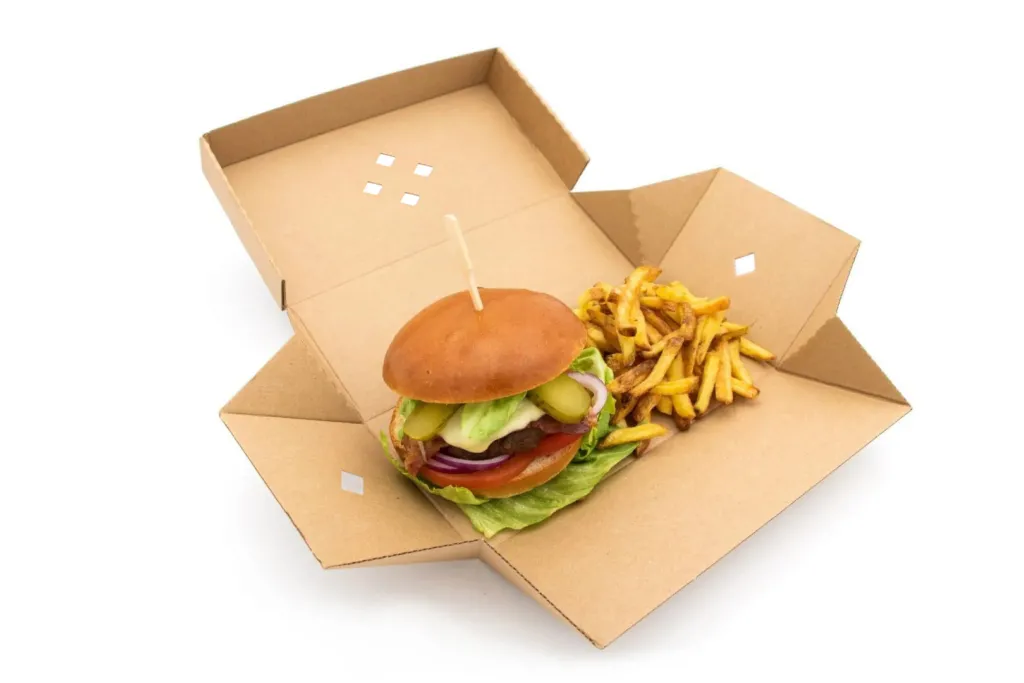
The way you pack your burger not only affects its taste and quality but also shapes the consumers’ perception of your brand. Your packaging should be leak-proof, grease-resistant, maintain heat, and protect the burger during delivery. Sounds challenging? It doesn’t have to be. In this packaging guide for the burger business, we will explore the right way to pack a burger, the best packaging for burgers, and the expert suggestions for burger boxes.
What Is the Best Packaging for Burgers?
The best packaging for burgers should have essential features, such as durability, insulation, and the ability to prevent sogginess. Moreover, it should be greaseproof to give convenience to customers.
Let’s break down the various types of burger packaging you need to consider.
- Clamshell Containers
Very secure and easy to open and close. Some clamshell containers perform well at keeping the burger hot, especially styrofoam.
- Paper/Wax/Parchment Wraps
Lightweight, cost-effective, and eco-friendly. They wrap snugly, helping keep your burgers warm and preventing messes. Plus, they are greaseproof and recyclable.
- Paper-Lined Foil
A combination of paper and foil, this material is oil-proof and moisture-proof, helping to keep your burgers fresh.
- Custom Boxes
Custom cardboard, kraft, or corrugated boxes offer perfect insulation, sturdiness, and protection against damage. Ventilation holes can also be added to prevent your burger from getting soggy. Overall, these boxes are a good choice for delivery or dine-in and can be customized with branding elements.
What Do Restaurants Wrap Burgers In?
Most fast-food restaurants in the US wrap burgers in various materials, most commonly paper-like greaseproof, wax, and parchment paper, to keep them fresh and prevent sogginess.
On the other hand, some others may prefer aluminum foil or wrap their burgers in paper-lined foil to keep them hot for longer. For larger or more specialty burgers, some restaurants prefer a custom box instead of wrapping.
So, what material would be most suitable for the packaging of the hamburger?
Among the various types of packaging, paper-based materials such as greaseproof paper and cardboard are most suitable for hamburger packaging. The main reason is that they offer grease resistance, heat retention, and environmental friendliness.
Yes, greaseproof paper helps you prevent greasy messes, keeping your burgers looking convincing and delightful. Meanwhile, cardboard boxes are highly durable to maintain the temperature of your burgers.
Expert Suggestions for Burger Boxes
To help you choose the proper packaging, below are key considerations for burger packaging.
- Functionality: Your packaging should be grease-resistant, durable, and provide proper insulation.
- Delivery: Consider delivery and choose packaging that protects your burger and is stackable for transport.
- Optimization: Get different sizes if you’re offering various burger types. For example, large double burgers should be prevented from shifting around.
- Customer experience: Ensure your packaging is easy to use and tamper-evident while promoting your business.
- Budget-friendly: Budget remains one of the most important considerations in product packaging. You can choose burger boxes wholesale in this context as they are customizable at low prices.
- Sustainable: Opt for eco-friendly materials like recycled paper, which is recyclable and environmentally friendly.
Nevertheless, it is essential to balance all the factors above to ensure your burgers are delivered in good condition while meeting both business and consumer expectations.
How to Package a Burger?
Despite choosing from different packaging types and considering key factors, you still need to pack your burger properly to preserve its taste and quality. The steps vary depending on how you want to package your burger. Let’s break it down.
A Half Wrap
- Fold your parchment or wax paper in half diagonally to create a large triangle.
- Place your burger on the long side of the triangle.
- Pull the top corner down and over the burger, then roll your burger from the bottom up while folding the sides in.
- Ultimately, tuck the final flap into the pocket to secure your burger.
A Classic Wrap
- Whether you use wax paper, parchment paper, or foil, make sure it’s about 2.5 times the size of your burger.
- Place the burger in the center of the paper so the inside wrapper faces up.
- Bring the two opposite sides of the wrapper together over the top of the burger. Pull each side and align them evenly across the top.
- Fold the top edge of the wrapper down towards the bottom bun until the wrap snugs the burger.
- Finally, fold the top edges of the wrapper into the sides of the burger.
How to Pack a Burger for Delivery?
Once you wrap the burger either in a classic or half wrap, it’s time to deliver it to the consumer.
Here are the steps to secure your burger during delivery.
- Choose a container
Use a sturdy container that can withstand movement during transit. Clamshells or cardboard boxes are good options.
- Focus on Leak-proof options
Ensure the container is leak-proof, especially if you’re delivering saucy burgers, to prevent spills.
- Select greaseproof materials
Look for options like poly-coated cardboard or bagasse, as they can prevent oil from leaking through.
- Add a tamper-evident sticker
Consider adding a tamper-evident sticker on the outside of the container to reassure consumers that your burger has not been touched during delivery.
- Use a handled bag
For further protection and easy carrying, place the secured container/box inside a handled paper bag.
Summing Up
Indeed, how you pack your burger not only affects its taste and quality but also shapes consumers’ perceptions of your brand. Your burger packaging should have essential features, such as durability, insulation, and the ability to prevent sogginess. Moreover, it should be greaseproof to give convenience to customers.
By following the expert suggestions and the right way to package your burger, you can ensure it stays warm and delicious until it reaches customers’ hands.