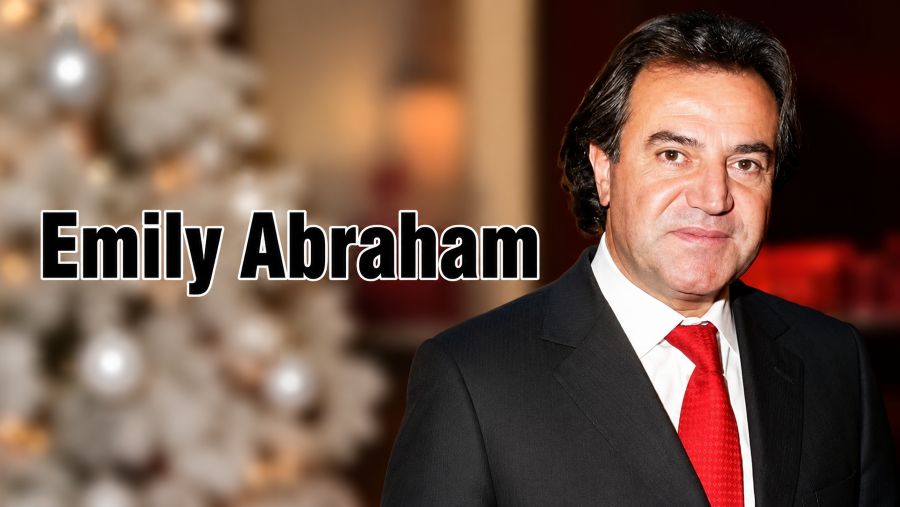
Introduction
Simon Halabi is a Syrian-born British businessman and property developer who was once ranked among the wealthiest people in Britain.
He became known for a major London commercial-property portfolio, an early stake in The Shard, the Esporta health-club business and ambitious plans involving Mentmore Towers.
His career later changed dramatically during the global financial crisis. Heavy borrowing, falling commercial-property values and company defaults were followed by asset sales and personal bankruptcy in 2010.
Today, his public business profile is smaller than it was at its peak, although official UK records show that he continues to hold several active company directorships.
Simon Halabi Profile
| Detail | Verified Information |
|---|---|
| Full Name | Bassam Simon Halabi |
| Common Name | Simon Halabi |
| Birth Date | August 1958 |
| Age | 67 as of June 2026 |
| Birthplace | Syria |
| Nationality | British |
| Country of Residence | United Kingdom |
| Profession | Businessman and property developer |
| Known For | Major London property investments and an early stake in The Shard |
| Peak Recorded Wealth | $4.3 billion in the 2007 Forbes list |
| Bankruptcy | Declared bankrupt in April 2010 |
| Current Public Role | Director of several active UK companies |
Who Is Simon Halabi?
Simon Halabi became a prominent figure in British commercial property during the years before the 2008 financial crisis.
He acquired interests in major office buildings occupied by well-known financial and insurance companies. His property activity brought him international attention and a place on leading wealth rankings.
Unlike residential developers such as Tony Pidgley, Halabi was particularly associated with large commercial buildings, highly leveraged acquisitions and prestige assets.
His name is now connected with both the scale of his former property empire and the financial risks that emerged when market conditions changed.
Early Life and Move into British Business
Bassam Simon Halabi was born in Syria in August 1958.
He later established himself in the United Kingdom, where he built his reputation through property acquisitions and investments.
His nationality is recorded as British in current UK company filings, while his country of residence is listed as the United Kingdom.
During his strongest business period, he kept a comparatively private public profile despite controlling property assets worth substantial amounts.
Building a Major London Property Portfolio
Halabi expanded his wealth by acquiring large commercial buildings, particularly in central London.
His portfolio was reported to have included buildings occupied by JP Morgan, Aviva and Old Mutual. Long leases with major corporate tenants made these properties attractive to lenders and investors.
This strategy allowed him to control highly valuable assets with borrowed money. It worked strongly while commercial-property prices and access to credit continued to rise.
Other British property entrepreneurs, including Paul Sykes, also built significant fortunes through large developments and commercial investments, although their business structures and risk levels differed.
Halabi’s approach became closely associated with the credit-driven property boom that preceded the global financial crisis.
Simon Halabi and The Shard
One of the most searched parts of Simon Halabi’s business career is his connection with The Shard.
He held a one-third stake in the London skyscraper project during its earlier development period. The building later became one of the most recognisable parts of the capital’s skyline.
However, he sold his interest in early 2008 for a reported £30 million. The stake had reportedly carried a substantially higher valuation only months earlier.
His departure came before the landmark building was completed and before it achieved its present international status.
For this reason, he is more accurately described as an early investor or developer connected with The Shard rather than the person who completed the project.
Major Properties and Business Interests
Halabi’s former portfolio extended beyond The Shard.
It included major London office buildings, private properties, a French wine estate and the historic Mentmore Towers in Buckinghamshire.
He also became involved with Esporta, a premium health-and-fitness club chain. The acquisition represented an expansion beyond traditional commercial property.
The scale and variety of these investments made his business empire highly visible, but they also increased its financial complexity.
Property entrepreneurs such as Grant Bovey have also experienced major changes in fortune, showing how borrowing and property-market conditions can quickly reshape a business career.
Mentmore Towers Plans
Halabi purchased Mentmore Towers in 1997.
The Grade I-listed Buckinghamshire mansion had previously been associated with the Rothschild family. Plans were developed to transform it into an exclusive luxury hotel.
The proposed project included high-end accommodation and hospitality facilities. However, the transformation was never completed as originally planned.
Financial and legal difficulties affected the development, and the condition and future of the building later became the subject of public concern.
Mentmore Towers remains closely connected with discussions about Halabi because it represented one of his most ambitious property ideas.
Peak Wealth and Forbes Ranking
Halabi reached the height of his public financial success in 2007.
Forbes placed him at number 194 on its global billionaires list and recorded his wealth at approximately $4.3 billion.
His wealth came mainly from real estate and the value attached to his property interests during a period of high commercial-property prices.
The figure represents his estimated wealth at that historical peak. It should not be presented as his current financial position.
Unlike the long-term housebuilding model associated with Steve Morgan, Halabi’s empire was particularly exposed to debt, refinancing conditions and changing commercial valuations.
Esporta and the First Major Financial Problems
The Esporta health-club investment became one of the early signs of pressure within his wider business activities.
Halabi had purchased the business for a reported £460 million. However, Esporta later entered administration following financial difficulties.
Reports estimated that the failure cost him at least £120 million of his own money.
The loss also affected relationships with lenders at a time when international credit markets were becoming less stable.
These problems appeared before the full force of the 2008 financial crisis reached the UK property market.
Property Crash and Bond Default
The global financial crisis caused commercial-property prices to fall sharply.
Buildings that had previously supported large loans declined in value, while banks became less willing to provide or renew credit.
In 2009, companies connected with Halabi defaulted on bonds reported to be worth about $1.9 billion.
The debt had been secured against a group of London properties. Falling valuations meant that the assets were no longer worth enough to comfortably support the borrowing placed against them.
Liquidators were appointed to parts of the business structure, and major properties were prepared for sale as creditors attempted to recover money.
Bankruptcy in 2010
Simon Halabi was declared bankrupt by the High Court in London in April 2010.
The bankruptcy followed a dispute involving a loan reported at more than £56 million.
It represented a dramatic change from his position only three years earlier, when international wealth rankings had valued his fortune in the billions.
His experience became a clear example of the dangers of using high levels of debt to control property assets.
When prices rise, borrowing can increase investment returns. When prices fall, the same borrowing can quickly leave assets worth less than the debts secured against them.
This lesson remains relevant to younger property entrepreneurs such as Akshay Ruparelia, even though modern property businesses may use very different models.
Sale of Former Assets
A number of properties connected with Halabi’s former empire were sold after its financial collapse.
Aviva Tower was sold in 2011. Other London buildings and interests were also transferred or prepared for sale as lenders and insolvency professionals dealt with outstanding debts.
Cambridge House in Piccadilly was among the prominent properties connected with the disposal process.
His French wine estate, Château Cantenac-Brown in Bordeaux, was sold to a French family in 2019.
These sales reduced the portfolio that had previously placed him among Britain’s richest property investors.
Legal History and Court Cases
Halabi’s public record includes several criminal and civil legal proceedings that should be reported accurately and without sensational language.
In 1998, he was convicted in France of rape and received a suspended prison sentence. The conviction was later connected to him by British authorities, leading to notification requirements in the United Kingdom.
In a separate case, he was accused of racially aggravated assault following an incident in Mayfair. He was acquitted of that charge in December 2016.
He later challenged the UK notification order, but the High Court dismissed that challenge in 2020.
In 2022, he faced three charges alleging failures to comply with notification requirements involving travel and bank accounts.
In March 2024, he was found not guilty of all three charges after the prosecution offered no evidence.
The 2022 Privy Council Trust Case
Halabi was also involved in an important civil trust-law case decided by the Judicial Committee of the Privy Council in October 2022.
He appeared as executor of the estate of his late mother, Madam Intisar Nouri, in a dispute concerning the Ironzar II Trust.
The case examined how the rights of former and successor trustees should rank when trust assets are insufficient to meet all liabilities.
The majority held that successive trustees’ interests generally rank equally rather than giving automatic priority to the trustee appointed first.
The official Privy Council case record identifies Halabi as the appellant in his capacity as executor and explains the legal questions considered by the court.
The ruling has wider importance in trust law, but it should not be confused with a restoration of Halabi’s former property wealth.
Simon Halabi’s Current Companies
Simon Halabi continues to appear in the UK company register.
As of June 2026, official filings show him as an active director of:
- Mayfair Estate Management Limited
- Mentmore Towers Estate Limited
- Buckingham Estates Management Limited
He was appointed to these positions during 2022.
The Companies House officer record lists his nationality as British, his country of residence as the United Kingdom and his identity-verification status as complete.
Two additional companies to which he was appointed in 2024 are recorded as dissolved.
These public records show continued company involvement, although they do not establish that he has rebuilt a business empire comparable with the one he controlled before 2008.
Current Status in June 2026
As of June 2026, Simon Halabi remains associated with property and estate-management companies in the United Kingdom.
He does not appear on current major billionaire rankings, and no dependable source supports the frequently repeated online claim that his present wealth is $50 million.
For accuracy, the clearest financial figure remains his historical 2007 Forbes valuation rather than an unsupported modern estimate.
His present public profile is mainly connected with active company appointments, his earlier London property portfolio, Mentmore Towers and the legal cases involving him.
Business Lessons from His Rise and Fall
Halabi’s career demonstrates how quickly paper wealth can increase when property prices rise and credit is easily available.
It also shows that owning expensive buildings does not always mean that an investor has strong financial security.
The amount of debt attached to a property, its rental income, refinancing terms and changing market value can be as important as the building’s headline price.
His experience is therefore both a story of extraordinary property expansion and a warning about excessive financial leverage.
Conclusion
Simon Halabi is a Syrian-born British businessman whose name became closely connected with high-value London commercial property.
At his peak, Forbes estimated his fortune at $4.3 billion, while his portfolio included an early interest in The Shard and several important corporate buildings.
The financial crisis exposed the risks within his debt-supported business structure. Bond defaults, asset disposals and bankruptcy followed.
Official records now show that he continues to serve as a director of several UK companies, but his current position is very different from the billionaire property empire he controlled during the 2000s.
His complete story is best understood through verified business records, historical financial reporting and accurate court outcomes rather than unsupported modern wealth estimates.
Frequently Asked Questions
Who is Simon Halabi?
He is a Syrian-born British businessman and property developer formerly associated with major London commercial properties.
What is Simon Halabi’s full name?
His full name is Bassam Simon Halabi.
How old is Simon Halabi?
He is 67 years old as of June 2026 and was born in August 1958.
Was Simon Halabi involved with The Shard?
Yes, he owned a one-third stake during the project’s early development before selling it in 2008.
How wealthy was Simon Halabi at his peak?
Forbes estimated his wealth at $4.3 billion in 2007 and ranked him number 194 worldwide.
Why did Simon Halabi go bankrupt?
Falling property values, high borrowing, business losses and debt problems contributed to his bankruptcy in 2010.
What companies is Simon Halabi currently connected with?
Companies House lists him as an active director of Mayfair Estate Management, Mentmore Towers Estate and Buckingham Estates Management.
What happened in his 2024 court case?
He was found not guilty of all three notification-related charges after the prosecution offered no evidence.