30-Second Summary
- Performance marketing in 2026 demands a full-funnel view, not isolated channel metrics.
- Privacy changes, AI-driven platforms, and omnichannel journeys have reshaped how success is measured.
- Marketers must balance efficiency, incrementality, and long-term value across the funnel.
- Metrics today are less about volume and more about quality, contribution, and sustainability.
Introduction
Performance marketing has undergone a fundamental transformation. In 2026, growth is no longer driven by aggressively optimizing a single metric at the bottom of the funnel. Rising media costs, AI-led bidding systems, stricter privacy regulations, and increasingly non-linear customer journeys have forced brands to rethink what “performance” truly means.
The modern consumer may first encounter a brand through a short-form video, revisit it via a search query days later, read reviews on a marketplace, and finally convert through a remarketing ad or a direct visit. Measuring this journey using last-click attribution or siloed channel KPIs is no longer sufficient.
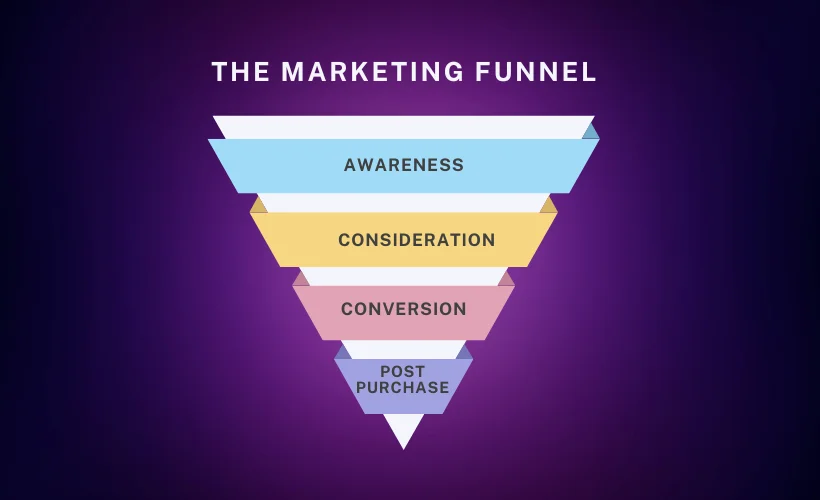
Full-funnel performance marketing focuses on understanding how awareness, consideration, conversion, and retention metrics work together to drive profitable, sustainable growth. For any performance marketing agency, mastering these interconnected metrics is essential to delivering measurable ROI and long-term brand impact. This blog explores the most critical full-funnel performance marketing metrics that matter in 2026 and explains how brands should interpret and act on them.
The Evolution of Performance Marketing in 2026
Three major forces define performance marketing today. Together, these changes have elevated the importance of full-funnel metrics that connect brand impact to business outcomes.
- Privacy-First Measurement:
With the decline of third-party cookies and restricted user-level tracking, platforms such as Google and Meta increasingly rely on modeled conversions and aggregated data. This has shifted focus from hyper-granular tracking to directional insights. - AI-Driven Media Buying:
Smart bidding, automated targeting, and creative optimization powered by AI mean marketers influence outcomes more through strategy and inputs than manual levers. - Profitability Over Pure Scale:
Venture-funded growth at all costs has given way to disciplined, margin-aware scaling. Metrics must reflect not just growth, but quality and durability.
Top-of-Funnel Metrics
Top-of-funnel performance marketing is no longer about chasing cheap impressions. In 2026, awareness metrics are evaluated based on attention quality and future impact, not just reach. Depending on a data-driven approach with support from top digital ads agencies like Intent Farm can be a boon to make this work.
1. Qualified Reach
Qualified reach measures how many people within your ideal customer profile were actually exposed to your message. Unlike raw reach, this metric emphasizes relevance over scale. High-quality reach ensures that spend at the top of the funnel drives downstream performance rather than inflating vanity metrics.
2. Attention Time and Engagement Rate
Impressions alone do not indicate impact. Attention-based metrics such as average view duration, scroll depth, and video completion rate now play a central role. These metrics help marketers understand whether their creative assets are capturing interest in an increasingly crowded media environment.
3. Brand Lift Metrics
Brand lift studies measure changes in awareness, recall, and consideration caused by advertising exposure. In 2026, brand lift is increasingly used as an early predictor of future conversion efficiency. Strong brand lift often correlates with lower cost per acquisition later in the funnel, making it a critical leading indicator.
Mid-Funnel Metrics
The middle of the funnel is where interest turns into intent. Measuring this stage accurately is essential to identifying whether top-funnel investments are working.
4. Engaged Sessions
Engaged sessions track users who meaningfully interact with your website or app through actions such as reading content, exploring product pages, or using on-site tools. This metric provides a clearer signal of intent than simple traffic numbers.
5. Marketing Qualified Leads (MQLs) or Intent Signals
For lead-driven businesses, MQLs remain relevant, but the definition has evolved. In 2026, MQLs are scored using behavioral depth, recency, and predicted conversion likelihood rather than form fills alone. For e-commerce brands, intent signals may include add-to-cart actions, wishlist saves, or repeat product views.
6. Assisted Conversion Rate
Assisted conversion rate measures how often a channel contributes to a conversion without being the final touchpoint. This metric is essential for evaluating mid-funnel channels such as content marketing, influencer campaigns, and upper-funnel paid media. It ensures that supportive channels receive credit for their role in driving conversions.
Bottom-of-Funnel Metrics
While conversions remain critical, the way they are evaluated has become more nuanced.
7. Blended Cost Per Acquisition (CPA)
Blended CPA aggregates spend and conversions across all paid channels rather than evaluating them in isolation. This approach reflects how modern media platforms work together to drive results. Blended CPA helps leadership teams understand true acquisition efficiency at the business level.
8. Conversion Quality Score
Not all conversions are equal. Conversion quality scores assess purchases or leads based on attributes such as order value, likelihood of repeat purchase, or downstream revenue. This metric ensures optimization efforts prioritize high-value customers over low-quality volume.
9. Incremental Conversion Lift
Incrementality measures how many conversions would not have happened without advertising. In 2026, incrementality testing is a cornerstone of advanced performance marketing strategies. By identifying true lift, brands can avoid overspending on conversions they would have captured organically.
Revenue and Profitability Metrics
As performance marketing matures, revenue and profit-aligned metrics have become central to decision-making.
10. Contribution Margin by Channel
Contribution margin evaluates how much profit remains after accounting for variable costs, including advertising spend. Measuring contribution margin by channel enables smarter budget allocation. Channels that deliver high revenue but low margins may require strategic adjustment.
11. Customer Lifetime Value (CLV)
CLV estimates the total revenue a customer is expected to generate over their relationship with the brand. In 2026, CLV models increasingly incorporate predictive AI and cohort analysis.
Optimizing for CLV rather than first-purchase revenue aligns marketing with long-term growth.
12. CLV to CAC Ratio
The CLV to CAC ratio measures the balance between customer value and acquisition cost. A healthy ratio indicates sustainable scaling, while a declining ratio signals inefficiency. This metric is widely used by both marketing leaders and finance teams.
Retention and Post-Purchase Metrics
Full-funnel performance marketing does not stop at conversion. Retention metrics are critical for understanding the true impact of acquisition efforts.
13. Repeat Purchase Rate
Repeat purchase rate measures how often customers return to buy again. High repeat rates often indicate strong product-market fit and effective onboarding. This metric is particularly important for subscription and D2C brands.
14. Time to Second Purchase
Time to second purchase reveals how quickly customers see enough value to return. Shorter times typically correlate with higher lifetime value. Marketing teams can use this insight to refine post-purchase communication and offers.
15. Retention-Adjusted ROAS
Traditional ROAS focuses only on immediate revenue. Retention-adjusted ROAS incorporates expected future revenue from acquired customers. This metric provides a more accurate view of campaign profitability in 2026.
Cross-Funnel Metrics
To truly understand performance, marketers must evaluate how the entire funnel operates as a system.
16. Funnel Velocity
Funnel velocity measures how quickly users move from awareness to conversion. Faster velocity often indicates strong messaging alignment and frictionless experiences. Monitoring velocity helps identify bottlenecks that slow growth.
17. Media Efficiency Ratio (MER)
MER compares total revenue to total marketing spend across all channels. It offers a high-level view of marketing effectiveness and is often used by executive teams. While not diagnostic on its own, MER provides valuable context for performance trends.
18. Attribution Model Consistency
Rather than relying on a single attribution model, 2026 best practices emphasize consistency across models. Comparing last-click, data-driven, and modeled attribution helps identify directional insights without over-reliance on any one view.
How Leading Brands Operationalize Full-Funnel Metrics
Platforms such as Amazon and Google increasingly reward advertisers who optimize holistically rather than narrowly, making this approach not just strategic but necessary. High-performing organizations share several common practices:
- They align marketing, finance, and analytics teams around shared definitions and goals.
- They invest in experimentation frameworks, including incrementality tests and geo-based experiments.
- They use dashboards that connect top-funnel engagement to bottom-line impact.
Common Mistakes to Avoid in 2026
Despite access to advanced tools, many brands still struggle with measurement. Avoiding these mistakes requires both analytical rigor and strategic patience. Common pitfalls include:
- Over-optimizing for short-term ROAS at the expense of brand health.
- Ignoring retention and post-purchase metrics.
- Treating attribution data as absolute truth rather than directional guidance.
Conclusion
In 2026, full-funnel performance marketing metrics are not about tracking everything but about tracking the right things. Success depends on understanding how awareness drives intent, how intent converts into revenue, and how customers deliver value over time.
Brands that master full-funnel measurement gain a decisive advantage: the ability to scale profitably, adapt quickly, and build lasting customer relationships. By focusing on metrics that truly matter, performance marketing becomes not just a growth engine but a sustainable business discipline.
If your organization is re-evaluating its performance measurement framework or seeking clarity in an increasingly complex media landscape, reach out to a digital marketing agency like Intent Farm for expert guidance and strategic support.