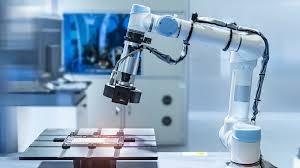
In the rapidly evolving landscape of technology, vision systems have emerged as a pivotal component in the advancement of robotics and automation. These systems, which enable machines to interpret and understand visual information, are transforming industries by significantly accelerating technological processes. As businesses strive for greater efficiency and precision, the integration of vision systems into robotic applications is becoming increasingly essential. This article delves into the integration of vision systems in robotic applications, their impact on automation efficiency, and the emerging trends in visual recognition technology.
The Integration of Vision Systems in Robotic Applications
Vision systems are integral to the functionality of modern robotics, providing machines with the ability to perceive their environment and make informed decisions. These systems utilize cameras and sensors to capture visual data, which is then processed using sophisticated algorithms to identify objects, measure distances, and detect changes in the environment. This capability is crucial for applications such as autonomous vehicles, industrial robots, and drones.
In industrial settings, vision systems are used to enhance the precision and accuracy of robotic arms, enabling them to perform complex tasks such as assembly, inspection, and packaging. For instance, in the automotive industry, robots equipped with vision systems can identify and assemble components with high precision, reducing the likelihood of errors and increasing production efficiency.
Moreover, vision systems are essential for the development of autonomous mobile robots (AMRs) and automated guided vehicles (AGVs). These robots rely on visual data to navigate through dynamic environments, avoiding obstacles and optimizing their paths. For more information on AGV and AMR systems, visit https://etisoft.eu/pc/agv-amr-systems/.
Impact on Automation Efficiency
The integration of vision systems into automation processes has a profound impact on efficiency and productivity. By enabling machines to perform tasks with minimal human intervention, vision systems reduce the time and cost associated with manual labor. This is particularly beneficial in industries where precision and speed are critical, such as electronics manufacturing and pharmaceuticals.
Vision systems also enhance quality control by providing real-time inspection capabilities. They can detect defects and inconsistencies in products with high accuracy, ensuring that only items meeting quality standards proceed to the next stage of production. This reduces waste and increases customer satisfaction by delivering products that meet or exceed expectations.
Furthermore, vision systems contribute to the flexibility of automation systems. They allow robots to adapt to changes in the production line, such as variations in product design or size, without the need for extensive reprogramming. This adaptability is crucial for companies looking to remain competitive in a rapidly changing market.
Emerging Trends in Visual Recognition Technology
As technology continues to advance, new trends in visual recognition are emerging, further enhancing the capabilities of vision systems. One such trend is the integration of artificial intelligence (AI) and machine learning algorithms, which enable vision systems to learn from data and improve their performance over time. This allows for more accurate object recognition and decision-making, even in complex and unpredictable environments.
Another trend is the development of 3D vision systems, which provide machines with a more comprehensive understanding of their surroundings. By capturing depth information, these systems can create detailed maps of the environment, improving navigation and manipulation capabilities. This is particularly useful in applications such as warehouse automation, where robots must interact with a variety of objects and obstacles.
Additionally, advancements in sensor technology are leading to the creation of more compact and affordable vision systems. This makes it feasible for smaller businesses to adopt these technologies, democratizing access to advanced automation solutions. For more insights into vision systems, visit https://etisoft.eu/pc/vision-systems/.
In conclusion, vision systems are revolutionizing the field of robotics and automation by providing machines with the ability to see and understand their environment. As these technologies continue to evolve, they will play an increasingly important role in enhancing efficiency, precision, and adaptability across various industries.