Transactional Leadership vs Transformational Leadership: A Complete Guide to Two Powerful Leadership Styles
Unveiling the Core Differences and Strategic Impact in Modern Organizations

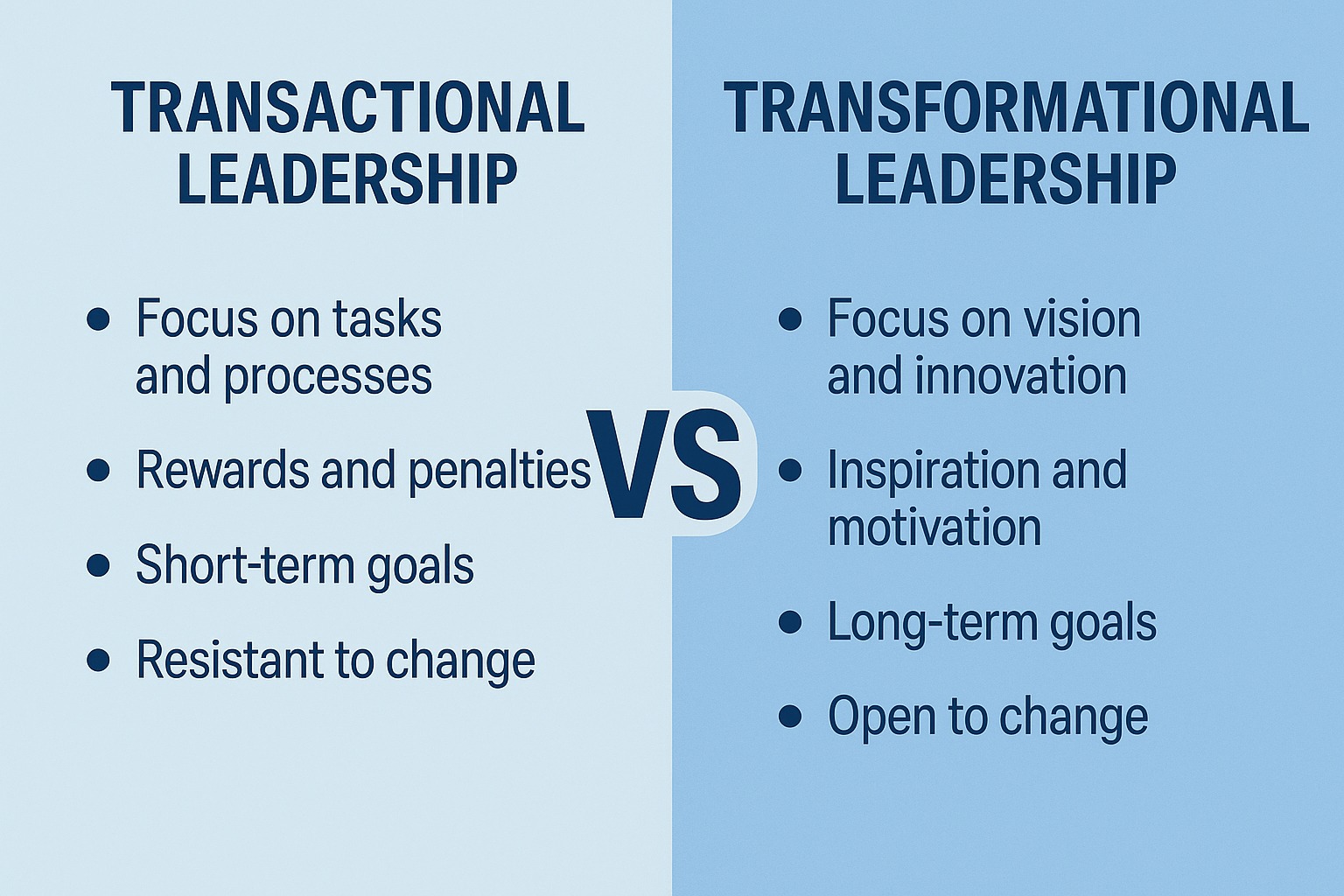
In the realm of organizational behavior and leadership, understanding the distinction between transactional leadership vs transformational leadership is crucial for managers, teams, and businesses aiming for sustainable success. These two leadership styles form the backbone of leadership theories and are widely practiced in diverse industries, from corporate enterprises to military institutions and educational institutions.
Related to the 10 leadership styles, transactional and transformational leadership are often discussed alongside types of leadership styles in business, qualities of a good leader, and leadership development programs.
What is Transactional Leadership?
Transactional leadership is a style based on structured tasks, clear objectives, and reward-based performance. Leaders using this style emphasize discipline, routine, and control. They manage teams by setting goals and using rewards or punishments to enforce performance standards.
Key Characteristics of Transactional Leadership:
- Contingent rewards and punishments
- Clear authority and structured environment
- Emphasis on short-term goals
- Focused on efficiency and task completion
- Prominent in military leadership and army leadership principles
When is Transactional Leadership Most Effective?
- Military and defense leadership models (e.g., direct leadership army, army leadership traits)
- Manufacturing and production industries
- Crisis situations where structure is necessary
- Organizations requiring clear protocols and compliance
This leadership style aligns with 360 degree assessment tools, supervisory and leadership training, and accountability vs responsibility frameworks.
What is Transformational Leadership?
Transformational leadership is centered around inspiring and motivating followers to transcend self-interest for the sake of a shared vision. These leaders stimulate creativity, foster commitment, and emphasize personal development.
Key Characteristics of Transformational Leadership:
- Idealized influence (serving as a role model)
- Inspirational motivation (communicating a vision)
- Intellectual stimulation (encouraging innovation)
- Individualized consideration (mentorship and empathy)
These are the four I’s of transformational leadership, key to effective leadership development programs.
When is Transformational Leadership Most Effective?
- Innovation-driven companies
- Educational institutions
- Nonprofits and social enterprises
- During organizational change and transformation
This style connects strongly with 360 feedback tool for leaders, transformational leadership in healthcare, and team leadership training.
Transactional vs Transformational Leadership: A Comparative Overview
| Aspect | Transactional Leadership | Transformational Leadership |
|---|---|---|
| Focus | Short-term goals | Long-term vision |
| Motivation Style | Extrinsic (rewards/punishments) | Intrinsic (personal development) |
| Leadership Strategy | Directive and controlling | Visionary and inspiring |
| Flexibility | Low | High |
| Employee Engagement | Minimal | High |
| Innovation Support | Limited | Strong |
| Management by Exception | Common | Rare |
Integrating Both Leadership Styles
Modern leadership is not about choosing transactional vs transformational leadership, but rather blending both depending on the context. A leader might adopt transactional methods during performance evaluations but switch to a transformational approach when mentoring high-potential employees or driving innovation.
Examples of Blended Leadership:
- 360 assessments for managers often reveal the need to balance structure with empathy.
- Leadership development programs emphasize developing both transactional structure and transformational vision.
- 360 leadership assessment and leadership 360 feedback offer insights into hybrid styles.
Related Leadership Theories and Concepts
In understanding these styles, it is helpful to explore:
- 10 types of leadership and examples in business
- 360-degree leadership assessments for holistic feedback
- Army leadership qualities and military leadership styles as examples of transactional structure
- 4 pillars of transformational leadership for sustainable change
- Leadership development goals and executive leadership certificate programs
These concepts highlight how leadership impacts organizational culture, performance, and employee satisfaction.
Benefits and Drawbacks
Transactional Leadership:
Pros:
- Clarity in expectations
- Efficient in stable, rule-based environments
- Reliable performance in routine tasks
Cons:
- Stifles creativity
- Can reduce employee engagement
- Reactive rather than proactive
Transformational Leadership:
Pros:
- High innovation and creativity
- Strong employee loyalty and development
- Encourages personal and organizational growth
Cons:
- Time-intensive
- May be unrealistic in certain rigid environments
- Success often depends on leader’s charisma
How to Choose the Right Leadership Style
Choosing between transactional and transformational leadership depends on your team structure, industry, and goals:
Ask Yourself:
- Is the goal innovation or consistency?
- Do employees need direction or inspiration?
- Is the environment stable or dynamic?
Smart leaders recognize that leadership is situational. By developing the ability to shift between styles, you maximize team performance and organizational effectiveness.
Use tools like leadership self assessment, leadership 360 questions, and 360 leadership review to identify your strengths.
Frequently Asked Questions (FAQs)
What are the 4 I’s of transformational leadership?
They include Idealized Influence, Inspirational Motivation, Intellectual Stimulation, and Individualized Consideration.
Can a leader be both transactional and transformational?
Yes, most effective leaders use a hybrid approach based on the situation and team needs.
Is transactional leadership outdated?
Not entirely. While it’s less effective for innovation, it’s still critical in environments that demand compliance, such as the military or emergency response units.
What tools help evaluate leadership styles?
360 degree evaluation tools, leadership self-assessment questionnaires, and executive coaching programs are effective.
Who are examples of transactional and transformational leaders?
- Transactional: Bill Gates (early Microsoft), Jeff Bezos (logistics focus)
- Transformational: Steve Jobs, Oprah Winfrey, Elon Musk
Final Thoughts
Understanding transactional leadership vs transformational leadership is essential for navigating modern workplaces. While transactional leadership emphasizes order and performance, transformational leadership drives innovation and purpose. Mastering both enables leaders to adapt, inspire, and lead effectively across diverse challenges.
Use this knowledge to build your leadership capacity, design effective leadership development programs, and ensure your team thrives in any scenario.