Richard Fairbank: The Relentless Architect of Data-Driven Banking
How Richard Dana Fairbank Redefined Consumer Finance and Built Capital One into a Global Power

Introduction
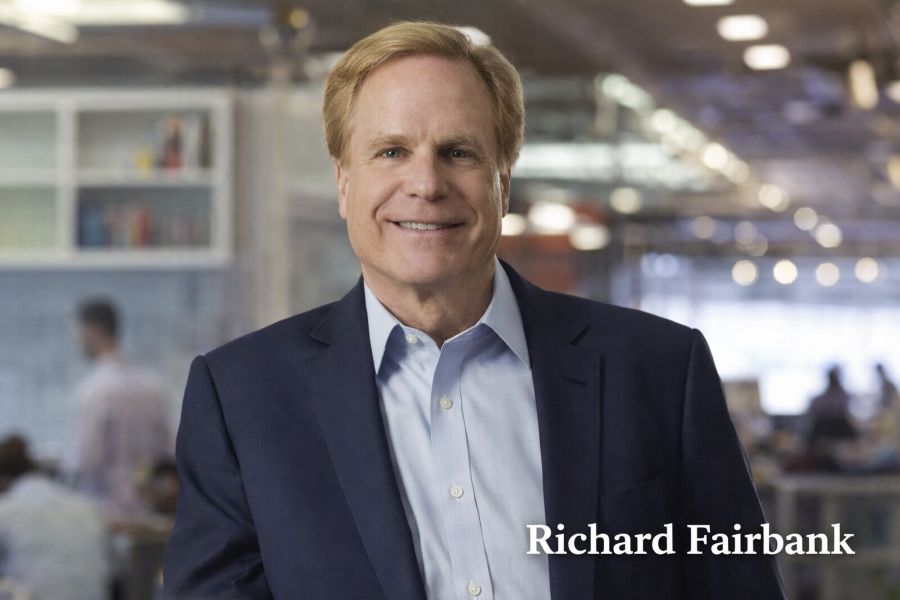
Richard Fairbank is widely regarded as one of the most influential banking executives of the modern era. As the CEO of Capital One, he did not simply lead a financial institution; he reshaped how consumer finance operates in the digital age. His career reflects a rare combination of intellectual rigor, long-term vision, and disciplined execution. While praised for innovation and resilience, his leadership has also faced scrutiny during economic cycles, making his journey both powerful and complex.
Table of Contents
ToggleBorn with a strong academic foundation and driven by analytical thinking, Richard Dana Fairbank built a career that challenged traditional banking norms. He introduced data analytics as a strategic weapon in finance, changing how credit risk, marketing, and customer relationships are managed. His story is not one of overnight success, but of persistence, experimentation, and strategic courage.
Quick Bio: Richard Fairbank
| Attribute | Details |
|---|---|
| Full Name | Richard Dana Fairbank |
| Known As | Richard Fairbank |
| Date of Birth | September 18, 1950 |
| Nationality | American |
| Profession | Businessman, Banker |
| Famous For | CEO of Capital One |
| Education | Stanford University (BA, MBA) |
| Position | Founder, Chairman & CEO, Capital One |
| Net Worth | Approx. USD 1.6 Billion |
| Marital Status | Married |
| Children | 8 |
Early Life and Academic Foundation
Richard Fairbank’s early life laid the intellectual groundwork for his later achievements. He pursued higher education with a clear focus on economics and strategic thinking, disciplines that would later define his leadership style. His academic journey reflects consistency rather than privilege, with progress earned through merit and discipline.
He completed his undergraduate studies in economics at Stanford University, developing a strong command of analytical reasoning. Years later, he returned to Stanford to pursue an MBA, where he distinguished himself by graduating first in his class. This academic excellence was not merely symbolic; it shaped his approach to leadership, emphasizing evidence, data, and structured decision-making over intuition alone.
The Start of a Strategic Career
Richard Fairbank began his professional journey in management consulting, joining Strategic Planning Associates. This phase of his career was critical, as it exposed him to the inner workings of financial institutions and the limitations of traditional banking models. He quickly emerged as a leading strategist within the firm, focusing on banking and financial services.
During this period, he developed a deep understanding of how banks evaluate risk and profitability. He also recognized inefficiencies in mass-market banking, particularly the lack of personalization and analytical rigor. These insights would later become the foundation for his entrepreneurial leap, marking the transition from advisor to innovator.
Founding Capital One: A Calculated Risk
In 1988, Richard Dana Fairbank co-founded Capital One, a decision that would redefine his career and the banking industry. At a time when most banks relied on broad assumptions and limited customer data, Fairbank envisioned a model driven by analytics and testing. This vision was ambitious and controversial, challenging deeply entrenched industry practices.
Capital One began as a credit card business but operated with a radically different mindset. Fairbank emphasized experimentation, using data to design products tailored to specific customer segments. While critics questioned the sustainability of this approach, its success proved transformative. The company’s growth validated Fairbank’s belief that disciplined analytics could outperform intuition-based banking.
Richard Fairbank as CEO of Capital One
As CEO of Capital One, Richard Fairbank demonstrated extraordinary longevity and consistency. Leading the company since its public listing in 1994, he oversaw its evolution from a niche credit card provider into a diversified financial institution. His leadership style balanced innovation with operational control, a combination that allowed Capital One to scale responsibly.
Under his direction, the company expanded into auto lending, consumer banking, and digital financial services. This expansion was not without challenges, particularly during economic downturns, yet Fairbank maintained a long-term focus. Supporters praise his resilience and adaptability, while critics argue that aggressive growth exposed the company to cyclical risks. Both perspectives underscore the complexity of his leadership.
Business Philosophy and Leadership Style
Richard Fairbank’s leadership philosophy is rooted in data, discipline, and accountability. He believes that organizations thrive when decisions are tested, measured, and refined continuously. This mindset fostered a culture of experimentation within Capital One, encouraging teams to learn from both success and failure.
At the same time, his approach demands high standards and intellectual rigor, which can be challenging in fast-moving markets. While admired for clarity and focus, his style has been described as demanding. This duality highlights a central theme of his career: progress often requires discomfort, and innovation rarely comes without pressure.
Wealth, Compensation, and Financial Discipline
Richard Fairbank’s financial profile reflects alignment between leadership and ownership. He has famously taken no base salary for many years, instead relying on performance-based compensation and equity. This structure reinforces his long-term commitment to Capital One’s success rather than short-term gains.
His net worth, estimated at approximately USD 1.6 billion, is primarily derived from his stake in Capital One. This wealth positions him among the most successful banking executives, yet his compensation model signals restraint and confidence in the company’s future. Admirers view this as principled leadership, while skeptics see it as a calculated bet backed by influence.
Personal Life and Public Presence
Despite his prominence, Richard Fairbank maintains a relatively private personal life. He is married and has eight children, balancing family responsibilities with professional demands. Unlike many public figures, he does not cultivate a social media presence, preferring to engage through corporate leadership rather than personal branding.
This discretion reinforces his reputation as a disciplined executive focused on substance over visibility. While it limits public insight into his personal views, it aligns with his broader philosophy of letting results speak louder than image.
Impact, Criticism, and Enduring Legacy
The legacy of Richard Fairbank is inseparable from the transformation of modern banking. He demonstrated that data analytics could be a strategic core rather than a support function. His influence is visible across the financial sector, where personalized products and digital platforms are now standard.
However, his career also illustrates the risks of innovation in regulated industries. Capital One’s growth exposed it to scrutiny and market volatility, reminding observers that disruption carries consequences. Ultimately, Fairbank’s legacy is defined not by perfection, but by lasting impact. He stands as a symbol of how disciplined innovation can reshape an industry.
Conclusion
Richard Fairbank’s journey from strategist to banking pioneer reflects determination, intellect, and calculated risk-taking. As the CEO of Capital One, he challenged traditional finance and proved that data-driven decision-making could deliver sustained growth. His career includes both triumphs and tensions, making his story realistic rather than idealized.
In an era where financial institutions struggle to balance innovation with stability, Richard Dana Fairbank remains a defining figure. His influence continues to shape how banks think, operate, and compete, ensuring his place in the history of modern finance.
Frequently Asked Questions (FAQ)
Who is Richard Fairbank?
Richard Fairbank is an American businessman and the founder, chairman, and CEO of Capital One, known for pioneering data-driven banking.
What is Richard Fairbank famous for?
He is best known as the CEO of Capital One and for transforming consumer finance through analytics-based decision-making.
What is Richard Fairbank’s educational background?
He earned a bachelor’s degree in economics and an MBA from Stanford University, graduating first in his MBA class.
How did Richard Dana Fairbank build Capital One?
He built Capital One by applying data analytics to credit products, focusing on experimentation, segmentation, and technology-driven banking.
What is Richard Fairbank’s legacy?
His legacy lies in redefining modern banking by making data, technology, and disciplined strategy central to financial services.