Over the last decade, timber cladding has become one of the most recognisable features of contemporary architecture across the United Kingdom. Architects are increasingly using natural timber façades to introduce warmth, texture, and contrast into modern buildings while also responding to growing demands for sustainable construction materials.
From residential developments and extensions to commercial buildings and public projects, timber cladding is now widely used as a defining architectural element. It allows designers to move away from purely industrial façade materials and incorporate surfaces that age naturally while maintaining strong visual character.
This shift reflects a broader trend within modern architecture toward materials that combine environmental responsibility with visual impact. Timber cladding meets both of these objectives, making it a popular choice for architects working on projects where design quality and sustainability are equally important.
Timber Cladding in Contemporary Building Design
Timber façades have become particularly popular in modern housing developments and commercial projects because of the flexibility they offer designers. Unlike rigid façade materials, timber boards can be installed in a variety of orientations and profiles that influence the overall visual rhythm of a building.
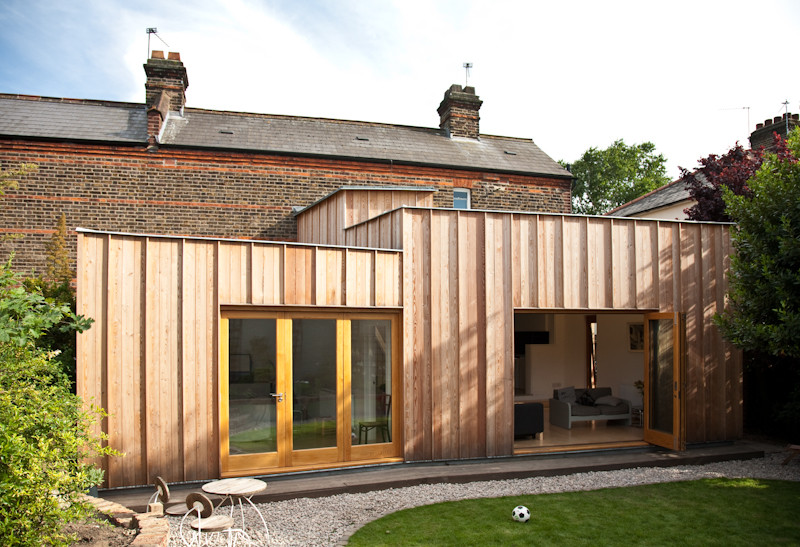
Vertical cladding systems are often used to emphasise the height of a structure and create strong shadow lines across the façade. Horizontal boards can produce a calmer visual pattern and are frequently used on residential buildings where a more traditional appearance is desired.
Architects also have access to a wide variety of timber profiles including shadow-gap boards, tongue-and-groove systems, and open batten façades. These profiles allow buildings to achieve distinctive textures while maintaining a clean architectural form.
Because the choice of profile, timber species, and installation system can significantly influence the final appearance of a façade, designers often explore the full range of timber cladding approaches before selecting a final solution. A detailed overview of these systems and how they are used across different building types can be found in timber cladding systems for modern buildings.
Understanding these options early in the design process allows architects to align structural performance with aesthetic goals.
Ventilated Rainscreen Systems and Performance
Modern timber cladding is typically installed as part of a ventilated rainscreen façade. This system separates the external cladding boards from the structural wall behind them, creating a cavity that allows air to circulate.
The ventilated cavity plays an important role in maintaining façade durability. It allows moisture that penetrates the outer surface to drain and evaporate rather than becoming trapped within the wall structure. This helps protect the building envelope while also extending the lifespan of the timber cladding.
A properly designed rainscreen system normally includes several layers: structural wall construction, weather-resistant membranes, vertical battens or rails, and the outer timber cladding boards. Each layer contributes to the overall performance of the façade.
By combining these elements, architects can create building envelopes that balance weather protection, thermal performance, and architectural design.
Material Selection for Timber Façades
The choice of timber species is a key factor in determining the durability and maintenance requirements of a façade. Different timber types respond differently to moisture, sunlight, and temperature fluctuations.
Some species are naturally more stable than others, while modern processing techniques have also made it possible to improve timber performance through heat modification. Thermally modified timber undergoes a controlled heating process that alters the cellular structure of the wood, reducing its moisture absorption and improving dimensional stability.
These properties are particularly valuable in climates such as the UK, where seasonal humidity changes can cause untreated timber to expand and contract significantly. As a result, architects frequently specify thermally modified timber for projects that require long-term stability and consistent façade appearance.
Dark Timber Finishes and Contemporary Architecture
Another trend gaining popularity in modern architecture is the use of darker timber finishes. Charred timber and stained cladding systems can create bold visual contrast against lighter materials such as render, brick, or glass.
These darker façades often highlight the natural grain and texture of the timber while introducing dramatic architectural character. Buildings with dark timber cladding can appear both modern and timeless, particularly when the façade is combined with simple geometric forms.
Charred timber finishes are inspired by traditional Japanese wood-burning techniques, where the surface of the timber is carefully burned to enhance durability and create a distinctive appearance. Today, this approach has evolved into a refined architectural finish widely used in contemporary façade design.
Architects seeking strong visual impact while maintaining natural material authenticity often consider charred timber cladding for contemporary architecture for projects where a darker façade is desired.
Timber and Sustainable Urban Development
Timber cladding also plays an important role in sustainable urban development. As cities expand and building regulations evolve, developers are increasingly searching for materials that reduce environmental impact while maintaining high design standards.
Timber offers a renewable alternative to many conventional façade materials and can significantly reduce the embodied carbon of a building when responsibly sourced. Its compatibility with modern construction techniques also makes it suitable for prefabricated façade systems and modular construction.
In addition to its environmental benefits, timber helps create buildings that feel more connected to natural materials and landscapes. This quality is particularly valuable in urban environments where architecture often seeks to soften the visual impact of dense development.
The Future of Timber in UK Architecture
Looking ahead, timber cladding is likely to remain a central feature of modern architectural design. Advances in timber engineering, improved treatment technologies, and growing knowledge of façade detailing are all expanding the possibilities for timber-based construction.
Architects are now able to design larger and more ambitious projects that incorporate timber as a primary exterior material. At the same time, clients and developers increasingly appreciate the environmental and aesthetic advantages that timber façades provide.
As sustainable construction becomes an essential priority within the building industry, materials such as timber cladding will continue to shape the architectural identity of modern buildings throughout the UK and beyond.