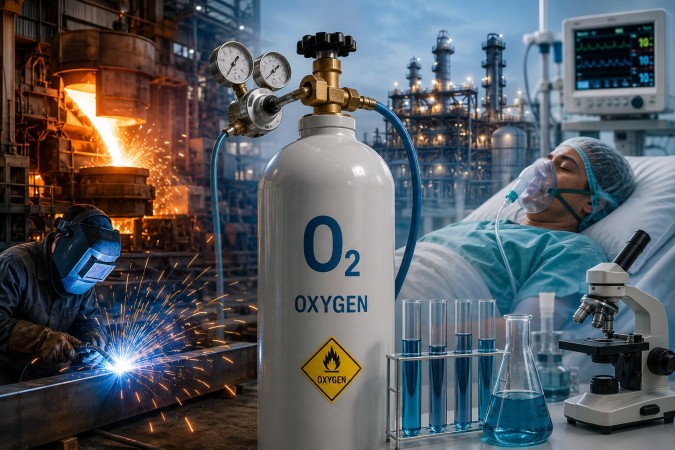
Oxygen gas is a versatile substance with a wide range of applications in industrial and laboratory settings. It is essential for various processes, making it an indispensable element in sectors such as manufacturing, healthcare, and scientific research. One of the most significant advantages of oxygen gas is its ability to support combustion, which is crucial in industrial processes like steelmaking and welding.
The Role of Oxygen in Industrial Applications
In the industrial sector, oxygen is often used to enhance the efficiency of combustion processes. This improvement is particularly evident in the steel manufacturing industry, where oxygen is introduced into blast furnaces to increase temperature and improve the quality of the metal produced. Similarly, in glass production, the addition of oxygen can help achieve higher temperatures, leading to better melting and refining of raw materials.
Moreover, oxygen is widely utilised in the chemical industry. It is a key reactant in oxidation reactions, which are fundamental for producing a variety of chemicals. The production of substances such as ethylene oxide, a precursor for antifreeze and polyester, relies heavily on oxygen.
Oxygen in Welding and Cutting
The welding and cutting industries significantly depend on oxygen gas for their operations. Oxy-fuel welding and cutting processes involve combining oxygen with a fuel gas to produce a flame with a temperature high enough to cut or weld metals. This method is not only efficient but also cost-effective, making it preferable for numerous metal fabrication tasks.
Furthermore, oxygen boosts the cutting speed and quality by enabling a more precise and clean cut compared to methods that do not use oxygen.
Oxygen Gas in Laboratories
Besides its industrial applications, oxygen finds extensive use in laboratories. It is crucial for experiments that require an oxidising environment. Researchers often use pure oxygen to study oxidation reactions and to simulate conditions where high levels of oxygen are necessary for experimental accuracy.
Another significant laboratory application is in the field of respiratory research. Oxygen is used to investigate the effects of various gas concentrations on respiratory systems, contributing invaluable insights into understanding and treating respiratory diseases.
Medical Uses of Oxygen
Oxygen gas is indispensable in the medical field for both therapeutic and life-support purposes. Hospitals and healthcare facilities rely on oxygen therapy to treat patients with respiratory illnesses. It is used in ventilators and anaesthesia machines, ensuring that patients receive adequate oxygen to sustain their bodily functions during medical procedures.
Additionally, oxygen chambers, or hyperbaric chambers, provide high concentrations of oxygen to treat conditions such as carbon monoxide poisoning and chronic wounds.
Environmental and Safety Considerations
While oxygen gas is extremely beneficial, it is essential to be aware of its environmental and safety implications. Using oxygen in controlled environments reduces the risk of uncontrolled fires due to its property of supporting combustion. Therefore, industries and laboratories employing oxygen gas must implement stringent safety protocols to prevent accidents.
Furthermore, proper storage and handling of oxygen cylinders are critical to maintaining safe operations. Implementing safety training and regular equipment checks can substantially minimise risks.
The Future of Oxygen Gas Applications
As technology advances, the applications of oxygen gas are expected to expand and evolve. Emerging fields such as aerospace and advanced manufacturing systems could further benefit from the utility of oxygen. Furthermore, environmental technologies aimed at reducing carbon emissions might find innovative ways to incorporate oxygen to enhance their processes.
Companies like Coregas are at the forefront of providing high-quality industrial gases, including oxygen, to meet the growing demand across various industries. Their expertise and experience ensure that businesses have reliable access to the essential gases needed for efficient operations.
The Economic Impact of Oxygen Gas
The availability and usage of oxygen gas significantly contribute to the economy by supporting numerous industrial activities. The steel and chemical industries, for example, rely heavily on oxygen, influencing global markets and trade patterns. Moreover, the technological advancements in oxygen applications continue to drive economic growth by fostering innovation in manufacturing and scientific research.
The growing need for industrial gases denotes an increasing demand that indicates both economic stability and progression. As industries continue to evolve, the importance of oxygen gas in maintaining and enhancing production efficiency cannot be overstated.