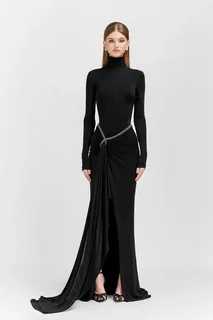
When you buy a latex dress, most of the advice focuses on fit, thickness and colour. Length deserves just as much attention. Once you have worn a mini, a midi and a maxi, you realise that the hemline changes how you move, where the dress is practical and how it feels after a few hours.
I have worn all three. Here is what actually changes.
The mini: confident, with practical limits
A latex mini dress usually finishes around the mid-thigh. It is often the style people start with because the shape is familiar and the shorter hem is easy to manage when walking.
The shorter length draws attention upwards, towards the legs and the fit at the waist. It photographs well and there is less risk of standing on the hem.
The catch is that latex does not move like cotton. A fitted mini that looks perfect while standing may ride up when you sit down. You may need to adjust it after standing or walking, particularly if the hem is very close to the upper thigh.
If you are taller, check the garment’s finished length rather than relying only on the word “mini”. Body proportions and the position of the waist can make the same named length look very different from one wearer to another.
The midi: an easy balance
A midi dress usually finishes somewhere between the knee and mid-calf. Many first-time wearers find this a comfortable place to start because it gives more coverage without creating a long trailing hem.
The extra length can make the dress feel more balanced when you are sitting, walking or moving between different settings. A back zip can also make dressing easier on some midi designs, because you may be able to step into the garment rather than pulling it over your head.
A midi can work for daytime plans and evenings. Under a blazer it can read as a sleek fitted dress; with heels or statement accessories, the same garment can feel more formal. The styling does not have to announce the material immediately.
The maxi: dramatic, but more demanding
A latex maxi dress reaches towards the ankle or floor. It creates a strong continuous line from the upper body down to the hem, but the longer skirt needs more attention when you move.
Sitting takes planning
A fabric maxi can fold and settle when you sit. Latex may hold its shape more closely, so it helps to arrange the skirt before sitting and to lift or gather the hem when standing again. This becomes more noticeable when the dress is fitted through the legs.
Stairs need both hands free
If the hem reaches the floor, you may need to gather it in one hand on stairs or uneven ground. Walking more slowly is part of wearing a long latex dress safely and comfortably.
Getting in and out of a car is different
With a long fitted skirt, it is usually easier to sit first, arrange the dress and then bring your legs into the car. The same applies when getting out. A little planning prevents the hem from catching in the door or dragging on the ground.
The silhouette is more continuous
A latex maxi does not hang like a loose fabric dress. It follows the body from the waist down, so the final silhouette depends heavily on the pattern, made to measurements latex and the way the dress is dressed. A smooth, well-fitting result can look architectural, while an incorrect length can pull at the seams or create unwanted folds.
Temperature matters
More latex covering the body can mean more heat during longer wear, especially in a warm venue. A maxi is not the same as a flowing summer dress, so consider the room temperature, ventilation and how long you will be wearing it.
Which length should you choose?
If this is your first latex dress, a midi may be the easiest length to live with because it offers coverage without the extra management of a floor-length hem. That said, the best choice depends on your height, proportions, wardrobe and where you plan to wear it.
A maxi can be perfect for a photoshoot, gallery opening or seated dinner where you have room to manage the hem. A mini can be a better choice for an evening where you want freedom around the legs and do not mind making occasional adjustments.
The measurement detail people miss
Length is not just a style choice. It affects how the dress behaves when you sit, walk and climb stairs.
For a made-to-measure dress, provide your height, your preferred finished length and the measurement from the relevant shoulder or neckline point to the intended hem. Tell the maker whether you will wear flat shoes or heels, as the shoe height can change the hem position. Waist, hip and bust measurements still matter, but they do not replace a clear length measurement.
A dress that is too long may drag on the ground and wear at the hem. One that is too short may look like a different style from the one you intended. If you are unsure, share a reference photo and explain where you want the hem to finish when standing and when wearing your usual shoes.
The length is not a small decision made at the end. It is one of the details that decides whether you actually enjoy wearing the dress or leave it hanging in the wardrobe.