Why Fraser Valley Properties Need Both Snowfall and Refreeze Planning: The Storm Is Not Over When the Snow Stops

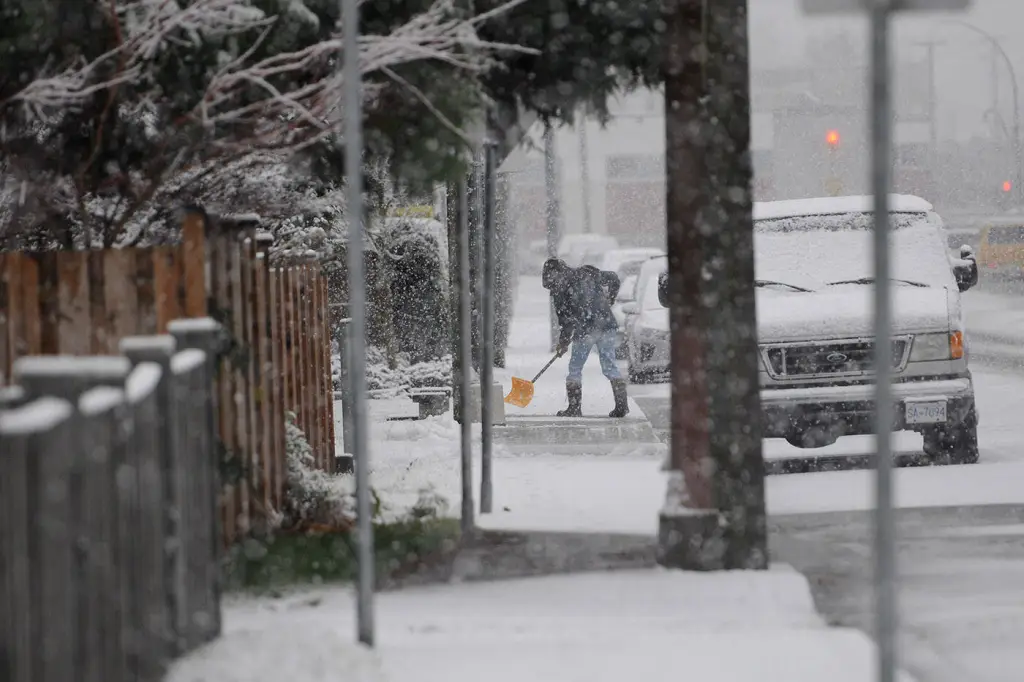
Snowfall Is Only Half the Storm
A property manager can wake up after an overnight snowfall, get the parking lot cleared, open the main walkways, and reasonably think the difficult part is finished.
In the Fraser Valley, that can be a mistake.
Snow Removal Expert’s Winter Intelligence Engine is relevant because winter risk does not disappear once the bulk snow has been moved. A wet surface, a shrinking pile, a shaded entrance, or runoff crossing a driveway can become the next problem several hours later.
That changes how a property should be managed.
The first plan deals with accumulation: where snow will be pushed, which surfaces open first, what equipment is needed, and when service begins.
The second plan deals with what happens afterward.
Where will the meltwater go? Which surfaces cool fastest? Which areas lose sunlight early? Does the site need another inspection before employees arrive the next morning?
Fast clearing matters. So do modern equipment, 24/7 response and scheduled service. But on a wet winter property, clearing snow is sometimes just the first half of the job.
Build the Property Around Two Winter Plans
Planning snow and ice support in Abbotsford and Mission means accounting for a winter pattern that does not always behave like a colder interior climate.
Rain can become snow. Snow can turn wet and heavy. Temperatures may climb enough to produce runoff during the day, then fall again overnight.
Plan One: Remove the Accumulation
The snowfall plan is the familiar part.
Identify priority entrances, vehicle routes, loading areas, accessible paths, fire access, sidewalks and approved storage zones before the event. Clear early enough that traffic does not repeatedly compact wet snow into a harder layer.
Also decide where the snow goes.
That decision matters later because every pile contains water that can eventually return to the pavement.
Plan Two: Manage What Melts
The refreeze plan starts where conventional snow clearing often ends.
Inspect curb lines, drains, low points, slopes and the downhill edge of stored snow. Check whether water is moving across pedestrian routes or parking-lot entrances.
The important question changes from “How much snow remains?” to “What will still be wet when the temperature falls?”
That second question catches risks that an accumulation total cannot.
The Water Has to Go Somewhere
Drainage is one of the easiest winter risks to overlook because it may not cause a problem during the snowfall itself.
A pile can sit safely beside a parking lot all morning. By afternoon, temperatures rise and water begins moving away from it. If the drainage route is open, little happens.
If the nearest catch basin is covered with snow, leaves or ice, the same runoff may pool along a curb or spread over pavement.
That is why broader property winter planning should include drainage before the season begins.
Abbotsford identifies both rain and snowmelt as sources of stormwater and requires stormwater originating on private property to be managed on-site or directed to an approved drainage system. Its winter guidance also specifically advises keeping gutters and storm drains clear so rain and melted snow can drain properly.
Mission gives similar practical advice. Its roadway guidance notes that catch-basin grates can become blocked by leaves, ice or snow, preventing runoff from draining.
For property managers, the lesson is simple.
Do not decide where to stack snow without also asking where that snow will drain when it melts.
Use Elevation, Shade, and Drainage to Set Priorities
Snowfall totals can make a large property appear uniform when it is anything but.
A shaded walkway beside a building may remain cold long after an exposed parking area has warmed. A higher entrance may accumulate differently from a lower lot. Water from one section may flow downhill and create an ice problem somewhere that received very little snow in the first place.
Mission provides a useful local example of why terrain deserves attention. Its winter road program gives extra priority to main-road hills during snowfall. Abbotsford also includes access to hillside areas among its priority road considerations.
Private-property operations are obviously different from municipal road maintenance, but the planning principle transfers well.
Map the property by behaviour.
Mark shaded entrances. Note slopes. Identify drainage crossings. Record which surfaces stay wet. Watch where snow repeatedly accumulates and where meltwater travels afterward.
A site with three centimetres of snow everywhere may still have only two or three zones that become serious refreeze concerns that evening.
Those are the places that deserve the next inspection first.
The Clear Lot Can Be the Dangerous One
A freshly cleared parking lot looks reassuring. That appearance can create false confidence.
Watch the Hours After Clearing
Mechanical clearing rarely means a surface is perfectly dry.
Thin residual snow, slush around parked vehicles, moisture near piles and water carried by tires can remain behind. If temperatures fall, those small amounts become important.
Mission’s winter program illustrates the operational value of watching cooling conditions rather than snowfall alone. From November through February, the City conducts overnight ice patrols when the ambient temperature at its Public Works Complex is 2°C or lower at the start of the shift, while also using precision forecasts.
Abbotsford similarly monitors weather forecasts, road conditions and pavement sensors as part of its snow and ice response.
The point is not that commercial properties should copy municipal thresholds.
The point is that the period after clearing still deserves active monitoring.
Reinspect the Zones Most Likely to Change
A local winter plan for properties across Abbotsford and Mission should identify where a second visit has the highest value.
That might be a north-facing entrance, a sloped driveway, a loading area where trucks track slush onto colder pavement, or a catch basin receiving water from a large snow pile.
Do not automatically repeat the entire route.
Go back to the surfaces most likely to have changed.
Review Conditions After the Snow Stops
One of the most useful habits in Fraser Valley winter management is delaying the declaration that an event is “finished.”
After clearing, note the forecast low and expected timing. Check the surfaces that are still wet. Confirm drains remain open. Look at snow-storage areas and where their runoff is travelling.
Then decide whether another inspection is justified.
Over several events, patterns become easier to see.
Perhaps one entrance almost always refreezes after afternoon melting. Perhaps a lower parking row receives runoff from an upper section. Perhaps a shaded walkway needs attention hours after the rest of the site is stable.
Document those patterns and use them next time.
This makes winter service more precise without treating every weather change as an emergency.
The most common planning mistake is measuring the whole event by snowfall depth.
Snow depth tells you how much accumulation may need to be moved. It does not tell you where water will travel afterward, how long a shaded surface will remain cold, or what will happen when temperatures fall overnight.
For Fraser Valley properties, the more useful winter question is not simply, “How much snow are we getting?”
It is, “What happens to this property after the snow becomes water?”