What International Buyers Should Verify Before Sourcing Oilfield Cementing Equipment

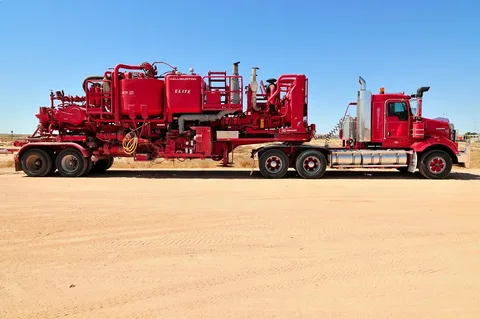
From supplier qualification and technical specifications to quality documentation and international delivery, a structured procurement process helps oil and gas companies reduce sourcing risks and improve equipment compatibility.
International procurement is an essential part of the oil and gas equipment industry. Drilling contractors, oilfield service companies and equipment distributors regularly source specialized components from manufacturers and suppliers located in different countries.
For oilfield cementing equipment, the purchasing process involves more than comparing product prices and delivery times.
Products such as cement heads, casing centralizers, float collars, float shoes, stage collars and liner hangers must match specific well conditions, casing dimensions and operating requirements.
An incorrect connection, unsuitable material or incomplete technical specification can create procurement delays and require additional engineering review before equipment can be accepted.
For international buyers, a structured supplier evaluation process provides a more reliable basis for purchasing decisions.
The most important questions concern supplier capabilities, product compatibility, applicable standards, inspection documentation, commercial terms and delivery responsibilities.
Why International Oilfield Equipment Procurement Requires Specialized Evaluation
Oilfield equipment differs from many general industrial products because it operates under defined mechanical, pressure and environmental conditions.
A casing centralizer must fit the intended casing and wellbore geometry. A float collar must match the casing connection and required cementing functions. A liner hanger must be compatible with the parent casing, liner dimensions and suspension requirements.
These technical conditions affect the purchasing process from the initial request for quotation to final equipment acceptance.
International transactions introduce additional considerations.
Buyers must coordinate technical documents, manufacturing schedules, inspection requirements, transportation arrangements and import procedures.
Different parties may participate in the supply chain, including equipment manufacturers, engineering companies, distributors, inspection providers and freight forwarders.
Clear communication between these parties is necessary to ensure that the equipment delivered matches the approved purchase specification.
Identify the Supplier’s Manufacturing and Technical Responsibilities
The first step in supplier qualification is understanding the company’s actual role in the supply chain.
An equipment supplier may manufacture products directly, coordinate production through qualified manufacturing facilities or provide technical sourcing and inspection services for multiple product categories.
These business models can all support international procurement, but they involve different responsibilities.
Buyers should identify which organization is responsible for engineering review, manufacturing, quality control, final inspection and technical documentation.
A supplier’s website may provide useful background information, but procurement decisions should be supported by records relevant to the intended purchase.
Important verification areas include:
Company identity and business registration
Manufacturing location and responsible production facility
Product categories and technical capabilities
Quality management arrangements
Applicable certificates and their scope
Inspection and testing responsibilities
Relevant project experience
Technical communication and after-sales support
Understanding these responsibilities helps buyers assess whether the supplier can manage the requirements of a particular equipment order.
It also clarifies who should respond if technical modifications or quality concerns arise during production.
Define Technical Specifications Before Requesting Quotations
A common procurement problem is submitting requests that identify only the product name and nominal size.
For example, a request for a 7-inch casing centralizer does not fully describe the required equipment.
The buyer may also need to specify the actual casing outside diameter, hole size, centralizer type, restoring-force requirements, installation method and operating conditions.
Similar considerations apply to other cementing equipment.
A cement head request should include the required connection, rated working pressure, plug configuration and relevant pumping-system interfaces.
A float collar or float shoe request should identify the casing size, connection, valve configuration and applicable operating requirements.
For liner hangers, the parent casing dimensions, liner size, hanging load, setting method and required liner-top arrangement are essential engineering inputs.
A complete request for quotation allows suppliers to prepare proposals using the same technical basis.
It also reduces the risk of receiving quotations for different product configurations that cannot be compared directly.
Compare Equipment Using a Common Technical Checklist
Procurement teams can improve quotation accuracy by defining the technical parameters that apply to each product category.
| Product category | Technical information to verify |
| Cement head | Connection type, rated working pressure, plug arrangement, release mechanism and pumping interfaces |
| Casing centralizer | Casing OD, hole size, centralizer type, restoring force, running force and installation arrangement |
| Float collar and shoe | Casing connection, valve configuration, flow requirements, backpressure performance and drill-out characteristics |
| Stage collar | Casing size, pressure requirements, activation method, opening and closing sequence |
| Liner hanger | Parent casing ID, liner dimensions, hanging load, setting mechanism and running-tool compatibility |
| Cementing plug | Casing ID, plug dimensions, landing profile, sealing arrangement and displacement requirements |
The checklist should be adapted to the actual well construction program.
Its purpose is to ensure that buyers and suppliers are discussing the same product specifications before agreeing on pricing and delivery.
Verify Applicable API Standards and Certification Scope
API standards are widely used in oil and gas equipment procurement.
However, different product categories fall under different technical standards.
For example, API Specification 10D addresses bow-spring casing centralizers, while API Recommended Practice 10F covers performance testing of cementing float equipment.
API Specification 19LH addresses liner hanger equipment and associated components within its defined scope.
For drill pipe procurement, API Specification 5DP establishes relevant product requirements.
These standards are not interchangeable.
A general claim that a company supplies API-standard equipment does not establish that every product is covered by the same specification or certification.
Buyers should verify the applicable standard, edition, product scope and documentation required by the purchase contract.
Where certification is required, it is important to establish which legal entity and manufacturing facility hold the relevant certification and whether the intended product falls within its scope.
The purchasing team should also distinguish between product compliance, quality-management certification and third-party inspection.
Each provides different evidence.
Review Manufacturing Quality and Inspection Documentation
Technical specifications describe what the equipment must achieve.
Quality documentation helps establish whether the supplied equipment meets those requirements.
Depending on the product, inspection records may include material certificates, dimensional inspection reports, pressure-test results, mechanical test records and other agreed documents.
For pressure-containing cementing equipment, the buyer may require evidence of pressure-integrity testing and appropriate material verification.
For casing accessories, dimensional checks and product-specific performance tests may be important.
Liner hanger systems introduce additional requirements associated with mechanical loading, setting functions and component compatibility.
Inspection planning should begin before manufacturing.
The purchase order should define which tests are required, which documents must be submitted and whether the buyer or a third-party inspection company will witness selected activities.
This makes the acceptance criteria clear to both parties.
It also helps avoid disputes when equipment is ready for shipment.
Evaluate Product Compatibility Across the Complete Cementing System
Even when individual products meet their specifications, interface mismatches can create problems.
Cementing operations often involve several equipment categories functioning together.
A cement head may need to accommodate a specific plug arrangement. The plug must be compatible with the intended casing and landing equipment.
Float equipment must match the casing connections and required cementing flow path.
In a liner cementing system, the hanger, running tool, cementing plugs and liner-top components must operate according to a coordinated sequence.
For international buyers, reviewing the equipment package as a complete system can be more effective than treating each component as an independent purchasing item.
This is especially relevant when multiple manufacturers participate in the same project.
Engineering drawings, interface dimensions, connection specifications and operating requirements should be reviewed before final approval.
Why a Broad Product Portfolio Can Simplify Procurement
International procurement teams frequently purchase several categories of cementing and casing accessories for the same project.
Coordinating multiple suppliers can increase the number of technical documents, commercial agreements and delivery schedules that must be managed.
A supplier with access to a broad product portfolio can provide a consolidated point of communication for related equipment categories.
For example, Shangshanpetro Equipment presents a portfolio covering cement heads, casing centralizers, float collars and shoes, cementing plugs, stage collars, liner hangers and associated casing accessories.
The company also provides engineering design coordination, quality-control support and international equipment supply services.
For procurement teams, such a product range provides an opportunity to discuss related equipment requirements through one supplier relationship.
However, a broad catalog should not replace technical qualification.
Each product configuration must still be evaluated against the approved project specifications, and the responsible manufacturing and inspection arrangements should be clearly identified.
Compare Total Procurement Cost, Not Just Unit Price
The lowest quoted unit price does not necessarily represent the lowest overall procurement cost.
International equipment purchases involve several cost categories beyond manufacturing.
These may include engineering modifications, inspection, documentation, export packaging, inland transportation, international freight, insurance, import duties and destination handling.
Buyers should therefore compare offers on a consistent commercial basis.
A quotation offered under EXW terms, for example, may allocate substantially different transportation and logistics responsibilities from a quotation offered under FCA, FOB, CIF or DAP terms.
The selected Incoterms 2020 rule should identify the agreed delivery location and the allocation of transportation responsibilities, costs and risks.
However, Incoterms rules do not replace the purchase contract or define every aspect of the transaction.
Payment terms, warranty requirements, technical acceptance, liability and documentation obligations should be agreed separately.
The goal is to establish a complete commercial comparison rather than selecting a supplier from the unit price alone.
Plan Inspection and Delivery Milestones Together
Manufacturing lead times and international transportation schedules should be reviewed as part of one procurement timeline.
A project may require engineering drawing approval, material preparation, machining, assembly, inspection, documentation and export packing before the equipment can leave the manufacturing facility.
If third-party witnessing is required, the inspection schedule should be incorporated into production planning.
International logistics may introduce additional requirements related to cargo dimensions, customs procedures and destination-specific documentation.
Procurement teams should establish realistic milestones for:
Technical specification and drawing approval
Manufacturing and production progress
Inspection and factory acceptance
Final documentation submission
Export packing and shipment readiness
Transportation and customs coordination
Delivery and receiving inspection
This approach helps identify schedule dependencies before they affect the drilling or cementing operation.
Build a Clear Supplier Evaluation Matrix
A structured evaluation matrix can help procurement teams compare suppliers using consistent criteria.
The relative importance of each criterion should reflect the project’s operating conditions and purchasing requirements.
| Evaluation area | Main question |
| Supplier qualification | Who manufactures and inspects the equipment? |
| Technical compliance | Does the proposed configuration meet the approved specifications? |
| Product compatibility | Are the dimensions, connections and operating interfaces correct? |
| Quality assurance | Are the required inspections and records available? |
| Manufacturing capability | Can the responsible facilities meet the technical and production requirements? |
| Commercial terms | Are prices, payment obligations and delivery conditions clearly defined? |
| Logistics | Can the supplier coordinate packing, documentation and transportation? |
| After-sales support | Are technical assistance and replacement-part arrangements established? |
This method helps organizations document their purchasing decisions and identify issues that require resolution before an order is placed.
It also supports communication between engineering, procurement and project management teams.
Long-Term Supplier Relationships Depend on Consistency
For oilfield equipment buyers, supplier performance should be evaluated beyond the first shipment.
A reliable long-term relationship depends on consistent specifications, accurate documentation, responsive technical communication and clear handling of quality concerns.
Replacement orders are often particularly sensitive to product compatibility.
Equipment supplied several years earlier may need spare parts, updated documentation or compatible replacement components.
Maintaining product identification, drawings and inspection records helps both buyers and suppliers manage these requirements.
A supplier’s ability to preserve technical information and support repeat orders can therefore be an important factor in long-term procurement planning.
Conclusion
International sourcing of oilfield cementing equipment requires a balance of technical understanding, supplier qualification, quality assurance and commercial coordination.
Buyers should begin with complete equipment specifications and identify the manufacturing and inspection responsibilities associated with each product.
Applicable standards, equipment compatibility and documentation requirements must be reviewed before finalizing the purchase.
Commercial evaluations should also consider inspection, delivery terms, logistics and long-term technical support rather than focusing only on the initial unit price.
For drilling contractors, oilfield service companies and international equipment distributors, a structured procurement process creates a clearer basis for selecting suppliers and accepting equipment.
The most effective sourcing decision is not simply the lowest-priced quotation, but the offer that meets the project’s technical, quality, delivery and commercial requirements.