If I ask you what makes making decisions easier, most of you will answer similarly: DATA. This is even true in healthcare, where each small decision can change the final outcome of a patient’s health. It is particularly true in behavioral health, as it can impact patients’ daily lives quite adversely if the treatment decisions are not informed.
However, many clinics lack the tools to collect patient data, and the reason is the generic EHR. These EHRs don’t have the dynamic dashboards to show the changes in patients’ health, their progress, or the side effects of the treatment.
The result is that providers are unable to provide timely assistance, leading to a reduction in patient outcomes. Most importantly, this unavailability of complete patient data can endanger patients’ lives.
But everything is not so difficult if the EHR is able to show all the real-time changes in patients’ mental health.
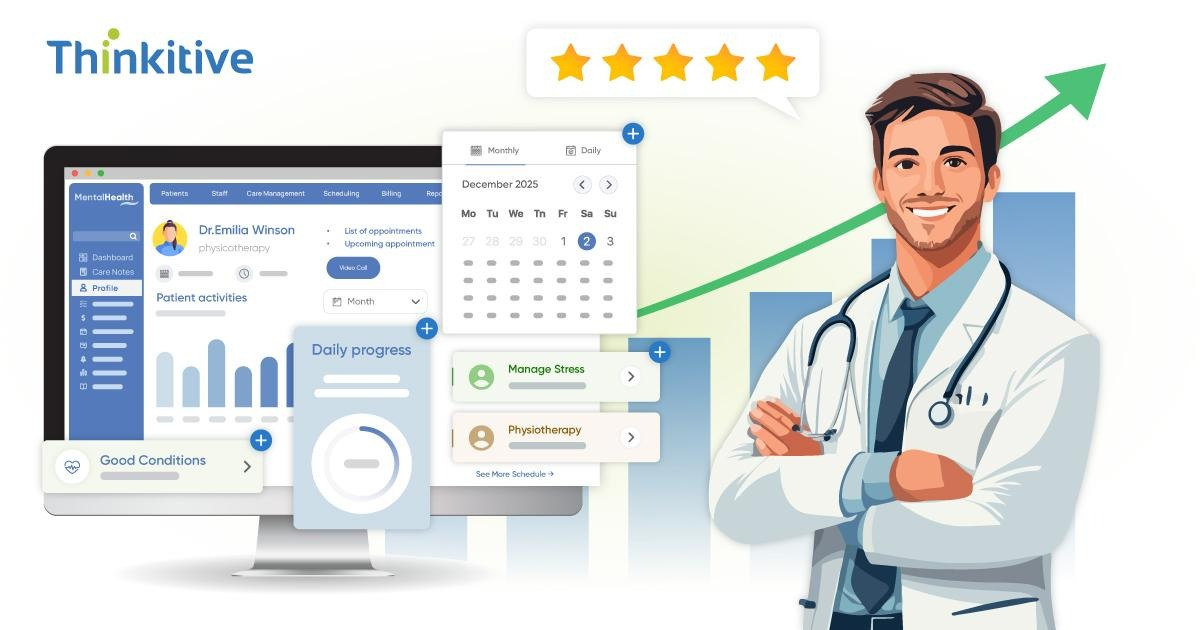
And that’s where a custom mental health EHR comes in. It has a dynamic dashboard that gives critical insights and allows clinicians to view complete patient profiles by connecting therapy notes, assessments, and billing.
In this blog, we are going to see why outcome data is so important and how custom mental health software development makes it accessible to providers.
Why Outcome Data Matters
For a provider, it is important to understand whether the therapy is working or not for the patients. Without knowing this, they have to make all the decisions blindly, which can be dangerous for patients. This is where outcome data becomes crucial, as it shows clinicians whether the treatment is right or something needs to be adjusted.
Along with supporting providers to make informed decisions, it allows for timely interventions and adjustments to care plans. In addition, with this data, clinics have proof that the therapy is working and patients have made progress from the first session.
It also works as a report to payers, regulators, and stakeholders. Most importantly, patients are shown that they have improved since the first visit, as there are no physical indicators of the progress made. This improves patients’ trust and engagement, bringing better final outcomes.
Finally, the biggest reason why outcome data is so important is that it tracks all the patient’s progress in a longitudinal manner. These reports compile all the data in a single platform, eliminating the need to change screens and compare different outcomes.
So, outcome data is both proof of treatment effectiveness and a tracker for clinics to mark the patient’s progress in the care journey.
How Generic EHR Dashboards Limit Mental Health Clinics
What mental health providers need is a dashboard that updates as the patient’s condition changes. However, in a generic EHR, the dashboards are static and only updated when providers themselves input the updated data.
These dashboards are not able to collect data automatically. Moreover, the generated reports are non-interactive and provide basic information without being able to explain any specific details for any data. For behavioral health, where progress is not visible, this means clinicians don’t understand the complete picture.
One of the biggest limitations is the inability to track patient progress over time. The generic EHR can’t go beyond the last few visits or treats each visit as a different session, creating a fragmented patient record. With this data, it becomes hard to track trends, and some small patterns might be overlooked.
Furthermore, due to all these limitations, providers are forced to manually extract data into spreadsheets or third-party tools. This takes up the providers’ time, adding extra work hours to their already overwhelming schedules, reducing the effectiveness of care.
In short, a generic EHR is not only inefficient but also contributes to provider burnout and their productivity.
The Cost of Poor Dashboard Reporting
In behavioral health, the outcomes are not always visible physically or through some lab tests. That’s why providers need to track every small change, whether it’s a good one or a bad one. So, when an EHR dashboard is not designed to work for mental health, it brings some cost that clinics need to pay.
The first one is the difficulty in demonstrating any outcomes of all the treatments. This makes it tough to justify care to insurance companies, regulatory bodies, or even to patients. Without proper reports, they can’t see any progress affecting their trust, and insurers’ approval, they can’t approve reimbursement.
Then come the missed opportunities for optimizing care. Clinicians can’t know the effectiveness of their therapy and treatment if they can’t see the effects of it. This limits them in providing interventions when needed and personalizing the care for each patient.
When dashboards don’t work as they should, clinicians need to put all the information together themselves. This means additional work on their already full desk and tight schedule, eating up their personal time. Over time, this stress accumulates and finally leads to either high burnout or turnover.
So, using a generic EHR means low-quality care, exhausted clinicians, and loss of productivity, along with revenue for the clinic.
How Modern Dashboards Solve the Problem
Modern healthcare dashboards in a custom mental health EHR solution are designed with behavioral health clinicians in mind. That’s why each function is tailored to fit them and make the work seamless and data easily accessible.
The first advantage they have over generic dashboards is their dynamic and interactive nature. They don’t just show numbers; they convert them into charts, tables, or trend lines for easy and quick understanding. Clinicians can filter by patients, timelines, and any specific condition, making it user-friendly.
The best thing is that providers can identify side effects, engagement gaps, and opportunities for proactive care while making informed decisions. After this comes the ability to track patients’ longitudinal progress. These dashboards integrate with PHQ-9 and GAD-7 scores along with other patient records, creating a complete patient journey for providers to look at.
What makes the dashboards in custom EHR truly powerful is their integration with therapy notes, standard assessments, and billing. By linking all these together, it eliminates the need for constant switching between interfaces and unifies the patient profile.
Ultimately, the modern dashboard presents a complete picture of patient history and removes the data siloes. If you are still confused about why you need to build custom dashboards, then read this guide on how dashboards make outcome tracking easier.
Benefits for Clinics & Clinicians
When dashboards actually work the way they should, the benefits go far beyond data visualization. They directly improve how providers deliver care, how clinics operate, and how patients experience treatment.
Instead of spending hours piecing together charts or sifting through records, clinicians get instant clarity on how patients are doing. Dashboards provide a quick, reliable snapshot of progress, making it easier to see who is improving, who needs more support, and where interventions should happen.
Moreover, with outcome data easily available, clinicians no longer have to rely solely on patient self-reporting. They can adjust therapy plans based on measurable results, whether that means adjusting medications, modifying therapy strategies, or scheduling more frequent sessions. This ensures that care stays patient-centered and effective.
Finally, modern dashboards also simplify reporting for regulators, payers, and internal stakeholders. Clear documentation of outcomes helps clinics demonstrate treatment effectiveness and secure reimbursements with confidence. At the same time, clinicians feel more supported and less burdened by administrative tasks, boosting overall job satisfaction and reducing burnout risk.
Conclusion
Long story short, data is the foundation of making the right decisions in healthcare. However, without a proper dashboard, collecting the data is nearly impossible. Generic EHRs only have static dashboards that don’t show the complete patient profile, hindering providers from providing proactive care.
However, with a modern dashboard in a custom behavioral health EHR software, clinicians can easily access complete patient profiles. Whether it is patient progress or side effects of a treatment, providers can easily intervene on time. This makes it easy to personalize care while improving behavioral health outcomes.
So, ready to transform your decision-making with dynamic dashboards? Click here to book a free demo of how outcome dashboards can improve care quality and your clinic’s reporting.
Frequently Asked Questions
- Why are dashboards important in behavioral health?
Dashboards consolidate patient data into clear, visual insights, allowing clinicians to track progress, detect early signs of relapse, and make timely treatment adjustments. They transform complex behavioral health data into actionable information for better patient outcomes.
- Can generic EHRs provide meaningful dashboards?
Most generic EHRs offer static, limited dashboards that fail to capture longitudinal outcomes or integrate therapy notes, assessments, and billing. They often require manual data extraction, making it difficult for clinicians to get a complete, real-time view of patient progress.
- How do modern dashboards improve patient care?
Modern dashboards provide interactive visuals, track outcomes over time, and integrate all patient data in one place. This empowers clinicians to make data-driven decisions, adjust treatment plans promptly, and engage patients with transparent progress reports, improving overall care quality.