Why CNC Lathe Automation Matters for High-Mix, Low-Volume Manufacturing?

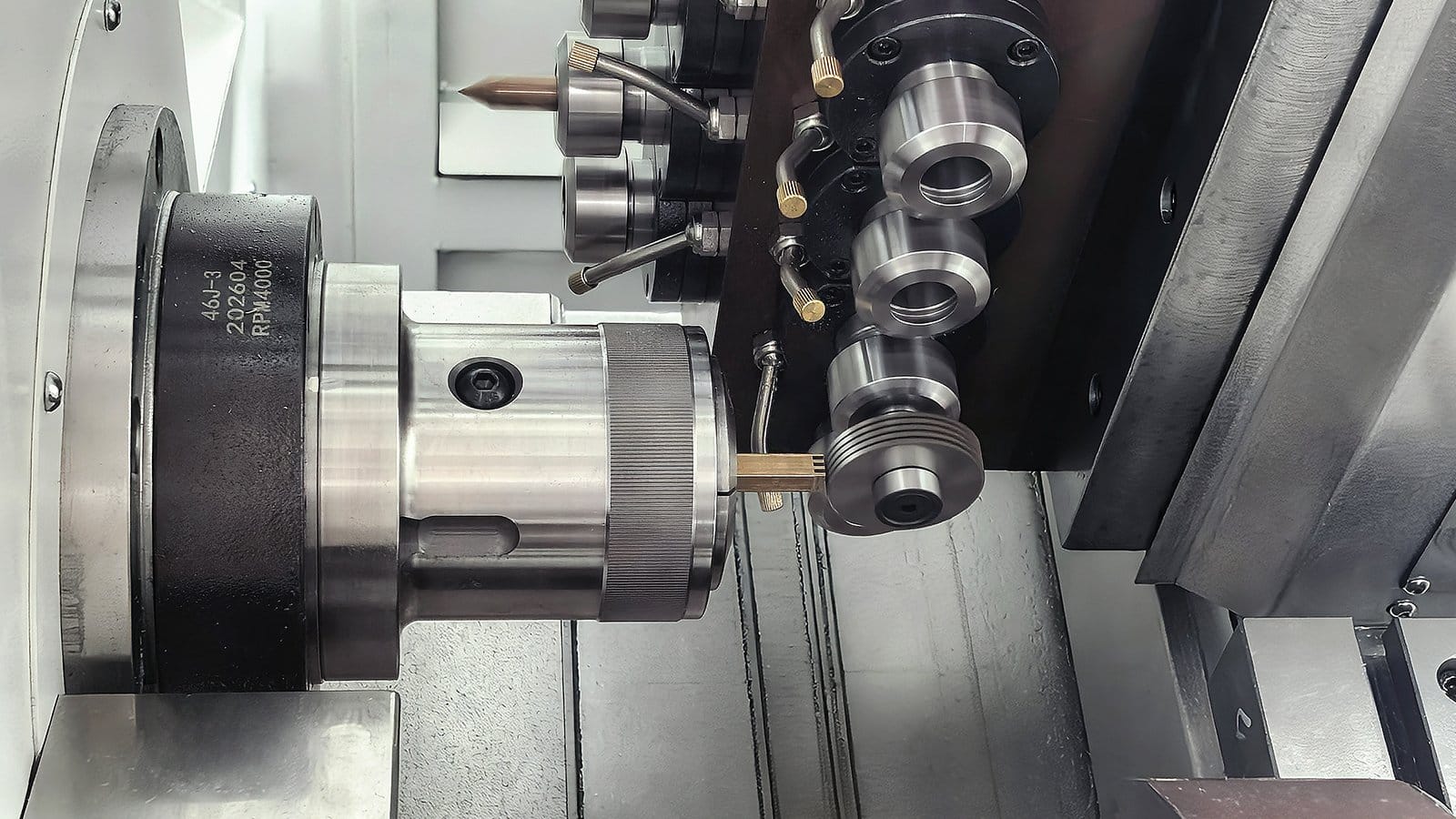
A high-mix, low-volume shop does not lose money at the spindle. It loses money in the forty minutes between jobs – the next drawing unprogrammed, the soft jaws uncut, the operator hunting for the right collet. HMLV machining lives or dies on what happens between cutting. That is where automation earns its keep: compressing changeover, holding process discipline across a shifting product mix, and keeping a CNC lathe cutting while people handle the work only people can do.
What Makes High-Mix, Low-Volume Manufacturing a Different Discipline?
Low-volume manufacturing spans batch sizes from a single prototype to a few thousand parts, and high-mix conditions add the hard part: dozens of different geometries, materials, and tolerance bands moving through the same machines every week. Aerospace brackets, medical device manufacturing work, energy components – this is job shop manufacturing by definition, and no two weeks look alike. Supply chain customers judge contract manufacturers on lead time as much as on price.
In traditional manufacturing, the system is tuned around one part. HMLV production inverts that logic: the product mix is the variable, so the manufacturing system itself – fixtures, tooling, CNC program structure, part loading – must be the constant. Manufacturers who treat every order as a one-off engineering exercise drown in setup time; those who build repeatability into changeover turn small batch work into a margin business.
Why Changeover Time Controls Profitability in HMLV Production?
Ten changeovers per machine per day at 45 minutes of setup each equals seven and a half hours of non-cutting time – longer than the machining process will ever run in the same window. Lean manufacturing classifies this as waste, not work, and cellular manufacturing layouts exist largely to shrink it: fewer footsteps, fewer searches, tools staged at the point of use in a compact manufacturing cell.
Setup time breaks into three components, and each demands a different fix. Physical work – chuck jaws, steady rests, toolholders – is attacked with standardized fixtures. Program work is attacked with template-based CNC program structures and proven tool libraries per material group. Judgment work – first-article checks, feed and speed adjustment – is attacked with in-process probing and documented cutting parameters. Automation that ignores this breakdown simply moves the waste around the production line instead of removing it.
What a CNC Lathe Machine Must Deliver Before Automation Pays Off?
Not every machine is ready to automate. A CNC lathe machine intended for HMLV work must first be a disciplined reference platform: consistent home-position returns, repeatable turret indexing, stable thermal behavior across a shift, and rigid support for both bar work and chuck work. If baseline positioning drifts or the turret repeats inconsistently, the robot or bar feeder will faithfully load material for parts that were wrong before any tool touched them.
Second, quick-change tooling: servo turrets with standardized holder interfaces let a setter swap an entire tooling package in minutes instead of re-shimming each tool. Live tooling and, where fitted, a Y-axis expand what a single CNC lathe machine can finish without a second operation – cutting the number of setups and the number of machines a part must visit. Third, chip management and coolant control must be automatic and reliable – an unmanned cell that birds-nests chips every third part is a breakdown waiting for a schedule, not an automated production system.
Fixture Standardization: The Fastest Automation Payback in a Manufacturing Cell
Of all automation investments available to low-volume production, standardized workholding pays back first. Zero-point clamping turns fixture changeover into a two-bolt gesture. Modular chuck jaws and soft jaws preset offline – while the machine still cuts the previous job – collapse setup from a skilled task into a placement task. The goal is that each different product arriving at the machine finds its clamping already engineered: standardized fixture family, known insert positions, probe cycle ready.
This is also the precondition for flexible automation: a loader does not care what the part is, only where it is. Standardized fixtures give the robot a predictable pick point for every job – the difference between a cell that runs forty part families and a demo cell that runs three.
Cobots or Traditional Industrial Robots: Choosing the Right Loader for HMLV
Machine-tending loaders come in three practical grades for HMLV production:
bar feeders for shaft-type parts – highest throughput, lowest flexibility, ideal for long unattended runs within one diameter range;
collaborative robots (cobots) – force- and power-limited machines that work beside operators without full fencing, best where one cobot serves several lathes and jobs change hourly;
traditional industrial robots behind safety fencing – fastest cycle times, better for a dedicated cell built around a stable part family.
A cobot earning its space will tend the machine through full cycles, load and unload blanks, and set finished parts in a gauge station. The safety logic differs as much as the economics. Collaborative functions are defined on the robot side in ISO 10218-1, but integrating any loader into a lathe cell remains a system-integration task: a risk assessment under ISO 12100 identifies pinch points, ejected-chip zones, and unexpected start-up hazards, and e-stop architecture must follow ISO 13850 so one command stops machine, loader, and peripherals together. Flexible automation is only flexible if it can be re-commissioned safely for a different product within an afternoon.
How to Measure Whether Automation Pays in High-Mix Production?
HMLV automation fails quietly when nobody measures it. The KPI framework in ISO 22400-2 gives a shop a common vocabulary: setup time tracked per changeover, cycle time against plan, and overall equipment effectiveness (OEE) as the composite – metrics modern manufacturing execution systems log automatically. For low-volume manufacturers the meaningful signal is the ratio of cutting time to touch time across the whole product mix.
The working sequence: log every changeover for two weeks before automating anything; categorize losses using the ISO 22400-2 definitions; automate the largest, most repetitive loss first. Shops that skip this step deploy a robot to solve a fixture problem, then conclude automation “does not work” in their manufacturing domain; shops that measure usually find a bar feeder or a probe is the better first automation.
Where YASHU CNC Lathe Machines Fit Into High-Mix Production?
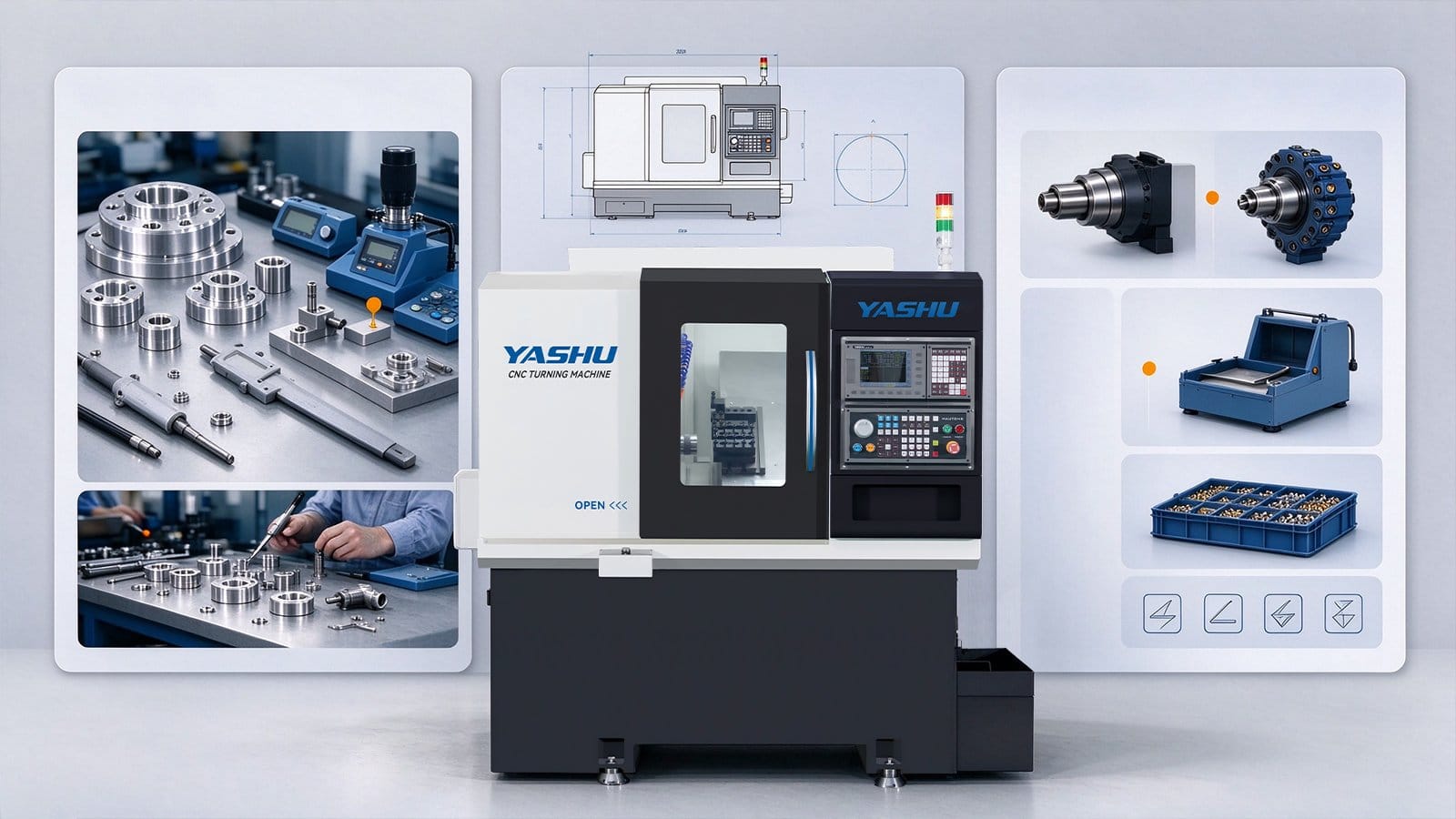
YASHU builds its CNC lathe machines around exactly these HMLV preconditions: flat-bed and slant-bed configurations on rigid one-piece bases, servo turrets with quick-change tool interfaces, and pre-engineered interfaces for bar feeders, parts catchers, chip conveyors, and robot loading – so automation is a planned option rather than a retrofit fight. Non-standard customization is handled at factory level: hydraulic and pneumatic clamping, tailstock variants, spindle options, and controller configurations matched to the customer’s manufacturing execution environment. An automated production system specified correctly at build time costs far less than one improvised later. Define the changeover process first, then choose the machine that supports it – and browse YASHU’s CNC lathe machines with that checklist in hand.
Frequently Asked Questions
Can automation pay off when batches run below 50 parts?
Yes – but only if it attacks changeover rather than just loading. With zero-point clamping and offline preset jaws in place, a cobot or bar feeder keeps the machine cutting while the next job’s workholding is prepared, so even single-part orders gain back the minutes that decide HMLV margins.
How much can setup time realistically drop after implementing automation?
Shops combining standardized fixtures, preset soft jaws, and template CNC programs commonly move from 45–90 minutes of setup to under 15. The hardware accounts for a third of that gain; the rest is process discipline automation forces a shop to document.
Do collaborative robots on a lathe cell need safety fencing?
Not necessarily, under the force and power limits defined in ISO 10218-1 – but the integrated cell still requires a documented risk assessment per ISO 12100, e-stop architecture per ISO 13850, and validation of the real application. A cobot throwing a steel shaft is not collaborative.
Which automation should a low-volume shop deploy first?
Measure first. In most high-mix lathe shops the largest repetitive loss is setup, not loading, so zero-point clamping plus in-process probing typically beats a robot on payback. Bar feeding comes next where part geometry allows; full robot tending makes sense once a stable part-family base justifies a dedicated manufacturing cell.
Does automation reduce flexibility on a shifting product mix?
Only poorly designed automation does. Rigid, fixed automation products built around one part strangle a high-mix shop. Modular fixtures, standardized pick points, and template programs preserve flexibility – the automation follows the product mix instead of dictating it.