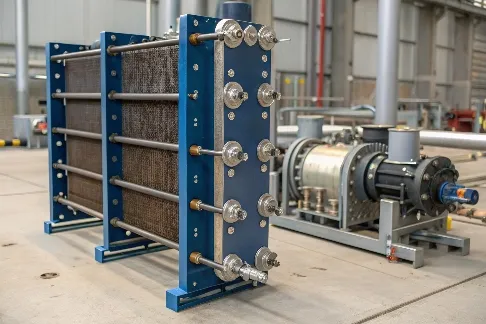
Plate heat exchangers: why they matter in domestic heating
Modern boilers hide a lot of clever kit. One of the hardest-working parts is the heat exchanger plate. It is a stack of thin, corrugated plates that move heat from one sealed circuit to another without the fluids ever mixing. In combi boilers, it’s usually the secondary exchanger for hot water. In practice, that separation keeps your tap water clean and your heating efficient.
- What it does: Transfers heat between sealed circuits via thin plates, keeping central-heating water and domestic hot water separate.
- Why it helps: Large surface area gives efficient heat transfer and quicker warm-up, which can improve overall boiler performance.
- When it struggles: Hot-water temperature swings, reduced flow at the tap, or performance drops caused by sludge or limescale.
- Lifespan and upkeep: Service life depends on water quality and maintenance; when a unit fails, replacement is usually quick for a professional.
- What to do next: Book a diagnosis and any replacement with a Gas Safe registered engineer.
Benefits at a glance
Efficient by design
Those corrugated plates create a big contact area, so heat moves quickly with minimal waste.
Compact
Slim and modular, plate exchangers fit neatly inside most boiler cases — no extra cupboard space needed.
Helps system hygiene
Because the two circuits stay fully separate, the risk of contamination drops and corrosion is kept out of the domestic side.
Straightforward to replace
If a unit fails or is blocked, engineers can usually swap it quickly, keeping downtime and disruption low.
Common symptoms of a faulty plate heat exchanger
- Hot water that swings between too hot and too cold
- Noticeably reduced hot-water flow
- Signs of sludge or scale in the system
If you spot any of the above, ask a Gas Safe registered engineer to check temperatures, pressures and flow to confirm whether the exchanger is restricted or failed.
FAQs
Is a plate heat exchanger the same as a secondary heat exchanger?
Often, yes — in combi boilers, the plate unit usually handles domestic hot water.
Can I replace it myself?
We recommend using a Gas Safe registered engineer for any boiler work. It keeps you safe and protects your warranty and insurance position.
Are refurbished units reliable?
When properly tested by a trusted supplier, refurbished units can perform well and reduce waste. Ask about the testing process and any warranty offered.
How can I prevent future problems?
Good system hygiene helps: stick to regular servicing, fit or renew filters, and consider scale control in hard-water areas. A professional can advise what’s appropriate for your property.
What details do I need to order the right part?
Have the boiler make, model and GC number to hand, plus a clear description of symptoms. Photos of the existing part and connections also help suppliers and engineers confirm compatibility.
Need help choosing the right plate heat exchanger?
Talk to our technical team for plain-English advice on diagnosis and replacement.
WhatsApp (badge): https://wa.me/447834398673
Contact us: Contact Us | National Boiler Spares
Always use a Gas Safe registered engineer for installation and repair.