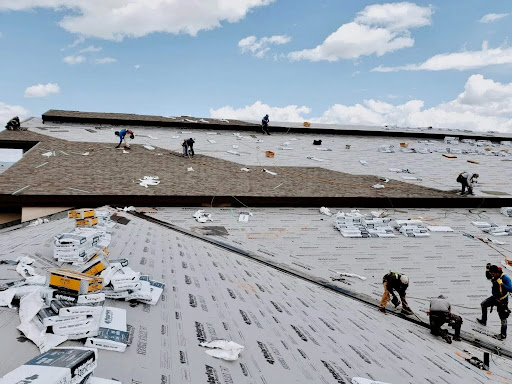
A retail unit or warehouse or mixed-use building requires a roofing project which should not involve engineers or cause downtime or require additional work. You need a roof which provides both proper appearance and weather resistance and completes construction within the planned timeframe. The first step requires selecting appropriate commercial roofing.
The system requires specific components which maintain weight reduction while ensuring easy installation.
A basic principle exists to help people evaluate different choices. The selected roof design needs to match the existing structure of your building instead of following your desired building design.
What “Commercial Roofing” Actually Means On Real Buildings
People discuss roofs as if they operated independently from other structures. They don’t. The roof of commercial buildings operates under multiple restrictions which exist within their building framework.
The facility operates during specific trading hours. The property contains rental spaces which are occupied by tenants. The facility maintains specific rules which control who can enter the building. The facility maintains specific rules which determine the maximum noise levels that can be produced. The building entrance area contains scaffolding structures which serve as protective barriers. You need to make delivery runs. Weather conditions affect delivery timing. You have insurance questions. You have fire performance paperwork.
Commercial roofing serves as more than a basic protective layer because it requires coordinated design and installation. The system needs to operate in harmony with both the facility structure and the operational activities of the business.
One contractor summed it up well: a roof works best when the work finishes without surprises.
Weight As The Silent Constraint
Weight functions as a factor which quietly dictates project outcomes.
You recognise the pattern. The building has aged. Modifications happened over time. New plant equipment was added. Signage changed. Small extensions appeared. Loads shifted.
Heavy roof coverings trigger a chain reaction. Structural checks. Reinforcement discussions. Extra drawings. Longer timelines. Higher cost. None of this improves waterproofing or helps tenants operate better.
Lightweight systems stop that chain reaction early. They reduce building load while preserving future maintenance flexibility and keeping projects within scope.
What You Gain When You Cut Load
You gain options.
Existing rooflines stay intact. Structural work stays limited. Projects avoid turning into redesign exercises.
Why This Matters In Retail And Mixed-Use
Retail sites hate uncertainty. Roofing projects need clarity before work starts. Weight is one of the few factors you can control early without committing to irreversible decisions.
The Problems That Actually Kill Commercial Roof Projects
Roofs rarely fail in the middle of a tile. They fail at interfaces.
Parapets. Abutments. Valleys. Roof-to-wall junctions. Ridges. Plant penetrations. Drainage transitions.
Ignoring these areas leads to long-term damage.
Downtime costs more than materials. Businesses pay twice. Once to the contractor. Again through lost trade, restricted access, and tenant disruption.
Speed matters only when planning is complete and all components are ready on site.
What You Should Check Before You Approve A Roof System
You reduce delays by checking critical elements before scaffolding goes up.
Pitch And Drainage Reality
Roof slope dictates water behaviour. Water does not compromise.
Any system that requires structural changes just to make the covering work should be rejected. The covering must match the roof, not the other way around.
Fire Performance And Documentation
Paperwork should be boring.
Building control and insurers want clear fire performance data and installation guidance. Unclear documentation causes delays and extra cost.
Weather Exposure And Wind Uplift
Commercial roofs face harsher exposure. Higher edges. Open surroundings. Stronger wind.
A system must explain how fixings, overlaps, and edge details manage these forces. If answers are vague, risk increases.
Warranty Language
A warranty that promises everything protects nothing.
You need defined scope, clear conditions, and an explained process. Read it like a contract, because it is one.
Where Lightweight Systems Make The Biggest Difference
Lightweight solutions matter most when complexity and continuity collide.
Live Sites That Must Keep Trading
Less structural work means fewer interruptions and more predictable schedules.
Complex Rooflines And Additions
Commercial buildings grow over time. Canopies. Walkways. Loading zones. Piecemeal extensions.
Lightweight systems adapt without forcing rebuilds.
Projects Where Appearance Matters
Customer-facing sites need roofs that look intentional. Temporary-looking solutions damage perception immediately.
How To Choose Without Guesswork
You don’t need opinions. You need a process.
Measure what you can early. Pitch. Access. Exposure. Working hours. Penetrations. Approval requirements.
Evaluate systems based on what they demonstrate. Complete detailing. Clear guidance. Defined junction solutions.
Choose your profile last, not first. That order prevents expensive mistakes.
A site manager put it simply: if edge details aren’t explained clearly, the roof will expose that during construction. For more information, visit https://www.metrotile.co.uk.