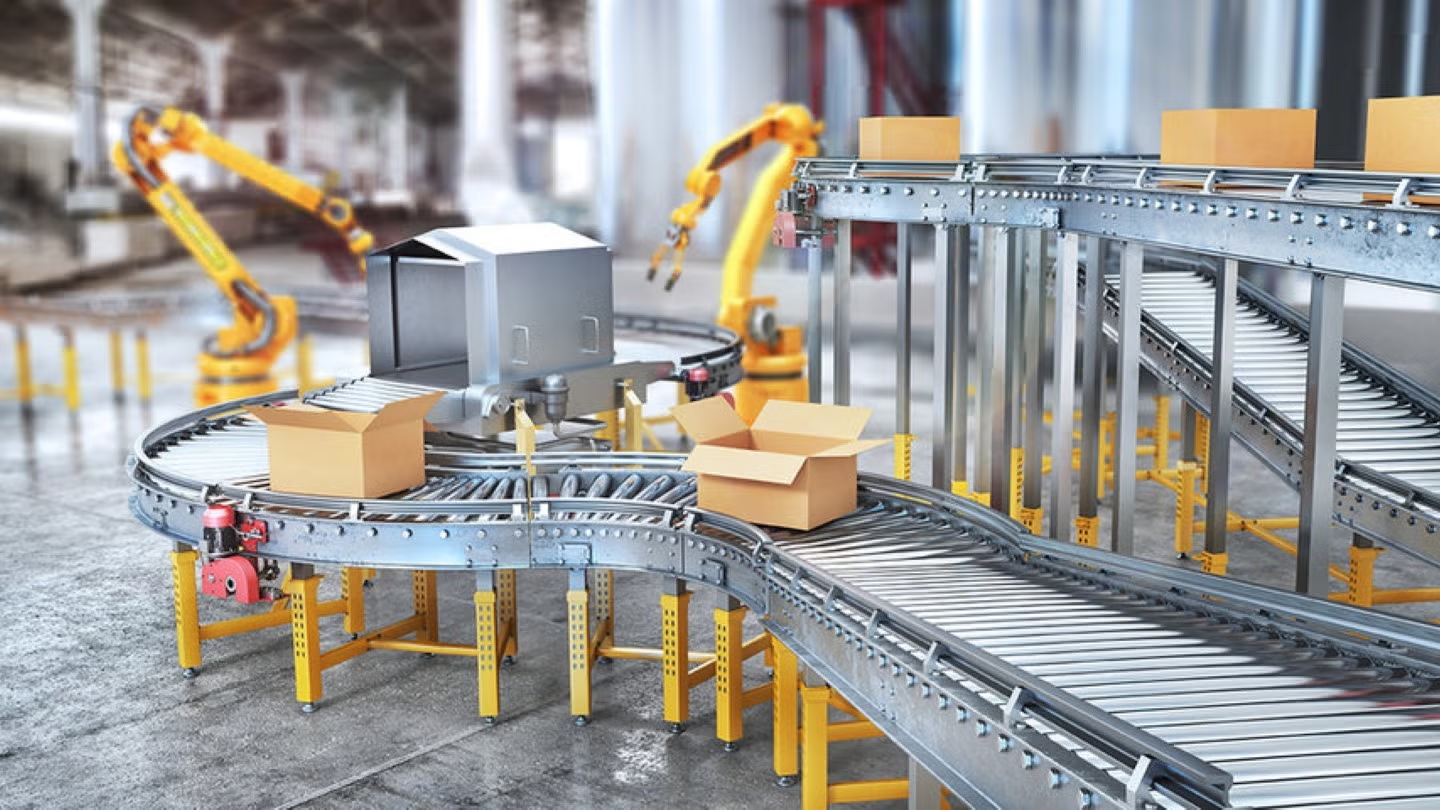
In modern manufacturing and packaging environments, efficiency is no longer driven by labour alone. Increasingly, it is shaped by how well systems communicate, adapt, and optimise themselves in real time. Smart automation has emerged as a critical enabler of this shift, helping manufacturers streamline operations, reduce waste, and respond quickly to changing production demands.
For pharmaceutical and packaging equipment manufacturers, the focus is not just on output—it is on precision, traceability, and consistent quality. Smart automation supports these goals by integrating digital technologies directly into packaging lines, allowing businesses to move from reactive processes to proactive, data-driven operations.
Understanding Smart Automation in Packaging
Smart automation refers to the integration of advanced control systems, sensors, and data analytics into production environments. Unlike traditional automation, which follows fixed instructions, smart systems can monitor conditions, adjust processes, and provide actionable insights.
In packaging lines, this means machines and systems are interconnected, sharing data across the entire workflow—from material input to final product output. This connectivity improves coordination between stages and reduces inefficiencies caused by manual intervention or isolated processes.
Manufacturers seeking to understand the broader impact of automation technologies can look to equipment manufacturers such as ruidapacking.com, which develop pharmaceutical and packaging machinery with integrated smart automation capabilities.
Reducing Downtime Through Real-Time Monitoring
One of the most immediate benefits of smart automation is the ability to minimise downtime. In traditional setups, equipment failures or inefficiencies are often identified only after they disrupt production. This reactive approach leads to delays, increased costs, and missed deadlines.
With smart automation:
- Sensors continuously monitor equipment performance
- Systems detect anomalies before they escalate into failures
- Alerts enable maintenance teams to act quickly
This predictive capability ensures that packaging lines remain operational for longer periods, significantly improving overall efficiency.
Enhancing Productivity with Data-Driven Insights
Smart automation transforms raw production data into meaningful insights. Instead of relying on manual reporting or guesswork, managers gain access to real-time dashboards that display key performance indicators (KPIs).
These insights help in:
- Identifying bottlenecks in the packaging process
- Optimising cycle times
- Improving resource allocation
By analysing trends over time, manufacturers can make informed decisions that enhance productivity without compromising quality. This data-driven approach is particularly valuable in industries where precision and compliance are critical.
Improving Traceability and Compliance
Traceability is a fundamental requirement in pharmaceutical and packaging operations. Regulatory standards demand that every stage of production is documented and verifiable.
Smart automation supports traceability by:
- Recording detailed production data at each step
- Linking batches to specific process parameters
- Maintaining digital records for audits and compliance checks
This level of transparency not only ensures regulatory compliance but also builds trust across the supply chain. In the event of a quality issue, manufacturers can quickly trace the source and implement corrective actions.
Streamlining Workflow Integration
Packaging lines often involve multiple stages, including filling, sealing, labelling, and inspection. When these stages operate independently, inefficiencies can arise due to misalignment or delays.
Smart automation integrates these processes into a unified system, enabling:
- Seamless communication between machines
- Synchronised operations across the line
- Reduced manual handling and intervention
This integration leads to smoother workflows and fewer disruptions, allowing manufacturers to maintain consistent output levels even under high demand.
Supporting Scalability and Flexibility
Market demands can change rapidly, especially in sectors like pharmaceuticals and consumer goods. Manufacturers need systems that can adapt without requiring extensive reconfiguration.
Smart automation provides flexibility by:
- Allowing quick adjustments to production settings
- Supporting multiple product formats
- Enabling scalable operations as demand grows
This adaptability ensures that packaging lines remain efficient even as production requirements evolve.
Reducing Operational Costs
Efficiency gains from smart automation translate directly into cost savings. By reducing downtime, minimising waste, and optimising resource use, manufacturers can lower operational expenses.
Key cost-saving areas include:
- Reduced material waste through precise control
- Lower maintenance costs due to predictive servicing
- Decreased labour requirements for repetitive tasks
Over time, these savings contribute to a more sustainable and competitive manufacturing operation.
Enabling Better Decision-Making
Perhaps the most significant advantage of smart automation is its impact on decision-making. With access to accurate, real-time data, managers can move beyond intuition and base their strategies on measurable insights.
This leads to:
- Faster response to production issues
- More accurate forecasting and planning
- Continuous improvement through performance analysis
In a competitive manufacturing landscape, the ability to make informed decisions quickly can be a decisive advantage.
Moving Towards a Digitally Transformed Future
Smart automation is not just a technological upgrade—it represents a shift towards digital transformation in manufacturing and packaging. By integrating intelligent systems, manufacturers can create more resilient, efficient, and transparent operations.
For pharmaceutical and packaging equipment manufacturers, this transformation is particularly important. It ensures that production processes meet the highest standards of quality, safety, and compliance while remaining adaptable to future challenges.
Conclusion
Smart automation is redefining how packaging lines operate. By enhancing efficiency, improving traceability, and enabling data-driven decision-making, it provides a strong foundation for modern manufacturing success.
As industries continue to embrace digital transformation, the role of intelligent, connected systems will only grow. Manufacturers that invest in smart automation today are better positioned to achieve long-term productivity, reduce costs, and maintain a competitive edge in an increasingly complex market.