The Science of Swag: Why Promotional Products Influence Customer Behaviour

Introduction
In an increasingly digital world, businesses are constantly searching for ways to create deeper, more meaningful connections with their audience. While online advertising can deliver reach, it often lacks the personal touch that builds lasting relationships. This is where promotional merchandise stands out — offering a tangible, memorable way to engage customers.
Branded products don’t just promote a logo; they create experiences. When someone receives and uses a useful item, it forms a subtle yet powerful connection between the brand and the individual. This connection is rooted in psychology, influencing how people perceive and interact with businesses over time.
For UK businesses looking to harness this power, partnering with industry branded products experts like GoPromotional can make a significant difference. With a wide range of custom branded products — from drinkware and tote bags to tech accessories and office essentials — they help brands select items that resonate with their audience. Their expertise ensures businesses can create high-quality promotional merchandise that not only reflects their identity but also leverages psychological principles to maximise engagement, visibility, and long-term impact.
The Psychology Behind Promotional Merchandise
Promotional products are effective because they tap into fundamental human behaviours. Unlike digital ads, which are often ignored or forgotten, physical items create a sensory experience that leaves a stronger impression.
When people can see, touch, and use a product, it becomes more memorable. This interaction activates multiple senses, making the brand easier to recall later.
This is why promotional merchandise continues to be a powerful marketing tool, even in a digital-first landscape.
Why Tangible Items Create Stronger Connections
Physical products create a sense of ownership. When someone receives a branded item, it becomes part of their personal space and daily routine.
This presence strengthens the connection between the individual and the brand. Over time, repeated use reinforces familiarity, making the brand feel more recognisable and trustworthy.
In contrast to fleeting digital impressions, tangible items offer ongoing engagement.
The Power of Reciprocity in Marketing
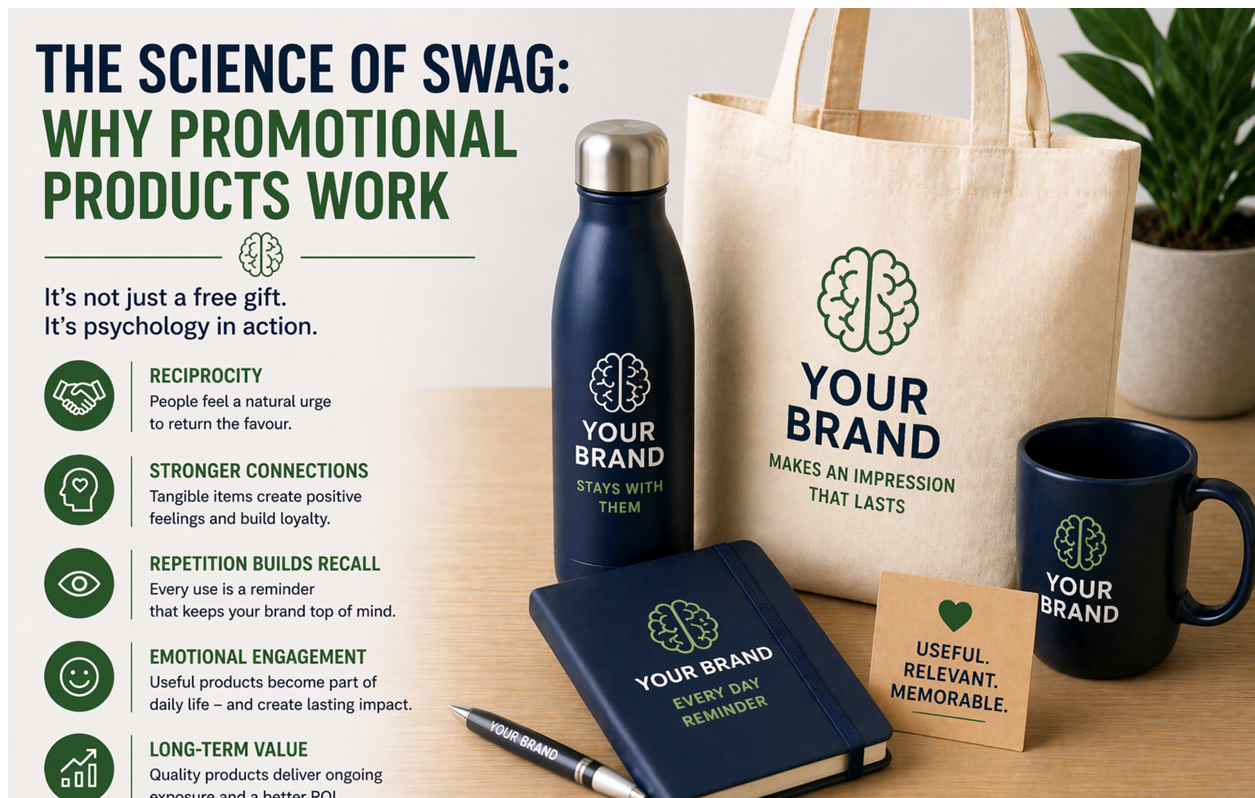
One of the key psychological principles behind promotional products is reciprocity. When people receive something of value, they often feel a natural inclination to give something back.
In a business context, this can translate into increased loyalty, positive brand perception, or even future purchases.
A simple gesture — such as giving a useful branded product — can create goodwill that influences customer behaviour in subtle but meaningful ways.
Repetition and Brand Recall
Repetition is essential for building brand awareness, and promotional products excel in this area.
Items like water bottles, notebooks, or bags are used repeatedly, exposing the brand to the user — and those around them — multiple times each day.
This consistent visibility strengthens memory and recall, making it more likely that the brand will come to mind when a purchasing decision is made.
Emotional Engagement Through Practical Products
Emotions play a significant role in how people interact with brands. Promotional products that are useful and well-designed can create positive feelings, such as appreciation or satisfaction.
These emotions become associated with the brand, enhancing its image and making it more appealing.
When a product adds value to someone’s daily life, it goes beyond marketing — it becomes a meaningful part of their experience.
Long-Term Impact and Business Value
One of the greatest strengths of promotional merchandise is its longevity. Unlike short-term advertising campaigns, physical products can remain in use for months or even years.
This extended lifespan ensures ongoing exposure and reinforces the psychological connection between the brand and the user.
For businesses, this translates into a strong return on investment, as a single product continues to deliver value over time.
Conclusion
The effectiveness of promotional products is rooted in psychology. By tapping into principles such as reciprocity, repetition, and emotional engagement, they create stronger and more lasting connections than many traditional forms of advertising.
For UK businesses, working with experts like GoPromotional provides the opportunity to take a strategic approach, ensuring their merchandise is not only high-quality but also designed to maximise impact.
Ultimately, when a promotional product is useful, well-made, and thoughtfully chosen, it doesn’t just promote a brand — it influences how people think, feel, and engage with it for the long term.
Read Also: westernbusiness.co.uk