Peter McColgan: Transforming Huntington’s Disease Research and Global Drug Development
A visionary leader bridging academic innovation and pharmaceutical challenges

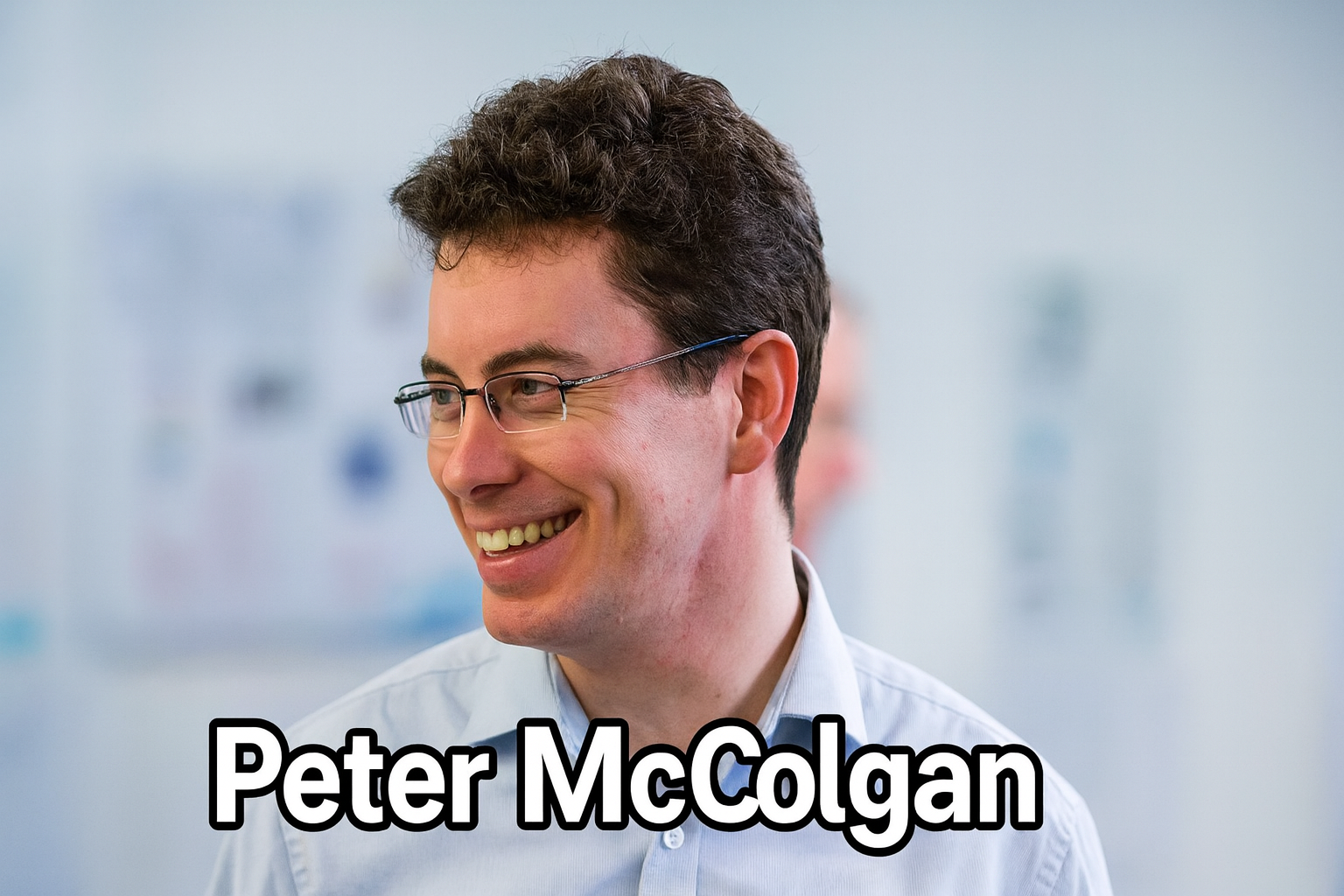
Introduction
Peter McColgan is a distinguished neurologist and neuroscientist whose career represents a rare blend of academic brilliance and industry leadership. With deep roots in neurodegenerative disease research at University College London (UCL) and his impactful role at Roche, he has become a key figure in the global fight against Huntington’s disease. His journey reflects both the power of science to change lives and the challenges that researchers face in tackling devastating illnesses.
Through his pioneering work on clinical trials, digital biomarkers, and disease modeling, Peter McColgan has redefined how the scientific community approaches neurodegeneration. His leadership demonstrates not only the potential for medical innovation but also the setbacks and lessons that shape future breakthroughs.
Quick Bio
| Field | Details |
|---|---|
| Full Name | Dr. Peter McColgan |
| Nationality | British |
| Current Roles | Clinical Science Leader, Roche; Honorary Senior Research Fellow, UCL |
| Academic Background | PhD and postdoctoral research at UCL under Prof. Sarah J. Tabrizi |
| Specialization | Neurology, Neurodegenerative Diseases (Huntington’s, Parkinson’s) |
| Known For | Clinical trials in Huntington’s disease; digital biomarkers; imaging |
| Professional Focus | Bridging academic research with industry-led therapeutic development |
Academic Foundation at UCL
Training under renowned mentorship
Peter McColgan built his scientific foundation at University College London (UCL), one of the leading centers for neurodegenerative research in the world. His PhD and postdoctoral training under the supervision of Professor Sarah J. Tabrizi gave him a unique opportunity to study Huntington’s disease from its earliest stages. This training allowed him to explore cutting-edge neuroimaging and biomarker approaches that would later form the basis of his global reputation.
During his time at UCL, he contributed to clinical research that analyzed how brain connectivity changes in patients even before symptoms of Huntington’s disease appear. His findings added depth to the understanding of disease progression and laid the groundwork for potential therapeutic strategies. His academic output continues to be cited widely, cementing his role as a thought leader in neurology.
Transition to Industry Leadership
The move to Roche and global development
After making significant contributions in academia, Peter McColgan joined Roche, one of the world’s largest pharmaceutical companies, as a Clinical Science Leader. At Roche, he took on the challenge of translating laboratory discoveries into viable therapies for patients. This role required not only scientific expertise but also leadership in strategy, regulation, and global trial management.
McColgan quickly became recognized for his ability to bridge the gap between research and development. He was instrumental in advancing clinical programs that aimed to provide meaningful treatments for Huntington’s disease, a condition with limited therapeutic options. His work at Roche has highlighted both the promise and the obstacles that come with leading groundbreaking drug development.
Contributions to Huntington’s Disease Research
Breakthrough trials and digital innovation
One of McColgan’s most notable achievements at Roche has been his involvement in the development and testing of antisense oligonucleotide (ASO) therapies, designed to lower levels of the mutant huntingtin protein. These therapies were considered revolutionary, representing the first major step toward modifying the underlying biology of Huntington’s disease.
In addition, McColgan led efforts to introduce digital monitoring platforms into clinical trials. These tools allowed researchers to measure motor and cognitive symptoms using smartphones and wearable devices, providing continuous and real-world data. Such innovations marked a turning point in how trials could be conducted, making them more patient-centered and precise.
The Challenges of Drug Development
Lessons from the tominersen trial
While McColgan’s contributions have been groundbreaking, not every trial has led to the desired outcome. The tominersen Phase III study revealed that one dosage arm appeared detrimental to patients, forcing the scientific team to reconsider the trial strategy. Although disappointing, McColgan emphasized the importance of learning from these results. Negative outcomes, while painful, provide insights that guide future therapies.
This experience highlighted his resilience as a leader. Rather than seeing failure as a barrier, he presented it as a step toward refining methods, improving trial design, and ultimately bringing safer, more effective treatments to patients. His ability to frame setbacks as opportunities for progress is part of what makes him a trusted global development leader.
Research Contributions and Publications
High-impact scientific output
Beyond clinical leadership, Peter McColgan has contributed to an extensive portfolio of publications. His work includes studies on:
-
Neuroimaging in Huntington’s disease – exploring white matter pathways and brain connectivity.
-
Biomarker development – particularly the use of plasma neurofilament light chain (NfL) as a marker of neurodegeneration.
-
Disease progression modeling – applying advanced analytics to predict outcomes in Huntington’s and Parkinson’s diseases.
-
Digital health technologies – integrating mobile devices and sensors into clinical research.
His publications have appeared in leading journals, making him an influential voice in neurology and neurodegeneration research.
Career Overview
From academic roots to global impact
Peter McColgan’s career can be summarized as a continuous drive to bridge the worlds of academic discovery and pharmaceutical development. At UCL, he advanced knowledge about early Huntington’s disease mechanisms. At NHNN in London, he served as an Honorary Consultant Neurologist, applying his expertise to patient care. At Roche, he became a leading figure in global clinical trials, digital biomarker innovation, and therapeutic strategy.
This progression demonstrates his rare ability to operate at the intersection of research, clinical practice, and global industry leadership. Few scientists manage to make such an impact across all these domains.
Latest News and Current Focus
Peter McColgan remains at the forefront of neurodegenerative disease research and drug development. His most recent work involves presenting clinical findings at major conferences, such as the CHDI Therapeutics Conference, and publishing on the use of digital biomarkers in Huntington’s disease. He continues to advocate for patient-focused, scientifically rigorous approaches that balance innovation with safety.
His current focus includes refining digital monitoring methods and pushing forward next-generation therapeutic strategies that can bring long-term hope to patients and families affected by Huntington’s disease.
Legacy and Impact
Peter McColgan’s legacy is already evident in the way neurodegenerative disease research is evolving. By introducing digital biomarkers, leading global trials, and contributing to landmark publications, he has set a new standard for how complex diseases can be studied. His resilience in facing setbacks and his vision for integrating academic and industry perspectives ensure that his influence will continue to grow.
For the scientific community, his career is a lesson in perseverance, innovation, and the need to constantly adapt. For patients, it represents hope that meaningful therapies for Huntington’s disease are not just an aspiration, but an achievable goal.
Conclusion
Peter McColgan’s biography illustrates the balance of achievement and challenge in the pursuit of medical progress. From his academic beginnings at UCL to his global leadership role at Roche, he has consistently pushed the boundaries of what is possible in Huntington’s disease research. His impact is measured not just in published studies or trial outcomes, but in the hope he brings to families living with neurodegenerative diseases.
While some trials have faced obstacles, his response has always been to learn, adapt, and innovate. This mindset ensures that his work will remain relevant and transformative in the years to come.
Frequently Asked Questions (FAQ)
Who is Peter McColgan?
Peter McColgan is a neurologist and neuroscientist specializing in neurodegenerative diseases, currently serving as Clinical Science Leader at Roche and Honorary Senior Research Fellow at UCL.
What is Peter McColgan known for?
He is best known for his leadership in Huntington’s disease clinical trials, development of digital biomarkers, and contributions to neuroimaging research.
What role does he play at Roche?
At Roche, McColgan leads clinical science programs focused on Huntington’s disease, helping to design and implement global drug development strategies.
What are his main research contributions?
His work includes studies on neuroimaging, biomarkers like neurofilament light chain, digital clinical trial tools, and disease progression models in Huntington’s and Parkinson’s disease.
What is his lasting impact?
Peter McColgan’s legacy lies in transforming how clinical trials are conducted, advancing biomarker development, and bridging the gap between academic research and industry innovation.