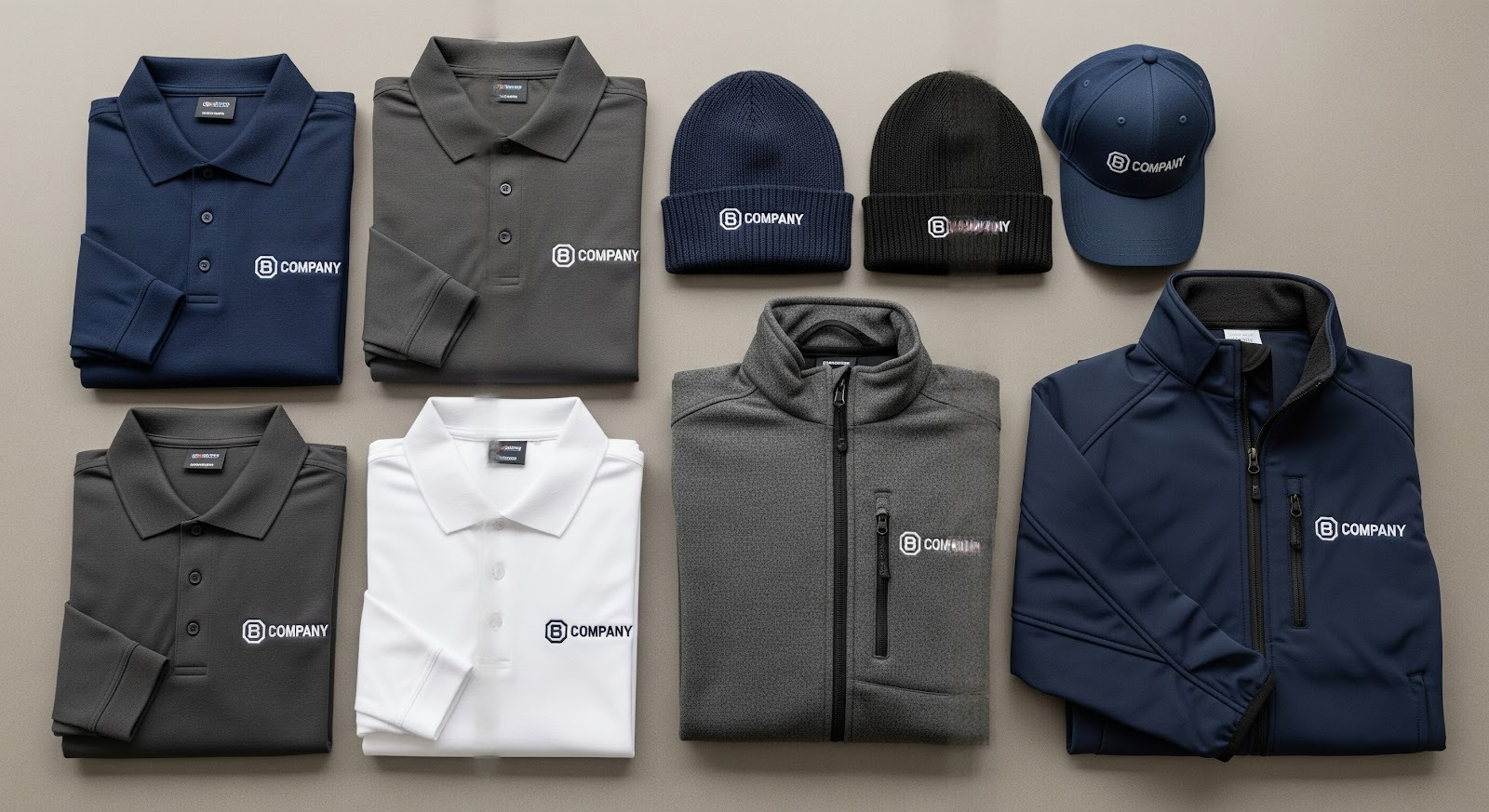
The first impressions usually come before any conversation takes place. Standards, reliability, and attention to detail are silently conveyed through uniforms and branded apparel used by staff. The process of selecting a partner to make those garments does not simply include choosing colours or adding a logo onto a piece of cloth. Each choice made, starting with the first sketch, to the completed shipment, will influence the perception of the business on both internal and external levels.
In the wide range of corporate clothing suppliers, one may get lost without certain guidelines. Understanding how production quality, brand execution, speed, and order flexibility interact is beneficial to decision-makers. A thoughtful strategy ensures that apparel functions well in daily use across many vocations and environments while preventing wasteful spending.
Understanding Material Quality and Longevity
The first thing to discuss should be durability. Workwear is subject to repeated washing, lengthy shifts and constant movement; therefore, materials should be able to withstand stress without losing their shape or colour. Instead of relying just on looks, ask prospective partners about fibre mixes, stitching techniques, and testing procedures.
Comfort should be considered equally. The breathability, weight and softness of the clothing that staff members must wear determine the willingness to wear it. No matter how pleasant it may look on delivery day, clothing that is tight or uncomfortable quickly becomes a burden. Trusted suppliers can explain how their material choices can suit specific industries, climates, or activity levels.
Evaluating Branding Precision and Consistency
A brand is characterized by details. The logo should be consistent in position, colour and readability in all the batches and styles of clothing. This is especially true among teams that deal with customers, where slight differences destroy visual coherence.
An efficient provider also provides a variety of decoration techniques and outlines where they are most useful. Embroidery can be used on outerwear, and screen printing on light shirts. Before full production starts, samples should be supplied so that changes can be made without the need for expensive rework.
Assessing Design Support and Expertise
Not all businesses come with complete artwork or with specifications. Design support can close that divide, transforming rough concepts into refined outputs. Find teams that provide advice without dominating brand intent.
Strong partners pose insightful questions regarding use cases, audience perceptions, and future scaling. Their job is to refine concepts so that clothing is both practical for everyday wear and consistent with the brand message.
Turnaround Times and Production Reliability
Speed is also important, especially during the onboarding of new employees or preparing an event. Clear schedules avoid last-minute deadlines and compromised decisions. Quality delivery is based on systematic processes and not idealistic assurances.
Ask about the management of schedules during peak periods. Disclosure of the lead times clearly reduces uncertainty and is a sign of professionalism. It is better to have consistency in a repeated order than a rush delivery that is followed by delays.
Flexible Ordering and Scalability
Workforces are dynamic. Over time, departments can grow, contract or require a variety of clothing. An order system must be capable of taking small top-ups, but also larger runs.
Minimum quantities, reorders, and storage options are worth discussing at the very beginning. Flexible arrangements reduce waste, and businesses can evolve without renegotiating every purchase. Scalability is an indication of a partner who is willing to commit to long-term cooperation and not one-time engagement.
Ethical Standards and Supply Transparency
Corporate responsibility is becoming a factor in purchasing choices. Ethical sourcing, fair labour and environmental awareness are a direct reflection on the client brand.
Accountability is demonstrated by suppliers who are open to talking about production conditions, certifications, or environmental activities. Transparency fosters trust and helps firms align activities with stated values.
Building a Long-Term Partnership
Clothing programs evolve alongside businesses. An ideal partner gets to know preferences, preempts needs, and makes proactive suggestions in the long term. Building relationships based on effective communication is more successful than a transactional arrangement.
Assess responsiveness, problem-solving and readiness to revise processes following original orders. Such attributes reveal whether a supplier will contribute to growth or merely meet demands.
When selecting a corporate clothing partner, one must decide to balance between design aspiration and practicality. When durability, branding precision, speed, and flexibility are in place, the outcome can contribute to employee confidence as well as brand credibility. Proper selection turns clothing into a strategic asset instead of a mere necessity.